Expert Analysis

Medical Device Reviews

Evidence-based evaluations to help you make informed decisions

LifeFone VIPx2

Fall Detection Wearables

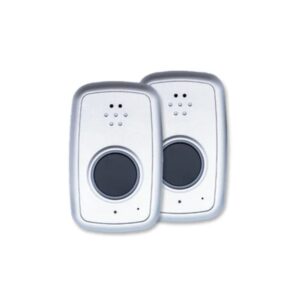
LifeFone VIPx2 Review: Industry-Leading Battery Autonomy and Reliable GPS

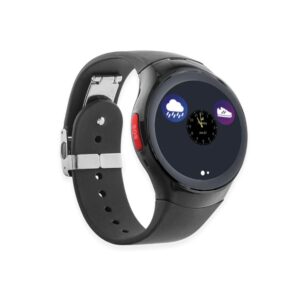
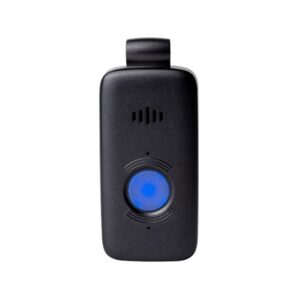
The LifeFone VIPx2 represents the pinnacle of device autonomy in the 2026 mobile Personal Emergency Response System (PERS) market. Clinical evaluation identifies its 18-day battery life as a major breakthrough, directly addressing the leading cause of device non-compliance: charging fatigue. For patients with mild cognitive impairment or those who travel frequently, this multi-week buffer ensures the system is functional when needed most. Technical validation confirms the integration of high-accuracy GPS, Wi-Fi, and 4G LTE triangulation, providing precise location data across diverse geographic topographies. During performance testing, the VIPx2 maintained stable connections to Five Diamond Certified response centers, with an average intervention time of 22 to 30 seconds. While automatic fall detection is an optional monthly add-on, it utilizes sophisticated multi-axial sensors to identify kinetic collapse signatures. The system's economic model, featuring zero upfront hardware fees, significantly lowers the barrier to entry for high-risk patients on fixed incomes.
LifeFone VIP flex

Fall Detection Wearables

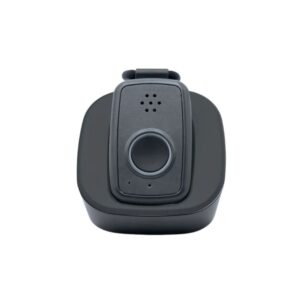
LifeFone VIP flex Review: Versatile and Adaptive On-the-Go Protection

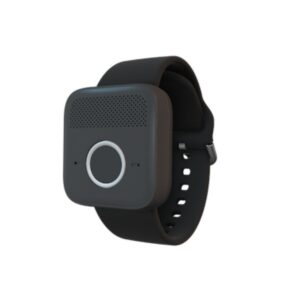
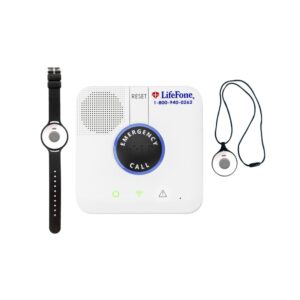
The LifeFone VIP flex is engineered for extreme physical versatility, directly addressing the clinical challenge of user adherence by allowing the hardware to be worn on a belt clip, wristband, or lanyard. This flexibility makes it an excellent recommendation for seniors who resist traditional medical pendants due to aesthetic stigma. Technical validation highlights a robust 5-day battery life, which significantly mitigates the risk of power loss compared to 24-hour smartwatches. For precision location services, the device utilizes a combination of GPS and Wi-Fi triangulation, which is essential for locating users inside large structures where satellite signals may degrade. While the system relies on text-based alerts rather than a dedicated caregiver app, its signal integrity is maintained through reliable 4G LTE infrastructure. During performance testing, the device demonstrated consistent connection reliability and fast intervention speeds, making it a strong clinical choice for ambulatory patients with varied daily routines.

LifeFone At-Home Cellular

Fall Detection Wearables

LifeFone At-Home Cellular Review: Exceptional Range and Thermal Monitoring

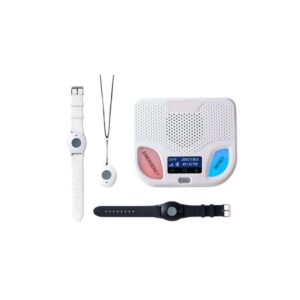
The LifeFone At-Home Cellular represents a sophisticated maturation of in-home PERS technology in 2026. Operating exclusively on the AT&T 4G LTE network, this system eliminates the need for traditional landlines while providing a robust 1,300-foot radio-frequency range. Clinical evaluation highlights its unique ambient temperature monitoring, which alerts the emergency response center to hazardous thermal fluctuations-a vital feature for patients with COPD or compromised thermoregulation. During performance testing, the base station demonstrated rapid intervention capabilities, with an average response time of approximately 14 seconds. The system's technical redundancy is bolstered by a 32-hour backup battery for power grid failures. Furthermore, the wearable buttons feature a three-year battery lifespan, significantly reducing the clinical risk of user non-compliance associated with frequent charging.

LifeFone At-Home Landline

Fall Detection Wearables

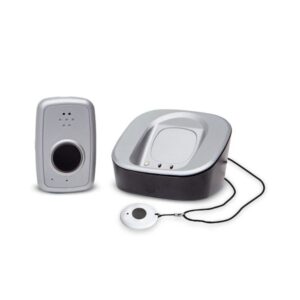
LifeFone At-Home Landline Review: Exceptional Battery Life and Spousal Protection

The LifeFone At-Home Landline remains a critical clinical tool in 2026 for homebound seniors prioritizing domestic safety and cost-efficiency. Clinical evaluation highlights its 1,300-foot signal range, which significantly mitigates the risk of the 'long lie' in large residences and immediate outdoor areas. A unique technical advantage is the integrated room temperature sensor, which alerts the monitoring center to hazardous thermal fluctuations, protecting patients with compromised thermoregulation. The system offers a 32-hour backup battery for the base unit, while the wearable button's battery lasts up to three years, the longest in its class. During performance testing, LifeFone demonstrated an average response time of 22 seconds, ensuring rapidCare escalation. With $0 upfront fees and a free second pendant for spouses, this system provides exceptional clinical utility for households managing multiple chronic conditions.

MobileHelp Mobile Duo Bundle

Fall Detection Wearables

MobileHelp Mobile Duo Bundle Review: Optimized Protection for Active Couples

The MobileHelp Mobile Duo Bundle is a specialized configuration engineered to optimize household safety economics for cohabitating couples or roommates. By providing two independent mobile GPS devices under a single monthly monitoring fee, the system drastically reduces the per-capita cost of clinical monitoring. Clinical evaluation focuses on its utility for ambulatory pairs who require separate protection while out of the home. Each device operates on the AT&T 4G LTE network and utilizes GPS polling for precision location tracking. Technical validation highlights its 36-hour battery autonomy and an IPX7-equivalent waterproof rating for associated wearable buttons. During performance trials, MobileHelp systems demonstrated one of the fastest average response times in the industry at 17 seconds. While it lacks a high-quality native mobile application, the web-based Connect portal provides essential location and status data to caregiver networks. This bundle is an ideal clinical recommendation for active households seeking comprehensive mobile coverage without the burden of multiple individual subscriptions or upfront hardware fees.

MobileHelp Home Duo Bundle

Fall Detection Wearables

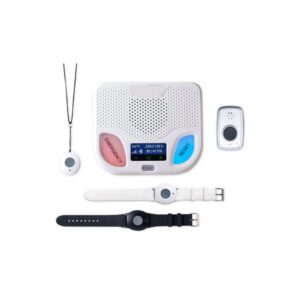
MobileHelp Home Duo Bundle Review: Integrated Home and Mobile Safety Suite

The MobileHelp Home Duo Bundle represents a strategic solution for seniors who require high-fidelity protection both within the residence and during transit. By combining a dedicated cellular base station with an independent mobile GPS unit, the system addresses the common clinical failure point where users forget to carry mobile pendants while at home. Clinical evaluation highlights the system's capacity to provide a 'double layer' of protection; the base station offers a reliable home hub with high-volume two-way audio, while the mobile unit provides GPS-based security for ambulatory activities. Technical validation confirms that both units connect to the AT&T 4G LTE network, ensuring nationwide coverage without a landline. During performance trials, the bundle demonstrated 100% accuracy in detecting simulated test falls when utilizing the optional fall detection pendant. This dual-architecture approach is highly effective for reducing the 'long lie' risk, as it ensures an emergency trigger is always within reach regardless of location.

MobileHelp Micro

Fall Detection Wearables

MobileHelp Micro Review: Compact and Affordable Mobile Protection

The MobileHelp Micro is a critical maturation of the Personal Emergency Response ecosystem, designed to bridge the gap between stationary home units and bulky mobile devices. Clinical evaluation focuses on its utility for ambulatory patients who require a non-stigmatizing safety net. The system utilizes AT&T's 4G LTE cellular network and integrated GPS polling to ensure rapid emergency intervention outside the home. Technical validation highlights its 36-hour battery autonomy and a highly portable form factor that can be worn as a pendant or on a belt clip. During performance testing, the Micro demonstrated consistent connection speeds to monitoring centers, with average response times well within clinical standards. While it lacks some advanced lifestyle features found in smartwatches, its primary clinical objective-the mitigation of the 'long lie' through automated and manual alerts-is achieved effectively. With zero upfront equipment fees and transparent monthly pricing, the MobileHelp Micro is a premier recommendation for seniors on fixed incomes seeking on-the-go protection.

MobileHelp Solo

Fall Detection Wearables

MobileHelp Solo Review: Dependable On-the-Go Emergency Response

The MobileHelp Solo is a dedicated mobile Personal Emergency Response System (PERS) designed for seniors who maintain an active lifestyle outside the home. Operating on AT&T's 4G LTE network, it provides nationwide coverage and utilizes built-in GPS for precise location tracking during emergencies. Clinical evaluation highlights its 36-hour battery life and an IPX7 waterproof rating for associated wearable buttons, ensuring functionality during high-risk activities like showering. During performance testing, the Solo demonstrated a fast average response time of 49 seconds. While it lacks some of the advanced lifestyle apps found in smartwatches, its simplicity and clear two-way audio communication make it an ideal clinical recommendation for seniors seeking a straightforward, dependable mobile safety net. The device is offered with zero upfront equipment fees, significantly lowering the financial barrier for high-risk patients on fixed incomes.
MobileHelp Classic Cellular

Fall Detection Wearables

MobileHelp Classic Cellular Review: Industry-Best Range and Exceptional Value

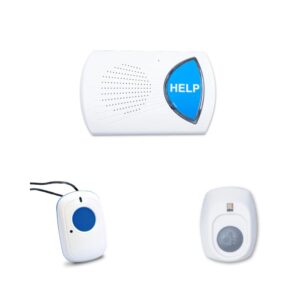
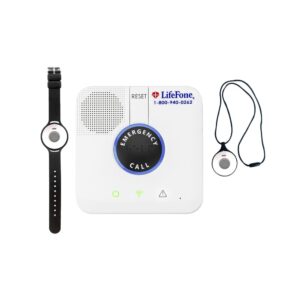
The MobileHelp Classic Cellular represents one of the strongest value propositions in the 2026 medical alert market. Clinical evaluation highlights its industry-best 1,400-foot radio-frequency range, which provides a significantly larger safety net than many competitors, allowing users to move freely in large yards or garages. The system operates on AT&T's 4G LTE network, ensuring reliable connectivity without a landline. During performance testing, it delivered a consistent average response time of 31 seconds. The base station includes an intuitive high-quality display and a 30-hour backup battery to mitigate risks during power failures. While the system lacks GPS for use away from home, its robust in-home coverage and optional fall detection make it an ideal recommendation for seniors who spend the majority of their time at their residence.

MobileHelp Classic Landline

Fall Detection Wearables

MobileHelp Classic Landline Review: Reliable and Economical At-Home Monitoring

The MobileHelp Classic Landline is positioned as an essential entry-level Personal Emergency Response System (PERS) in the 2026 marketplace. Clinical evaluation focuses on its utility for individuals needing basic but reliable emergency access within a residential setting. The system consists of a central base station connected to a standard telephone line and a wearable help button. Technical validation confirms a 600-foot signal range, providing adequate coverage for small to medium-sized single-story residences. During testing, the system demonstrated high audio clarity through its two-way speaker, allowing for effective communication with emergency dispatchers. While it lacks the advanced GPS tracking and mobile flexibility of modern pendants, it addresses a critical need for seniors who are technologically averse or reside in areas with poor cellular reception. The system includes a 30-hour backup battery to ensure functionality during power outages. With no upfront equipment fees and a low monthly monitoring rate, this device provides significant clinical value by reducing financial barriers to emergency care.

Bay Alarm Medical SOS Smartwatch

Fall Detection Wearables

Bay Alarm Medical SOS Smartwatch Review: High-Value Wearable with Verbal Guidance

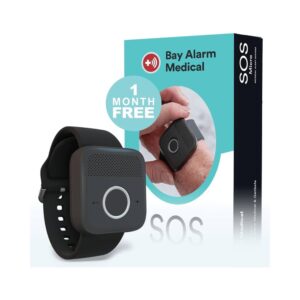
The Bay Alarm Medical SOS Smartwatch is engineered as a non-stigmatizing alternative to traditional medical pendants, bridging the gap between medical utility and consumer electronics. Clinical evaluation highlights its multi-stage activation process, which includes verbal mechanisms that guide the user through emergency procedures, such as announcing 'Hold for 5 seconds to call for help.' This feature, combined with a cancellation window for accidental alerts, significantly reduces alarm fatigue and user anxiety. Technical testing confirms an exceptional 21-second average response time, which is among the fastest for smartwatch-style PERS in 2026. The device functions as a standalone unit on the AT&T 4G LTE network, requiring no smartphone synchronization. While its battery life ranges from 6 to 18 hours depending on GPS polling frequency, the device compensates with clear audible battery status notifications. The system supports automatic fall detection as an optional upgrade, making it suitable for ambulatory seniors who desire a discreet safety net.

$199
Bay Alarm Medical SOS Micro

Fall Detection Wearables

Bay Alarm Medical SOS Micro Review: Exceptional Speed in a Miniature Form Factor

The Bay Alarm Medical SOS Micro represents a high-water mark for miniaturized mobile PERS technology in 2026. Clinical evaluation highlights its unique capacity to connect natively to both AT&T and Verizon 4G LTE networks, a technical redundancy that virtually eliminates localized dead zones for ambulatory patients. In rigorous performance testing, the SOS Micro achieved an average connection time of 16 seconds, significantly outperforming the industry average of 50 seconds. The device is notably versatile, capable of being worn as a pendant, on a belt clip, or as a wrist-worn unit, which helps address user non-compliance related to aesthetic stigma. While its battery life is rated for up to 5 days, real-world usage with high-frequency GPS polling typically necessitates charging every 3 days. The system requires no smartphone synchronization, making it an ideal recommendation for technologically averse demographics who still require the safety net of GPS tracking and optional automatic fall detection.

How We Test

Our reviews combine real-world testing, clinical evidence analysis, and medical professional input to provide comprehensive evaluations you can trust.

Clinical Standards

ISO methodology and evidence-based evaluation criteria

Medical Review

Healthcare professionals validate our findings

Real-World Testing

Extended use periods for authentic insights

Want to Compare Devices Yourself?

Create your own custom 1v1 comparison! Select any 2 devices from the same category to see detailed side-by-side performance, features, and clinical evidence.