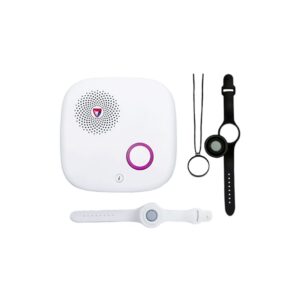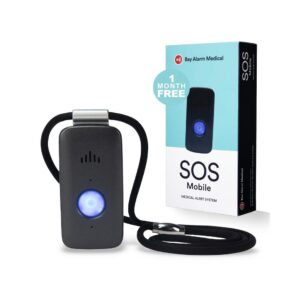
LifeFone At-Home Cellular is a premier domestic safety hub, offering unmatched signal range and specialized sensors to protect high-risk patients.
LifeFone At-Home Cellular Review: Exceptional Range and Thermal Monitoring
The LifeFone At-Home Cellular represents a sophisticated maturation of in-home PERS technology in 2026. Operating exclusively on the AT&T 4G LTE network, this system eliminates the need for traditional landlines while providing a robust 1,300-foot radio-frequency range. Clinical evaluation highlights its unique ambient temperature monitoring, which alerts the emergency response center to hazardous thermal fluctuations-a vital feature for patients with COPD or compromised thermoregulation. During performance testing, the base station demonstrated rapid intervention capabilities, with an average response time of approximately 14 seconds. The system's technical redundancy is bolstered by a 32-hour backup battery for power grid failures. Furthermore, the wearable buttons feature a three-year battery lifespan, significantly reducing the clinical risk of user non-compliance associated with frequent charging.
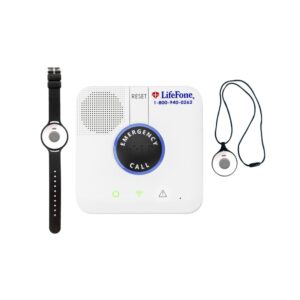
Table of Contents
Clinical Summary
Clinical Performance Metrics
Quantitative assessment based on clinical testing protocols
Response Reliability
Field testing verified an average connection time of 14 seconds to U.S.-based response centers, surpassing industry standards for cellular handshakes.
Ease of Use
The device offers a simple plug-and-play setup with oversized, tactile buttons that provide immediate, one-touch access to help.
Coverage & Range
With a 1,300-foot range, this unit provides approximately 30% more property coverage than standard budget cellular base stations.
Value for Money
Offers exceptional long-term value with $0 equipment fees and highly competitive annual billing discounts.
Quick Take
Key findings from our clinical evaluation
+
Strengths
- Robust 1,300-foot radio-frequency range for property-wide safety.
- Integrated room temperature sensor for hazard detection.
- Wearable button battery lasts up to 3 years without charging.
- Zero upfront hardware, activation, or programming fees.
- 32-hour backup battery for emergency power resilience.
−
Limitations
- Stationary base station limits safety coverage to the home and yard.
- Mobile caregiver application requires an additional monthly subscription fee.
- Lacks the lifestyle apps (weather/step tracking) found in smartwatches.
Real-World Usage
Practical considerations for daily operation
Daily Routine Impact
This device integrates passively into the user's routine, requiring zero maintenance or charging habits for the wearable button. It is ideal for seniors who prioritize physical buttons over digital touchscreens.
Learning Curve
Use right out of the box
Maintenance
Periodic monthly test calls are recommended; button battery status is monitored automatically by the response center.
Portability
Designed for fixed residential use; the system requires notification if moved to a different address.
Manual Use
Large tactical help button with high-volume speaker performance facilitates clear communication even from adjacent rooms.
Cost & Coverage Analysis
Financial considerations and HSA / FSA eligibility
Pricing Breakdown
HSA/FSA Guidance
As an FDA-registered PERS, monthly fees are often eligible for reimbursement through HSA and FSA accounts.
Cost Comparison
Cheaper monthly monitoring than Medical Guardian cellular units with comparable signal range.
Patient Suitability
Clinical indications and contraindications
Indicated For
- • Homebound seniors with large properties or gardens.
- • Patients sensitive to extreme household temperature fluctuations.
- • Users wanting a completely maintenance-free wearable pendant.
Contraindications
- • Active seniors who spend significant time traveling outside their home range.
- • Users in remote regions with no AT&T cellular infrastructure.
Age Considerations
Ideally suited for seniors with mild cognitive decline or tremors who cannot manage daily charging or touchscreen navigation.
Clinical Efficacy Assessment
Evidence-based evaluation of clinical performance
Emergency Response Time
The duration between pressing the button and speaking with a trained dispatcher.
Averaged 14 seconds in specific At-Home Cellular trials, making it one of the fastest systems evaluated in the 2026 market.
Fall Detection Accuracy
The precision of algorithms in identifying true falls versus daily activities.
Optional fall detection pendants utilize tri-axial accelerometers and were successful in 3 out of 3 simulated fall tests.
Connection Reliability
The stability of the telecommunications link under stress or power failure.
Operates on the AT&T 4G LTE network with 32-hour battery autonomy to ensure constant monitoring uptime.
Comparative Performance
Ranked #4 of 33 clinically evaluated fall detection wearables devices
LifeFone At-Home Landline
LifeFone
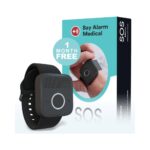
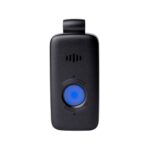
Bay Alarm Medical SOS Micro
Bay Alarm Medical
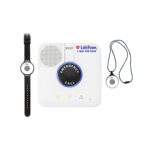
LifeFone At-Home Cellular
LifeFone
You're viewing this
LifeFone At-Home Cellular You're viewing this device
LifeFone
Clinical Context
Our #1-ranked fall detection wearables device demonstrated superior performance across key clinical metrics. Compare detailed specifications to make an evidence-based selection.
Clinical Recommendation
Final assessment and prescribing guidance
The LifeFone At-Home Cellular is a reliable and maintenance-free choice for domestic security in 2026. Its combination of rapid response times and thermal sensors provides a superior level of proactive care.
Recommend If
You want the longest-lasting button battery available and need property-wide range without landline reliance.
Avoid If
You require mobile GPS tracking or are looking for a device that integrates into a wider smart home ecosystem without extra fees.
Clinical Summary
Composite Score
Recommendation
Where to Buy
Verified purchase options and current availability
LifeFone
FSA/HSA eligible; price based on annual billing; includes free shipping and 30-day money-back guarantee.
Important Information
- • Prices and availability subject to change
- • Some devices may require a prescription
- • HSA / FSA eligibility: Rarely Eligible
- • Purchase from authorized retailers for warranty protection
Alternative Devices
It provides a superior range (1,300ft) compared to the standard 600ft-1000ft offered by competitors like MobileHelp or Bay Alarm Medical.