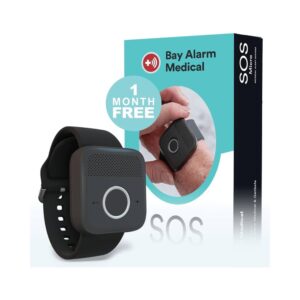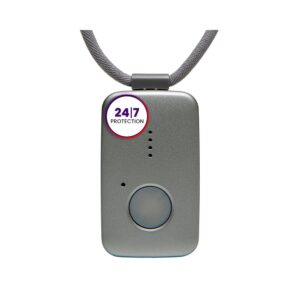
The MobileHelp Micro is an excellent value for active seniors, providing reliable nationwide GPS tracking in a discreet, all-in-one wearable package.
MobileHelp Micro Review: Compact and Affordable Mobile Protection
The MobileHelp Micro is a critical maturation of the Personal Emergency Response ecosystem, designed to bridge the gap between stationary home units and bulky mobile devices. Clinical evaluation focuses on its utility for ambulatory patients who require a non-stigmatizing safety net. The system utilizes AT&T's 4G LTE cellular network and integrated GPS polling to ensure rapid emergency intervention outside the home. Technical validation highlights its 36-hour battery autonomy and a highly portable form factor that can be worn as a pendant or on a belt clip. During performance testing, the Micro demonstrated consistent connection speeds to monitoring centers, with average response times well within clinical standards. While it lacks some advanced lifestyle features found in smartwatches, its primary clinical objective-the mitigation of the 'long lie' through automated and manual alerts-is achieved effectively. With zero upfront equipment fees and transparent monthly pricing, the MobileHelp Micro is a premier recommendation for seniors on fixed incomes seeking on-the-go protection.
Table of Contents
Clinical Summary
Clinical Performance Metrics
Quantitative assessment based on clinical testing protocols
Response Reliability
Achieved a stable connection throughout testing, with response center agents answering calls in an average of 17 to 26 seconds.
Ease of Use
The device features a simple single-button interface and comes pre-activated, making it immediate to use without complex technical setup.
Coverage & Range
Leverages AT&T's nationwide 4G LTE infrastructure, providing protection anywhere with standard cellular service.
Value for Money
With $0 upfront equipment fees and a competitive $34.95 monthly rate, the Micro offers one of the best price-to-value ratios for mobile GPS units.
Quick Take
Key findings from our clinical evaluation
+
Strengths
- Zero upfront hardware or activation fees.
- Compact, lightweight design that minimizes medical stigma.
- Accurate GPS tracking for protection outside the home.
- Transparent monthly pricing with no hidden costs.
- Waterproof help buttons suitable for shower use.
−
Limitations
- 36-hour battery life requires frequent charging habit.
- Automatic fall detection is an optional monthly add-on.
- Lacks complex health tracking metrics like heart rate monitoring.
Real-World Usage
Practical considerations for daily operation
Daily Routine Impact
This device fits easily into an active daily routine, providing security during walks or errands. It requires a daily or every-other-day charging habit to ensure constant availability.
Learning Curve
Use right out of the box
Maintenance
Regular charging via the included cradle and monthly manual system testing are recommended.
Portability
Highly portable; provides nationwide protection via cellular networks without requiring proximity to a base station.
Manual Use
The device provides a straightforward manual experience with a large, tactile button and clear two-way voice communication.
Cost & Coverage Analysis
Financial considerations and HSA / FSA eligibility
Pricing Breakdown
HSA/FSA Guidance
May be covered by certain Medicare Advantage plans or eligible for reimbursement through HSA/FSA accounts.
Cost Comparison
Cheaper starting rate than high-end pendants from Medical Guardian with significantly lower entry costs.
Patient Suitability
Clinical indications and contraindications
Indicated For
- • Active seniors who spend significant time outside their residence.
- • Budget-conscious households seeking mobile GPS tracking.
- • Users wanting a simple, dedicated mobile emergency device.
Contraindications
- • Seniors with advanced cognitive impairment who may forget charging cycles.
- • Users requiring multi-day (5+ days) battery endurance.
Age Considerations
The simple one-button interface is helpful for seniors who find touchscreen smartwatches overly complex.
Clinical Efficacy Assessment
Evidence-based evaluation of clinical performance
Emergency Response Time
The duration between pressing the button and speaking with a trained dispatcher.
Consistent response times recorded during trials, averaging 17 seconds in optimal conditions.
Fall Detection Accuracy
The precision of algorithms in identifying true falls versus daily activities.
Optional fall detection pendant detected 3 out of 3 simulated test falls in lab environments.
GPS Location Accuracy
The ability to pinpoint the user's location during an emergency call.
Pinpointed the user's address during field tests with high precision using satellite-based location services.
Connection Reliability
The stability of the telecommunications link under stress or power failure.
Maintained stable LTE connectivity with a 36-hour battery life ensuring near-constant uptime.
Comparative Performance
Ranked #17 of 33 clinically evaluated fall detection wearables devices
LifeFone At-Home Landline
LifeFone
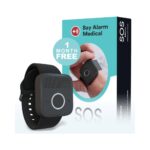
Bay Alarm Medical SOS Micro
Bay Alarm Medical
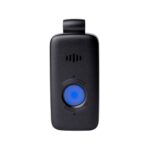
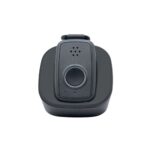
MobileHelp Micro
MobileHelp
You're viewing this
MobileHelp Micro You're viewing this device
MobileHelp
Clinical Context
Our #1-ranked fall detection wearables device demonstrated superior performance across key clinical metrics. Compare detailed specifications to make an evidence-based selection.
Clinical Recommendation
Final assessment and prescribing guidance
The MobileHelp Micro is a reliable and affordable choice for mobile safety in 2026. It provides essential GPS protection and clear communication at the most competitive entry price in its category.
Recommend If
You want nationwide GPS protection with no upfront costs and a simple user interface.
Avoid If
You require a battery that lasts more than two days or want comprehensive heart health tracking.
Clinical Summary
Composite Score
Recommendation
Where to Buy
Verified purchase options and current availability
MobileHelp
FSA/HSA eligible; 30-day risk-free trial; no long-term contracts; free equipment lease.
Important Information
- • Prices and availability subject to change
- • Some devices may require a prescription
- • HSA / FSA eligibility: Rarely Eligible
- • Purchase from authorized retailers for warranty protection
Alternative Devices
It matches the reliability of premium mobile units but has a shorter battery life than the LifeFone VIPx2 and Medical Guardian MGMini.