Expert Analysis

Medical Device Reviews

Evidence-based evaluations to help you make informed decisions

Rossmax PF120 Series Peak Flow Meter

Peak Flow Meters

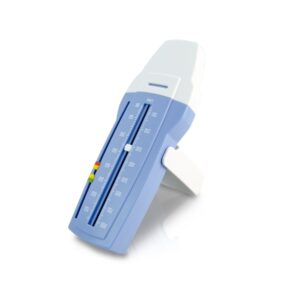
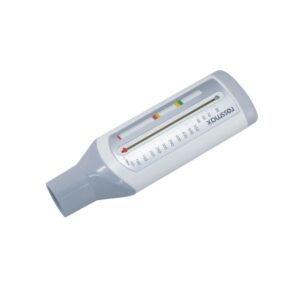
Rossmax PF120 Series Peak Flow Meter Review: Accurate and Economical Respiratory Tracking

The Rossmax PF120 Series, comprising the PF120 A (Adult) and PF120 C (Child) models, represents a standard of precision in mechanical respiratory monitoring. These Class II medical devices are engineered to measure Peak Expiratory Flow Rate (PEFR) using a time-tested spring-and-piston mechanism. The PF120 A features a measurement range of 60-800 L/min BTPS, while the PF120 C is tailored for pediatric users with a 50-400 L/min BTPS range. A key technical advantage is the built-in flexible three-zone management system, which uses adjustable color-coded indicators (Green, Yellow, Red) to help patients track their respiratory status against their personal best. The devices comply with the EN ISO 23747:2009 standard, ensuring accuracy within ± 10 L/min or ± 10% of the reading. Constructed from washable medical-grade ABS plastic, the series is designed for long-term durability and hygiene. While purely mechanical and lacking digital data logging, the PF120 Series remains a benchmark for affordable, reliable home monitoring in 2026.
$20
Teleflex Medical Pocket Peak Universal Peak Flow Meter (1801)

Peak Flow Meters

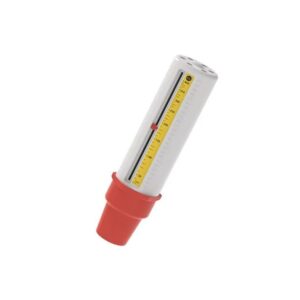
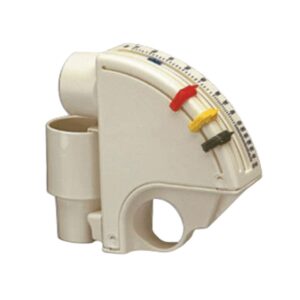
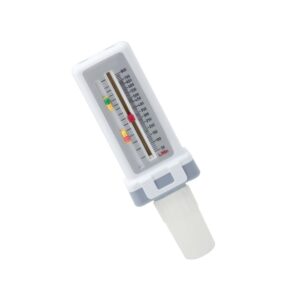
Teleflex Medical Pocket Peak Universal (1801) Review: Reliable Universal-Range Mechanical Monitoring

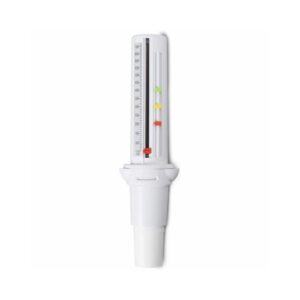
The Teleflex Medical Pocket Peak Universal (1801) is a mechanical, Class II medical device engineered for monitoring Peak Expiratory Flow (PEF) in home and clinical settings. Its primary technical distinction is its 'Universal Range' of 50 to 720 L/min, which allows it to be used effectively by both children and adults within a single unit. Operating on a robust spring-and-piston mechanism, the 1801 captures the maximal expiratory velocity during a forced maneuver. Technical specifications from 2026 highlight its ease of use, with high-contrast markings in 10 LPM increments and manually adjustable color-coded zone markers for standardized asthma management. The device is constructed from latex-free plastic and features an easy-grip handle designed to direct the user's hands away from the airflow path, ensuring measurement accuracy by preventing accidental obstruction. While it lacks the automated data logging of digital counterparts, its battery-free reliability and low unit cost make it a staple for large-scale patient distribution and clinical screening.

$21
Sunset Healthcare Solutions RES052 Pocketpeak

Peak Flow Meters

Sunset Healthcare Solutions RES052 Pocketpeak Review: Versatile Universal-Range Monitoring

The Sunset Healthcare Solutions RES052 Pocketpeak is a mechanical, Class II medical device engineered for the objective assessment of Peak Expiratory Flow (PEF). Its primary technical advantage is its 'Universal Range' capability, spanning 50 to 720 L/min. This design choice allows the device to serve as a single-unit solution for both pediatric subjects and adult patients, eliminating the need for age-specific models. The device operates using a spring-loaded internal piston mechanism that captures the maximal expiratory velocity during a 'fast blast' maneuver. Clinical evaluation confirms that the RES052 adheres to standard performance requirements for domiciliary respiratory monitoring. The unit features an integrated, easy-to-grip handle to ensure proper hand positioning away from the airflow path, which is critical for measurement accuracy. The high-contrast numeric scale is supplemented by manually adjustable color-coded zone markers (Green, Yellow, Red), facilitating the easy implementation of asthma action plans. While it lacks the digital logging found in electronic monitors, its robust mechanical design and low unit cost make it a staple for large-scale clinical distribution and home-based self-management.

$14
Monaghan TruZone Peak Flow Meter

Peak Flow Meters

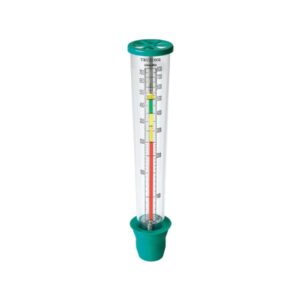
Monaghan TruZone Peak Flow Meter Review: Precision and Portability for Domiciliary Care

The Monaghan TruZone Peak Flow Meter is an over-the-counter mechanical device designed to monitor respiratory performance in patients with conditions such as asthma and COPD. Classified as a Class II medical device under 21 CFR 868.1860, the TruZone is engineered for precision and repeatability across its 60 to 800 L/min flow range. One of its distinct technical features is the integrated anatomical mouthpiece, which facilitates a more consistent seal during exhalation maneuvers compared to traditional circular designs. The device utilizes a spring-loaded piston mechanism that responds to forced exhalation by moving a visual indicator along a color-zoned scale. This color-coded system allows for easy delineating of green, yellow, and red zones based on a patient's personal best, aiding in the adherence to physician-directed asthma action plans. The build quality is robust, utilizing medical-grade plastics that are both washable and reusable. While it lacks the automated data logging of digital alternatives, its simplicity and resistance to mechanical friction make it a staple tool for longitudinal respiratory assessment.

$20
Clement Clarke Mini-Wright Low Range Peak Flow Meter

Peak Flow Meters

Clement Clarke Mini-Wright Low Range Peak Flow Meter Review: Precision Pediatric Monitoring

The Clement Clarke Mini-Wright Low Range is a mechanical, Class II medical device tailored for populations where standard range meters lack the sensitivity to capture small but significant changes in lung function. While the standard model covers up to 880 L/min, this low-range version is typically scaled for 30-400 L/min (or 50-300 L/min in pediatric-specific configurations), allowing for much clearer increments at the bottom end of the scale. It utilizes the same clinically-proven spring-and-piston mechanism as its parent model, capturing the peak velocity of a forced exhalation. Our assessment highlights its material integrity, utilizing high-impact medical polymers and a stainless steel internal spring that resists fatigue. A key safety feature is the internal one-way valve, which prevents the patient from inhaling through the device, thereby minimizing the risk of cross-contamination and moisture buildup. While it does not offer digital data logging or FEV1 measurement, its status as a clinically-validated tool makes it a staple for establishing baselines in pediatric asthma management and monitoring severe COPD cases where flow rates are chronically low.

$35
Clement Clarke Mini-Wright Standard Peak Flow Meter

Peak Flow Meters

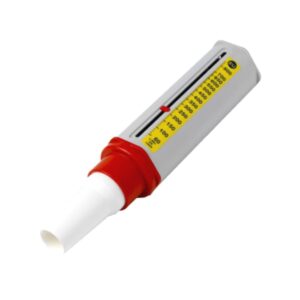
Clement Clarke Mini-Wright Standard Review: The Clinical Benchmark for Mechanical Peak Flow

The Clement Clarke Mini-Wright Standard is the most recognized mechanical peak flow meter in the world, serving as the benchmark for clinical and domiciliary respiratory monitoring for decades. As a Class II medical device, it is specifically engineered to measure Peak Expiratory Flow (PEF) with a focus on durability and precision. The device operates on a spring-loaded piston mechanism that captures the 'fast blast' of a forced exhalation. Our evaluation highlights its robust construction and high-contrast, easy-to-read scale, which follows the standardized EU or ATS measurement scales. A critical safety feature is the built-in one-way valve, which prevents the user from accidentally inhaling through the device, thereby protecting the internal mechanism from moisture and reducing cross-contamination risks. With a measurement range of 60 to 880 L/min, it provides sufficient headroom for the vast majority of adult subjects. While it lacks the digital logging features of modern electronic monitors, its status as a clinically validated tool makes it a primary choice for healthcare providers globally.

$29
Vitalograph copd-6 Respiratory Monitor

Peak Flow Meters

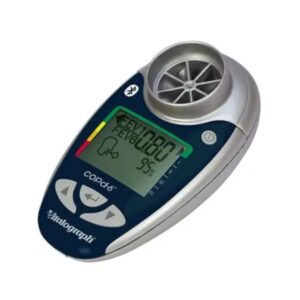
Vitalograph COPD-6 Review: Precision Screening for Obstructive Airway Disease

The Vitalograph COPD-6 is a pioneering electronic screening device designed to identify individuals at risk of Chronic Obstructive Pulmonary Disease (COPD) at the pre-symptomatic stage. Unlike standard peak flow meters that focus on asthma, the COPD-6 is engineered for clinical case selection, allowing spirometry resources to be focused on those most at risk. It measures Forced Expiratory Volume in 1 second (FEV1) and Forced Expiratory Volume in 6 seconds (FEV6), using the FEV1/FEV6 ratio as a reliable surrogate for the laboratory-based FEV1/FVC ratio. Clinical studies have demonstrated that this ratio provides a sensitivity of 0.89 and a specificity of 0.98 for recognizing airway obstruction. The device automatically calculates 'lung age' and provides GOLD (Global Initiative for Chronic Obstructive Lung Disease) classification from Stage I to IV. Technical analysis confirms an accuracy of better than +/- 3% across a range of 0 to 9.99 L. While the device does not measure Peak Expiratory Flow (PEF) for daily asthma monitoring, its role in identifying obstructive index and % predicted values makes it a cornerstone tool for early medical intervention in adult smokers and symptomatic patients.

$145
Vitalograph Lung Age Monitor

Peak Flow Meters

Vitalograph Lung Age Monitor Review: Innovative COPD Screening and Physiological Age Assessment

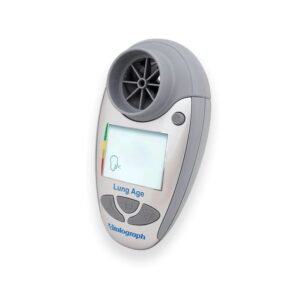
The Vitalograph Lung Age Monitor is a dedicated electronic device engineered for the early identification of Chronic Obstructive Pulmonary Disease (COPD) and the assessment of lung health in smokers. Unlike standard respiratory monitors in this category, this device does not measure Peak Expiratory Flow (PEF). Instead, it focuses on Forced Expiratory Volume in 1 second (FEV1) and Forced Expiratory Volume in 6 seconds (FEV6). By calculating the FEV1/FEV6 ratio, the device provides a reliable surrogate for total lung capacity in home and point-of-care settings. Its primary innovation is the 'Lung Age' calculation, which benchmark's a user's performance against predicted norms to provide a physiological age for their lungs. The monitor also includes GOLD (Global Initiative for Chronic Obstructive Lung Disease) staging for identifying the level of obstruction. While the device features integrated quality prompts to ensure maneuvers are performed correctly, it is important to note that this specific model lacks internal memory for longitudinal data tracking, serving primarily as a point-of-use screening instrument.

$150
Vitalograph Lung Monitor

Peak Flow Meters

Vitalograph Lung Monitor Review: Comprehensive Respiratory Tracking for Chronic Conditions

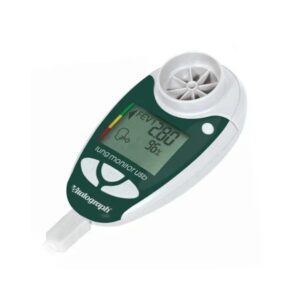
The Vitalograph Lung Monitor is an advanced electronic device engineered for the home monitoring of chronic respiratory conditions such as COPD, cystic fibrosis, and for post-transplant patient care. Classified as a Class II medical device, it stands out by measuring a broader range of clinical parameters than basic peak flow meters, specifically Peak Expiratory Flow (PEF), Forced Expiratory Volume in 1 second (FEV1), and Forced Expiratory Volume in 6 seconds (FEV6). The inclusion of FEV6 is a significant engineering feature, as it provides a reliable surrogate for Forced Vital Capacity (FVC) in home settings, allowing for the calculation of the FEV1/FEV6 ratio to identify obstructive patterns. The device features an internal memory capable of storing 200 sets of readings, allowing for detailed longitudinal analysis. Our clinical evaluation highlights the device's adherence to American Thoracic Society (ATS) and European Respiratory Society (ERS) standards. It includes a traffic light risk indicator system based on the user's personal best, providing immediate feedback on lung function status. While highly accurate, the basic model is a standalone unit, with connectivity reserved for higher-tier variants in the series.

$324
Vitalograph asma-1 Asthma Monitor

Peak Flow Meters

Vitalograph asma-1 Asthma Monitor Review: Clinical-Grade Monitoring with Extensive Data Storage

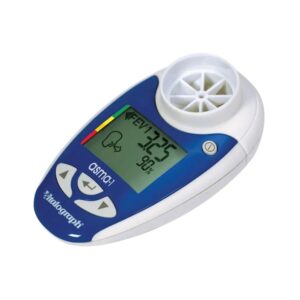
The Vitalograph asma-1 is a sophisticated electronic monitor designed for objective lung function testing in both home and clinical settings. As a Class II medical device, it measures both Peak Expiratory Flow (PEF) and Forced Expiratory Volume in one second (FEV1), allowing for a more nuanced clinical assessment of airway obstruction than basic peak flow meters. A primary engineering advantage of the asma-1 is its massive internal memory, which stores up to 600 sets of readings-far exceeding the standard 240 readings found in many competing digital monitors. The device features integrated quality prompts to ensure valid maneuvers and a customizable 'traffic light' system for immediate zone assessment relative to the user's personal best. The sensor technology is designed to meet or exceed rigorous international standards for spirometry, including ATS and ERS guidelines. While primarily a standalone electronic tool, its high-capacity logging and ability to generate detailed clinical reports make it a cornerstone of 2026 respiratory management for chronic patients.

$99
Omron Peak Air Peak Flow Meter (PF9940)

Peak Flow Meters

Omron Peak Air Peak Flow Meter (PF9940) Review: Simple, Reliable Home Monitoring

The Omron Peak Air (PF9940) is a mechanical, Class II medical device designed for the domiciliary monitoring of Peak Expiratory Flow (PEF). It features a universal range of 60 to 720 L/min, which is specifically engineered to accommodate both pediatric and adult populations within a single device. The unit operates on a time-tested spring-and-piston mechanism that captures the maximum velocity of air during a forced exhalation maneuver. Our technical assessment indicates that the device meets standard technical requirements for accuracy and repeatability for home monitoring. The design is lightweight and reusable, featuring a sliding indicator that holds the measurement until manually reset. While the 720 L/min upper limit may be slightly restrictive for very high-flow adult males or athletes, it provides sufficient range for the vast majority of asthma and COPD patients. The device includes adjustable color-coded markers for manual zone management, assisting users in following their personalized asthma action plans.

$30
Quest AsthmaMD BreatheWell Lung Performance Peak Flow Meter

Peak Flow Meters

Quest AsthmaMD BreatheWell Lung Performance Peak Flow Meter Review: Integrated App-Based Asthma Management

The Quest AsthmaMD BreatheWell represents a strategic integration of reliable mechanical sensing with modern digital data management. Classified as a Class II medical device under 21 CFR 868.1860, this handheld monitor is engineered for the domiciliary assessment of Peak Expiratory Flow (PEF). Our evaluation confirms that while the device itself is a purely mechanical, spring-loaded piston system, its primary innovation lies in its pairing with a robust, physician-developed smartphone application. The meter features easy-to-read graduations and adjustable three-zone markers that allow users to delineate green, yellow, and red zones based on their personal best values. Technical specifications highlight its portability and durability, with dimensions of 6 x 2.25 x 1.5 inches. Clinical feedback indicates the device is among the most accurate in the mechanical class, specifically designed to capture the high-velocity 'fast blast' of air required for objective lung function measurement. The AsthmaMD app facilitates better adherence by replacing paper journals with automated trending and reporting features, though it requires users to manually input the values read from the physical device.

$20

How We Test

Our reviews combine real-world testing, clinical evidence analysis, and medical professional input to provide comprehensive evaluations you can trust.

Clinical Standards

ISO methodology and evidence-based evaluation criteria

Medical Review

Healthcare professionals validate our findings

Real-World Testing

Extended use periods for authentic insights

Want to Compare Devices Yourself?

Create your own custom 1v1 comparison! Select any 2 devices from the same category to see detailed side-by-side performance, features, and clinical evidence.