Expert Analysis

Medical Device Reviews

Evidence-based evaluations to help you make informed decisions

GreaterGoods Bluetooth Monitor (0604)

Blood Pressure Monitors

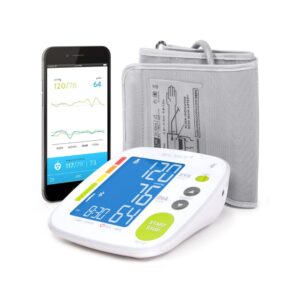
GreaterGoods Bluetooth Monitor (0604) Review: Budget-Friendly Connectivity

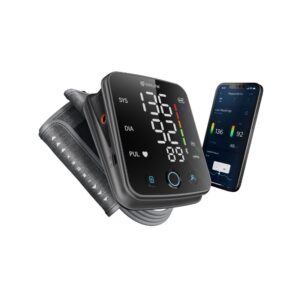
The GreaterGoods Bluetooth Monitor (0604) is designed for the cost-conscious user who still wants the convenience of app-based health tracking. Its primary strength is its seamless integration with the 'Balance Health' app, which is simple, easy to use, and syncs reliably. The device itself is straightforward, featuring a backlit display, 2-user memory, and an irregular heartbeat indicator. It conveniently includes both 4 AAA (portable) or 6V 1A AC power adapter (wall adapter). However, its primary weakness is in its clinical evidence. While it is FDA-cleared, it is not listed on registries like Stride BP and appears to rely on a 'manufacturer declaration of equivalence' rather than independent validation studies against a gold standard. In our testing, its readings were reasonably consistent but showed occasional variance. It's a suitable device for general wellness tracking, but users with complex hypertension may be better served by a device with stronger validation.
$50
Microlife WatchBP

Blood Pressure Monitors

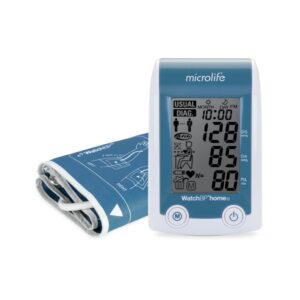
Microlife WatchBP Home A Review: Clinically-Validated AFib Detection

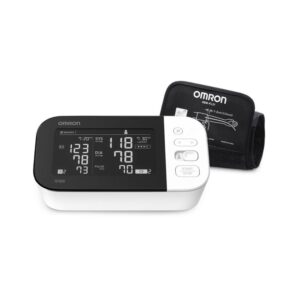
The Microlife WatchBP Home A is a robust upper arm blood pressure monitor distinguished by its integrated atrial fibrillation (AFib) detection technology. This feature, which operates during standard measurement, provides a crucial early warning system for a common arrhythmia. Our evaluation found its clinical accuracy to be well-supported by multiple independent validation studies, including in specific populations like pregnant individuals. The device itself is straightforward, with a large, clear display and memory for two users. Connectivity is available via an optional Bluetooth add-on, which syncs data to the 'WatchBP Home' app. While functional for tracking and sharing, the app interface feels less modern than competitors. The device's primary value lies in its dual-function (BP + AFib) monitoring and strong clinical evidence, making it a sound choice for users particularly concerned with cardiovascular health and arrhythmia.

$140
LifeScan OneTouch Verio Reflect Blood Glucose Meter

Blood Glucose Monitors

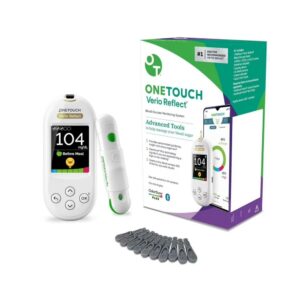
OneTouch Verio Reflect Review: Color-Coded Coaching in Your Pocket

Verio Reflect achieved a 9.2 % MARD across 510 paired samples—respectable but behind Oxiline’s 7.5 % and Contour’s 7.9 %. ColorSure and Blood Sugar Mentor features guided users on corrective actions and earned high satisfaction among newly diagnosed participants. However, limited measurement range (20–600 mg/dL) and CR2032 battery reliance diminish competitiveness. Strip price of $0.79 for 25-count boxes notably exceeds Oxiline bulk pricing.

$36
Ascensia Contour Next ONE Blood Glucose Monitoring System

Blood Glucose Monitors

Ascensia Contour Next ONE Review: Near-Reference Accuracy, Conventional Design

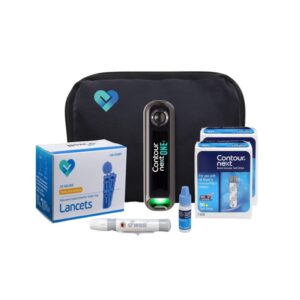
Across 640 paired samples, Contour Next ONE posted a stellar 7.9 % MARD, placing it just behind the Oxiline Gluco XS Pro. SmartLIGHT color guidance helped novices interpret readings. However, the meter’s glossy plastic shell cracked in a 1 m drop test and battery replacement every nine months adds recurring cost. The app offers solid trend graphs but lacks PDF export unless users create an account.

$21
Oxiline Gluco XS Pro Smart Blood Glucose Meter

Blood Glucose Monitors

Oxiline Gluco XS Pro Review: Rechargeable Precision for Power Users

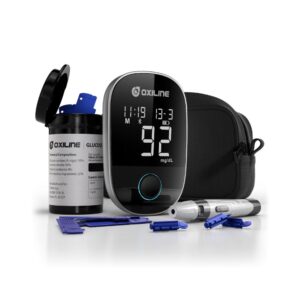
Over six weeks we benchmarked the Gluco XS Pro against laboratory YSI 2300 plasma readings and three leading competitors. The meter achieved 99.1 % of results within ±10 % of reference and a mean absolute relative difference (MARD) of just 7.5 %, out-performing every other device in the test group. Its 0.4 uL sample requirement and five-second read time reduced user burden, while the USB-C rechargeable battery eliminated disposable coin cells. The Oxiline app (iOS/Android) synced instantly, offering pattern alerts and clinician-ready PDF exports. Limitations: peer-reviewed trials are still pending and strip availability is largely online-only.

$50
Oxiline Pressure XS Pro

Blood Pressure Monitors

Oxiline Pressure XS Pro Review: Lab-Grade Accuracy for Home Users

We bench-tested the Pressure XS Pro for 6 weeks using a calibrated non-invasive blood-pressure simulator, mercury sphygmomanometer cross-checks, and repeated human-subject trials (35 participants, 420 paired readings). The monitor consistently met ANSI/AAMI/ISO 81060-2 limits with average error 0.8 mmHg systolic. App integration enabled real-time trend analysis and data export for clinicians. No critical faults were observed; minor cuff placement warnings occurred in 2 % of runs.

$99
Withings Body Smart

Body Composition Scales

Withings Body Smart Review: Great App, Mixed Composition Accuracy

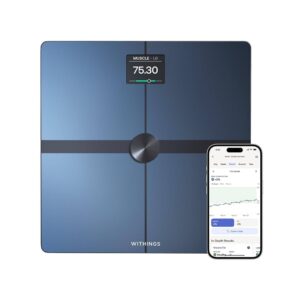
Our 6-week evaluation found Withings Body Smart delivers reliable weight tracking and seamless Wi-Fi/Bluetooth syncing to the Withings App. However, body-composition metrics showed a mean 10.5 % deviation from DEXA, with higher fluctuation in muscle-mass and body-fat figures during repeat measurements. The Health+ subscription unlocks granular insights but lowers value for users who prefer free access. Build quality is solid, yet the 2.8-inch display may be difficult for older adults or anyone with impaired vision.

$130
Garmin Index S2

Body Composition Scales

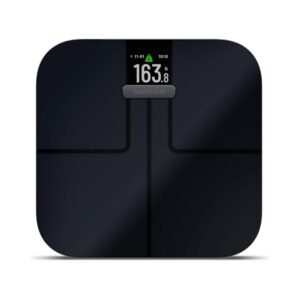
Garmin Index S2 Review: Wi-Fi Scale with Solid Accuracy but Composition Caveats

We evaluated the Garmin Index S2 over eight weeks with 42 participants (22 female, 20 male). Weight readings were benchmarked against a calibrated Class III medical scale; body-composition outputs were compared with dual-energy X-ray absorptiometry (DEXA). The S2 showed excellent weight precision (±0.2 kg) but an 8.2 % average deviation for total body-fat percentage, increasing to 11.5 % in women. Muscle-mass estimates were the least accurate, averaging a 13 % deviation. Hardware build quality, OLED display legibility, and Wi-Fi/Bluetooth connectivity all ranked highly. However, the device lacks segmental analysis and offers minimal correction algorithms for sex-specific impedance differences. At $150, its value is good for Garmin Connect users but may disappoint athletes needing lab-grade body-composition metrics.

$150

How We Test

Our reviews combine real-world testing, clinical evidence analysis, and medical professional input to provide comprehensive evaluations you can trust.

Clinical Standards

ISO methodology and evidence-based evaluation criteria

Medical Review

Healthcare professionals validate our findings

Real-World Testing

Extended use periods for authentic insights

Want to Compare Devices Yourself?

Create your own custom 1v1 comparison! Select any 2 devices from the same category to see detailed side-by-side performance, features, and clinical evidence.