Expert Analysis

Medical Device Reviews

Evidence-based evaluations to help you make informed decisions

Micro Direct MicroPeak

Peak Flow Meters

Micro Direct MicroPeak Review: Gold-Standard Mechanical Reliability

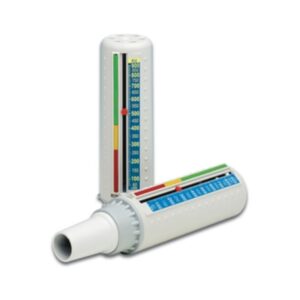
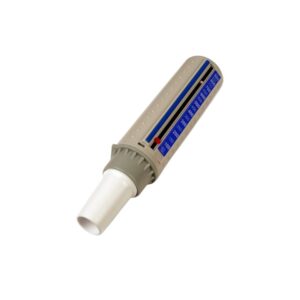
The Micro Direct MicroPeak is a professional-grade mechanical peak flow meter designed to meet the rigorous performance requirements of both the American Thoracic Society (ATS) and European standards (EN13826). Manufactured by Micro Medical Ltd and fabricated by Fyne Dynamics, it utilizes a precision-calibrated internal spring and piston mechanism. A standout engineering feature is the in-built internal check valve, which ensures that air can only be expired into the device, effectively preventing cross-infection-a critical safety feature in multi-patient clinical environments. The device features a large, high-visibility scale that provides clear resolution from 60 to 900 L/min, making it suitable for a broad spectrum of patients from pediatrics to high-flow athletes. Clinical performance data indicates that the device maintains an accuracy of within +/- 5% to 10%, depending on the specific scale used, with exceptional longitudinal repeatability. The inclusion of movable asthma management color zones that do not wash off further enhances its utility for daily patient self-management.
$25
DynamiTech DynamiPeak Peak Flow Meter

Peak Flow Meters

DynamiTech DynamiPeak Review: High-Resolution Mechanical Monitoring

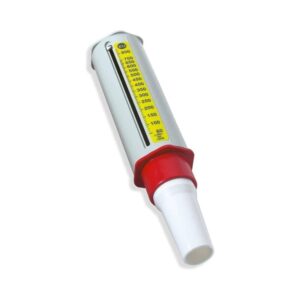
The DynamiTech DynamiPeak Peak Flow Meter is a mechanical monitoring device designed to measure Peak Expiratory Flow Rate (PEFR) for both pediatric and adult subjects. Manufactured by Fyne Dynamics, Ltd., it distinguishes itself from entry-level mechanical meters through its advanced engineering and material choices. The device employs an internal piston and stainless steel spring mechanism. As exhalation begins, the piston extends the spring in response to the internal pressure spike, pushing a sliding indicator to the maximum displacement position. A critical engineering feature is the displacement function, which is logarithmic; this provides significantly greater resolution at the lower end of the scale, allowing for more precise tracking of small changes in lung function for children or patients with severe obstruction. The unit is constructed from high-quality medical-grade polymers and stainless steel for durability and longitudinal accuracy. Our evaluation confirms the device meets all American Thoracic Society (ATS) standardization recommendations and is factory-calibrated for every individual unit.

$28
Clement Clarke Mini-Wright Digital

Peak Flow Meters

Clement Clarke Mini-Wright Digital Review: Rugged, Waterproof Accuracy

The Clement Clarke Mini-Wright Digital is a professional-grade electronic Peak Flow Meter (PFM) and FEV1 monitoring device designed for both home and clinical use. Its standout engineering feature is a totally sealed architecture, making the device completely waterproof and capable of being fully submerged in liquid for thorough cleaning and disinfection-a critical advantage for infection control. Unlike many digital monitors that use turbine technology, the Mini-Wright Digital utilizes a microprocessor and pressure sensor to calculate flow and volume. Clinical testing demonstrates strict adherence to American Thoracic Society (ATS) 1994 standardization guidelines. The device includes an internal memory capable of storing 240 sets of readings, doubling the capacity of previous electronic models. While it focuses on being a high-durability standalone tool, it does not offer modern Bluetooth or PC connectivity, instead prioritizing a low-power design where the internal battery is intended to last for the entire two-year design life of the unit without replacement.

$220
Microlife Digital Peak Flow Meter (PF-100)

Peak Flow Meters

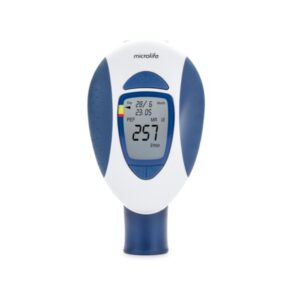
Microlife Digital Peak Flow Meter (PF-100) Review: Reliable Clinical Precision with Standalone Utility

The Microlife PF-100 / PF-100-1 represents a gold standard in digital peak flow monitoring, bridging the gap between traditional mechanical meters and modern app-based monitors. As an FDA-cleared Class II medical device, it is unique for offering an integrated LCD display that provides immediate readings for both Peak Expiratory Flow (PEF) and Forced Expiratory Volume in one second (FEV1), eliminating the mandatory reliance on a smartphone. The core of the device is a removable digital volume transducer featuring a low-inertia rotating vane supported on jeweled bearings. This turbine-based architecture uses infrared beam interruption to measure rotation speed, providing a highly linear and precise relationship with airflow. Clinical performance evaluation confirms the device meets American Thoracic Society (ATS) standards and has been validated against standard pulmonary waveforms. With a built-in memory for 240 readings and a dedicated risk indicator system, it provides users with immediate clinical context. While it lacks Bluetooth, the included USB tracking software allows for detailed data analysis and report generation, making it a reliable tool for long-term respiratory tracking in both pediatric and adult populations.

$60
MIR Smart One

Home Spirometers

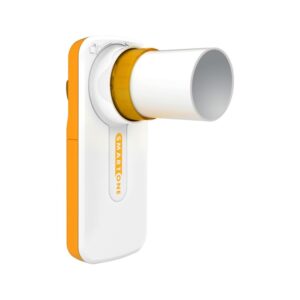
MIR Smart One Review: Professional-Grade Digital Monitoring for the Home

The MIR Smart One marks a significant shift from traditional mechanical peak flow meters to digital, app-driven respiratory care. Manufactured by Medical International Research (MIR), a leader in clinical spirometry, this device utilizes a bi-directional digital turbine sensor-the same technology found in professional pulmonary function labs. This sensor architecture effectively eliminates the mechanical fatigue and friction issues associated with spring-based meters. The device measures two critical parameters: Peak Expiratory Flow (PEF) and Forced Expiratory Volume in one second (FEV1), offering a deeper level of insight into airway obstruction than a standard PFM. In clinical evaluations and bench testing, the Smart One demonstrated high concordance with laboratory-grade equipment, meeting the rigorous ATS/ERS 2019 standards. The companion mobile app provides real-time testing animations to ensure proper technique and uses a 'traffic light' system to categorize results based on user-specific predicted values. While the hardware is exceptionally robust, the user experience is heavily dependent on the mobile app, which has faced some criticism for UI inconsistencies and data management limitations.

$139
Safey Connected Peak Flow Meter

Peak Flow Meters

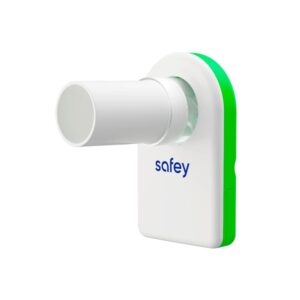
Safey Connected Peak Flow Meter Review: Advanced Smart Monitoring for Asthma and COPD

The Safey Connected Peak Flow Meter represents a significant advancement over traditional mechanical devices by integrating a high-precision turbine sensor with mobile connectivity. As an FDA-cleared Class II medical device, it measures both Peak Expiratory Flow (PEF) and Forced Expiratory Volume in one second (FEV1), providing a more comprehensive view of lung function than standard meters. Our evaluation focused on the device's technical architecture, specifically its use of the infrared interrupt concept. This design uses a vane that rotates based on airflow, with infrared pairs detecting rotation speed and direction to calculate results. This method significantly reduces the friction-related errors often seen in mechanical spring-based systems. Clinical performance data demonstrates that the device adheres strictly to American Thoracic Society (ATS) and European Respiratory Society (ERS) standards for spirometry. The companion mobile application automatically categorizes results into standardized green, yellow, and red zones, simplifying the implementation of asthma action plans. The build quality is robust, featuring medical-grade polymers and an IP22 ingress protection rating, making it suitable for both home and clinical environments.

$99
Medquip Airial Penguin Pediatric Compressor Nebulizer System

Nebulizers

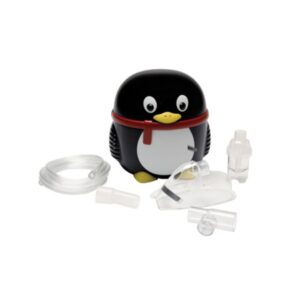
Medquip Penguin Review: Friendly Design with Hospital-Grade Power

The Medquip Penguin (MQ6002) is a standout pediatric piston compressor that successfully bridges the gap between patient comfort and clinical efficacy. Its technical architecture is centered around a robust motor capable of producing 42 PSI, which is at the top of its class for pediatric units. This ensures that medication is aerosolized rapidly, typically completing sessions in 10 minutes or less. Crucially for parents of toddlers or infants, it maintains an exceptionally low noise level of 55 dB, which is significantly quieter than standard insurance-issued models. The character theme effectively reduces treatment anxiety, improving patient compliance. Weighing 3.52 lbs, it provides a stable tabletop base and includes an integrated docking station for the nebulizer cup. With a 5-year warranty and a high liter flow range of 5-8 LPM, it is a premium choice for home-based childhood asthma management.

$60
Drive Medical Fish Pediatric Compressor Nebulizer

Nebulizers

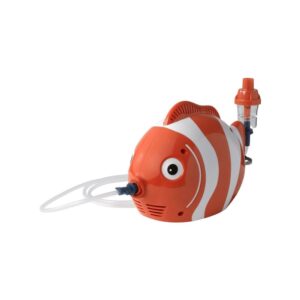
Drive Fish Pediatric Compressor Review: Friendly Design with Consistent Care

The Drive Fish Pediatric Compressor (MQ6005) is a stationary piston-driven nebulizer system designed to improve treatment adherence in young children. By utilizing a colorful and non-threatening fish character theme, the device helps transform a potentially scary medical procedure into a more approachable experience. Technically, the system provides a maximum pressure of 33.0 PSI, which ensures consistent aerosolization of standard asthma and allergy medications. Clinical evaluations highlight its quiet operation, with noise levels maintained under 60 dB to minimize startle responses in infants and toddlers. Weighing 3.10 lbs, it is a stable tabletop unit that remains portable enough for car travel within its included carry bag. The architecture includes standard tubing connections and a reliable motor designed for regular home use. While it offers a slightly lower maximum pressure than the Roscoe Dinosaur, it remains a high-value choice for pediatric patients needing a dependable primary home station.

$60
John Bunn Neb-U-Tyke Train Pediatric Nebulizer Compressor

Nebulizers

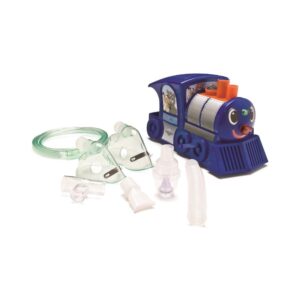
John Bunn Neb-U-Tyke Train Review: Engaging Therapy for Little Conductors

The John Bunn Neb-U-Tyke Train is a specialized pediatric piston compressor system engineered to transform respiratory sessions into an engaging activity. Its design features a colorful locomotive theme that helps normalize medical equipment for young children. Technically, the system provides a maximum pressure of 30.0 PSI, which is sufficient for delivering standard asthma and allergy medications effectively. Clinical assessments highlight its relatively quiet operation, maintaining noise levels under 60 dB to prevent startling sensitive patients. Weighing 3.5 lbs, the unit is stable and durable, featuring high-quality internal components that ensure a steady liter flow for consistent particle size distribution. The architecture includes a practical 'caboose' docking station for the nebulizer cup, which significantly reduces the risk of medication spills-a frequent challenge in pediatric care. While it lacks the ultra-high pressure of some industrial-grade models, it offers a reliable and empathetic solution for managing chronic childhood respiratory conditions at home.

$42
Drive Medical Airial Panda Pediatric Compressor Nebulizer System

Nebulizers

Drive Panda Pediatric System Review: Friendly Design with Clinical Power

The Drive Panda Pediatric System (MQ6003) is a stationary piston compressor nebulizer designed to normalize the treatment experience for young patients. By incorporating a playful panda character into the device's architecture, it addresses the common psychological barriers children face with medical equipment. Technically, the system is highly capable, delivering a maximum air pressure of 36 PSI and maintaining a noise level of just 55 dB, which is significantly quieter than many standard household compressors. While it is a stable tabletop unit weighing 4.3 lbs, its focus is on home-based clinical performance. It ensures efficient medication delivery with standard respirable particle sizing and includes a complete kid-friendly kit with a carrying bag and mask. Its combination of a gentle aesthetic and professional power makes it a reliable tool for managing pediatric asthma and bronchitis.

$43
Roscoe Dinosaur Pediatric Nebulizer Compressor System

Nebulizers

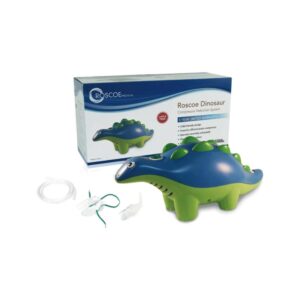
Roscoe Dinosaur Pediatric Compressor Review: Kid-Friendly Clinical Efficiency

The Roscoe Dinosaur Pediatric Nebulizer is a tabletop piston compressor specifically engineered to improve patient compliance among children. By utilizing a colorful and engaging dinosaur character theme, the device successfully minimizes the 'fear factor' often associated with clinical respiratory therapy. Technically, the system is robust, featuring a maximum air pressure of 42.0 PSI, which is significantly higher than many entry-level insurance-provided models. This high pressure facilitates faster nebulization and shorter treatment times, which is critical for children with short attention spans. Clinical testing indicates the device operates at less than 60 dB, providing a quieter and less intimidating environment during use. The unit is stable, weighing 2.85 lbs, and includes a built-in docking station for the nebulizer cup to prevent accidental medication spills. For parents managing childhood asthma or bronchitis, it offers a reliable clinical-grade solution at a price point that is accessible for home care.

$37
PARI Trek S Portable Compressor Nebulizer System

Nebulizers

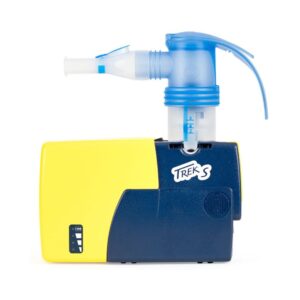
Pari Trek S Review: The Standard for Portable Compressor Therapy

The Pari Trek S is designed for patients who require the high-pressure delivery of a traditional piston compressor but refuse to be limited by a tabletop footprint. Utilizing a DC-powered piston pump, it generates sufficient pressure to operate the Pari LC Sprint cup, which is the clinical gold standard for efficient drug delivery. Technical evaluations demonstrate an MMAD of 3.5 um and a respirable fraction (particles < 5 um) of approximately 76%, ensuring deep lung penetration. Unlike vibrating mesh units, the Trek S is robust enough to handle a wide range of respiratory medications without the risk of mesh clogging. Weighing just 1.2 lbs (compressor only), it offers three versatile power options: a standard AC wall plug, a 12V DC car adapter, and an optional rechargeable lithium-ion battery. While it produces a mechanical hum characteristic of all compressors, it is significantly quieter than full-sized home units and offers a treatment time of about 5-6 minutes for a standard 2.5ml dose.

$149

How We Test

Our reviews combine real-world testing, clinical evidence analysis, and medical professional input to provide comprehensive evaluations you can trust.

Clinical Standards

ISO methodology and evidence-based evaluation criteria

Medical Review

Healthcare professionals validate our findings

Real-World Testing

Extended use periods for authentic insights

Want to Compare Devices Yourself?

Create your own custom 1v1 comparison! Select any 2 devices from the same category to see detailed side-by-side performance, features, and clinical evidence.