The Microlife PF-100 is a robust, clinical-grade digital monitor that excels in measurement accuracy and standalone functionality for comprehensive asthma and COPD management.
Microlife Digital Peak Flow Meter (PF-100) Review: Reliable Clinical Precision with Standalone Utility
The Microlife PF-100 / PF-100-1 represents a gold standard in digital peak flow monitoring, bridging the gap between traditional mechanical meters and modern app-based monitors. As an FDA-cleared Class II medical device, it is unique for offering an integrated LCD display that provides immediate readings for both Peak Expiratory Flow (PEF) and Forced Expiratory Volume in one second (FEV1), eliminating the mandatory reliance on a smartphone. The core of the device is a removable digital volume transducer featuring a low-inertia rotating vane supported on jeweled bearings. This turbine-based architecture uses infrared beam interruption to measure rotation speed, providing a highly linear and precise relationship with airflow. Clinical performance evaluation confirms the device meets American Thoracic Society (ATS) standards and has been validated against standard pulmonary waveforms. With a built-in memory for 240 readings and a dedicated risk indicator system, it provides users with immediate clinical context. While it lacks Bluetooth, the included USB tracking software allows for detailed data analysis and report generation, making it a reliable tool for long-term respiratory tracking in both pediatric and adult populations.
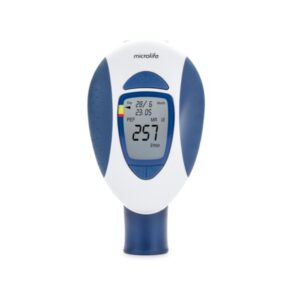
Microlife Digital Peak Flow Meter (PF-100)
Microlife
Our Score
Table of Contents
Clinical Summary
Clinical Performance Metrics
Quantitative assessment based on clinical testing protocols
Measurement Accuracy
Utilizes a clinical-grade turbine sensor with jeweled bearings that minimizes friction, ensuring high precision that meets or exceeds ATS/ERS recommendations for spirometry.
Ease of Use
The standalone design with a large LCD screen makes it exceptionally easy to use daily without needing a phone; however, the lack of Bluetooth means data syncing requires a physical USB connection.
Build Quality
Features a robust microprocessor-based unit and high-quality internal components designed for thousands of uses; the removable mouthpiece is easy to clean and sanitize.
Value for Money
Priced competitively at approximately $59.99, it offers dual-parameter monitoring and clinical accuracy that rivals more expensive Bluetooth-enabled models.
Quick Take
Key findings from our clinical evaluation
+
Strengths
- Measures both PEF and FEV1 for a more complete picture of lung health.
- Large, easy-to-read LCD display allows for standalone use without a smartphone.
- Internal memory automatically stores 240 readings with date and time stamps.
- Removable and washable turbine sensor ensures hygiene and long-term accuracy.
- Meets strict American Thoracic Society (ATS) standards for measurement precision.
−
Limitations
- No Bluetooth connectivity; data transfer requires a USB cable.
- Tracking software interface is less modern than contemporary smartphone apps.
- Larger physical profile compared to ultra-portable Bluetooth-only monitors.
Real-World Usage
Practical considerations for daily operation
Daily Routine Impact
The PF-100 fits seamlessly into daily routines. Users can take measurements and view results instantly on the device, with the 240-reading memory reducing the need to sync data more than once every few weeks.
Learning Curve
Use right out of the box
Maintenance
TRANSDUCER: Transducer and mouthpiece should be removed and cleaned periodically with soap and water or a 1:20 bleach solution; uses AAA batteries which require occasional replacement.
Portability
Very portable; though slightly larger than a smartphone, it is lightweight and compact enough for travel, and its standalone screen makes it ideal for use where phone access is limited.
Manual Use
Excellent; the device is designed to be a complete standalone monitor with an integrated screen and risk indicators, requiring no external apps for daily operation.
Cost & Coverage Analysis
Financial considerations and HSA / FSA eligibility
Pricing Breakdown
HSA/FSA Guidance
BZH classified Class II device. Often covered as durable medical equipment (DME) when prescribed by a physician; eligible for HSA/FSA reimbursement.
Cost Comparison
Offers superior accuracy and features compared to basic mechanical meters for a moderate price increase; significantly cheaper than high-end Bluetooth spirometers.
Patient Suitability
Clinical indications and contraindications
Indicated For
- • Patients who prefer a standalone device that does not require a smartphone to operate.
- • Individuals who need to track both PEF and FEV1 for detailed lung function analysis.
- • Users looking for a medically validated, time-tested digital monitoring solution.
Contraindications
- • Users who want seamless, real-time Bluetooth syncing with mobile apps.
- • Individuals seeking an ultra-slim, pocket-sized profile for discreet carrying.
Age Considerations
Clinically validated for use from pediatric patients to adults. Children under 5 may require supervision to ensure correct technique.
Clinical Efficacy Assessment
Evidence-based evaluation of clinical performance
Peak Flow Accuracy
Measures the precision of Peak Expiratory Flow rate readings.
Tested against ATS Standard Waveforms with high fidelity, ensuring that PEF readings are reliable for identifying the onset of respiratory exacerbations.
Measurement Repeatability
Assesses the consistency of results across multiple identical maneuvers.
The digital turbine architecture eliminates the spring fatigue issues common in mechanical models, providing stable and repeatable readings over years of use.
Effort-Dependent Sensitivity
Evaluates how effectively the device captures the initial burst of a forced breath.
The low-inertia rotating vane reacts instantly to exhalation force, accurately capturing the true peak of the patient's respiratory effort.
Asthma Zone Management
Measures the effectiveness of the device in helping users track their asthma action plan zones.
Includes an on-screen risk indicator that alerts users to potential respiratory incidents based on their current reading relative to their baseline.
Comparative Performance
Ranked #2 of 22 clinically evaluated peak flow meters devices
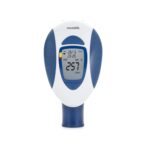
Microlife Digital Peak Flow Meter (PF-100)
Microlife
Microlife Digital Peak Flow Meter (PF-100) Current
Microlife
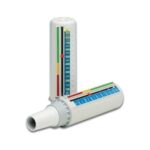
Clinical Context
This device scored 1 points behind the highest-rated device in this category. Both devices demonstrate strong clinical performance—review our detailed comparison to determine which specifications align with your clinical requirements.
Clinical Recommendation
Final assessment and prescribing guidance
The Microlife PF-100 remains one of the most reliable and user-friendly digital monitors on the market. Its combination of clinical accuracy, dual-parameter tracking, and standalone utility makes it a top choice for serious respiratory health monitoring.
Recommend If
You want a clinically accurate digital meter that works perfectly without needing to pair with a phone for every use.
Avoid If
You prioritize modern app features and Bluetooth connectivity over a standalone on-board screen.
Clinical Summary
Composite Score
Recommendation
Price Point
Where to Buy
Verified purchase options and current availability
Microlife USA
Official manufacturer store; 2-year limited warranty included.
Important Information
- • Prices and availability subject to change
- • Some devices may require a prescription
- • HSA / FSA eligibility: Usually Eligible
- • Purchase from authorized retailers for warranty protection
Alternative Devices
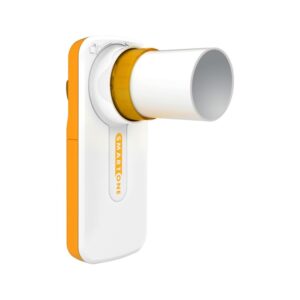
The Microlife PF-100 outclasses mechanical meters in data reliability and parameter tracking. While it lacks the sleek app integration of the MIR Smart One, its built-in display provides superior independence and immediate feedback.