
The lightest and cheapest band in the group, with a 7-day battery and an optional coaching fee.
Fitbit Air Review: The $99.99 Screenless Band
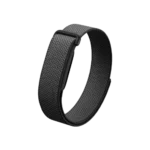
Fitbit Air scores 86/100: App Experience 88, Measurement Accuracy 86, Hardware and Wearability 86, Overall Value 85. Google sells it from $99.99. The module is 5.2 g, water resistance is listed to 50 meters, and battery life is up to 7 days with a fast top-up. Heart rate, SpO2, sleep, and a skin-temperature estimate show in the Google Health app. Google advertises AFib alerts. A three-month Premium trial is in the box. The coach after that costs $9.99 a month or $99.99 a year. The 86 is an editorial score of Google's published specs, not a Medgrade wearing study.
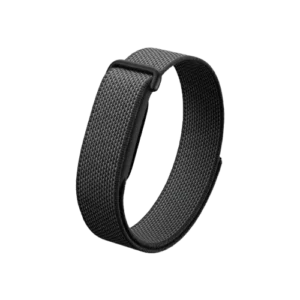
Table of Contents
Clinical Summary
Clinical Performance Metrics
Quantitative assessment based on clinical testing protocols
Measurement Accuracy
The sensor list is the right set for this price: optical heart rate, SpO2, motion, and a skin-temperature estimate, plus Google's advertised AFib alerts. There is no ECG workflow and no published cuff-style blood pressure. The 86 leaves room for the missing training metrics Garmin publishes, and for the fact that Medgrade did not bench the Air against a reference device.
App Experience
Google Health is the interface, on Android and iOS, and Google says the Air can share that app with a Pixel Watch so sleep can move to the band. The three-month Premium trial includes the coach. After that, the coach is $9.99 a month. Day-to-day heart rate, steps, and sleep do not require the fee. There is still no wrist display.
Hardware & Wearability
At 5.2 g for the module, this is the smallest body in the group, and the 50-meter water listing is the deepest. The battery rating of 7 days is the shortest. Five minutes on the charger for a day of use softens that, if you are near a cable. Extra bands are $34.99 and up.
Overall Value
$99.99 is the entry price here, about $50 under the Band XS Pro and about half of CIRQA or Polar Loop. The optional Premium plan changes the math if you keep the coach: $99.99 a year on top of the band. Scored without assuming that subscription, value is still an 85 rather than higher, because 7 days of battery and the thinner training set are what the lower price buys.
Quick Take
Key findings from our clinical evaluation
+
Strengths
- $99.99, a 5.2 g module, and 50 m water resistance.
- Up to 7 days of battery. A 5-minute charge covers about a day.
- Heart rate, SpO2, sleep, and skin temperature in Google Health.
−
Limitations
- Shortest battery here, at 7 days.
- No GPS, no ECG, and no display. Premium starts after the trial.
Real-World Usage
Practical considerations for daily operation
Daily Routine Impact
The Air is built to stay on and stay quiet. Steps, heart rate, and sleep land in Google Health. A haptic motor can serve as a silent alarm. If you also wear a Pixel Watch, Google's setup is to swap the band on at night without a second account.
Learning Curve
Use right out of the box
Maintenance
Charge every few days if you want margin under the 7-day rating. A short charge is useful: Google says five minutes is about a day. Dry the textile band after workouts. The app needs a Google account and a phone that meets Google Health's current OS list.
Portability
The module is easy to pack. Seven days means a charger belongs in the bag for a longer trip, unless you use the 5-minute top-up. The band holds a week of detailed motion if the phone stays in airplane mode.
Manual Use
Without the phone, the Air keeps 7 days of motion detail and 30 days of daily totals. Anything beyond that, including trends and the coach, waits for Google Health.
Cost & Coverage Analysis
Financial considerations and HSA / FSA eligibility
Pricing Breakdown
1-Year Total
$219.87
3-Year Total
$459.63
HSA/FSA Guidance
The $99.99 purchase is a consumer wearable. Insurance coverage is unlikely. HSA or FSA use depends on the plan. The Premium subscription is a software fee and is even less likely to qualify.
Cost Comparison
Fitbit Air is the low purchase price: $99.99 against $149 for the Band XS Pro, $199.99 for CIRQA and Polar Loop, $249 for Hume Band 2.0, and $359 a year for WHOOP Life. Keeping Google Health Premium adds $99.99 a year. The value score of 85 assumes you can stop at the free tracking tier.
Patient Suitability
Clinical indications and contraindications
Indicated For
- • Buyers who want a screenless band under $100.
- • Pixel Watch owners who want a lighter band for sleep.
- • People already using a Google account on Android or iOS.
Contraindications
- • Anyone who wants two weeks between charges.
- • Anyone shopping for an ECG or Garmin-style training status.
- • Anyone who does not want a Google account tied to the data.
Age Considerations
Sold as a consumer wellness tracker. Google's AFib alert, where offered, has age limits on other Fitbit products. This review did not confirm a separate age indication for the Air, so it should not be bought for a child on the strength of that feature.
Clinical Efficacy Assessment
Evidence-based evaluation of clinical performance
Heart rate
Optical heart rate through the day and during a workout.
24/7 optical heart rate in the Google Health app.
Sleep tracking
Sleep duration and stages, including time awake in bed.
Sleep stages and duration. The band can take the night if you also wear a Pixel Watch.
Recovery and HRV
Heart-rate variability and the readiness score built from it.
HRV is recorded. A coaching plan after the trial needs Google Health Premium.
Overnight vitals
SpO2, skin temperature, and any blood-pressure trend.
SpO2 and skin-temperature variation. No blood-pressure trend.
Comparative Performance
Ranked #4 of 6 clinically evaluated screenless fitness trackers devices
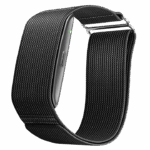
Oxiline Band XS Pro
Oxiline
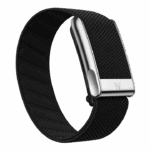
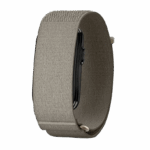
Fitbit Air
Fitbit
You're viewing this
Fitbit Air You're viewing this device
Fitbit
Clinical Context
Our #1-ranked screenless fitness trackers device demonstrated superior performance across key clinical metrics. Compare detailed specifications to make an evidence-based selection.
Clinical Recommendation
Final assessment and prescribing guidance
Fitbit Air scores 86/100. For $99.99 you get the lightest module in the group and a Google Health app that works on both phone platforms. You also get the shortest battery rating, and the coaching layer is a subscription after three months.
Recommend If
You want the lowest purchase price, you already live in Google Health or own a Pixel Watch, and a weekly charge is acceptable.
Avoid If
You want a two-week battery, an ECG, or training metrics without opening a Premium upsell.
Clinical Summary
Composite Score
Recommendation
Price Point
Where to Buy
Verified purchase options and current availability
Google Store
From $99.99. Includes a Performance Loop band and a three-month Google Health Premium trial. Premium renews at $9.99 a month or $99.99 a year if you keep it. A Google account is required.
Important Information
- • Prices and availability subject to change
- • Some devices may require a prescription
- • HSA / FSA eligibility: Not Typically Eligible
- • Purchase from authorized retailers for warranty protection