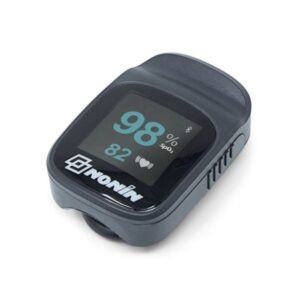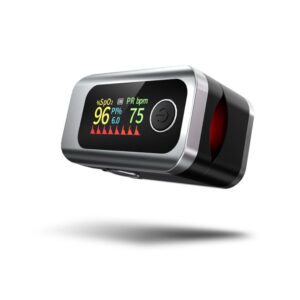
A highly capable connected medical device that automatically streams SpO2 and pulse rate data to mobile apps via Bluetooth, ensuring accurate, long-term health tracking.
Zewa Advanced Fingertip Pulse Oximeter Review: Seamless Bluetooth Connected Care
Model 21600 represents Zewa's definitive foray into the connected care marketplace. Retaining a compact physical footprint and slip-resistant, non-latex silicone padding, this model integrates a Bluetooth Smart (BLE) wireless communication module directly onto the logic board. The device acts as an edge-computing node, programmed to transfer readings automatically to the free Zewa MyHealthConnected app, which is natively compatible with iOS and Android. This connectivity bridges raw data directly to Apple HealthKit and Google Fit. Although early retailer descriptions indicated an LED display, updated technical specifications confirm a high-resolution color OLED matrix that vividly displays the plethysmograph and perfusion index. It delivers FDA 510(k) cleared accuracy, making it an exceptional tool for holistic physiological modeling.
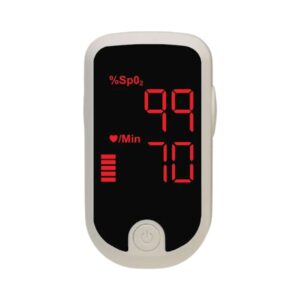
Zewa Advanced Fingertip Pulse Oximeter With LED Screen
Zewa Medical Technology
Our Score
Table of Contents
Clinical Summary
Clinical Performance Metrics
Quantitative assessment based on clinical testing protocols
Accuracy
Provides guaranteed FDA-cleared ±2% accuracy within the standard 70-100% testing range.
Ease of Use
Extremely user-friendly; readings are automatically beamed to your phone via Bluetooth without requiring manual logging.
Hardware Quality
Features a high-resolution color OLED matrix that vividly displays the continuous plethysmographic waveform without exhausting the battery.
Value for Money
Its price range justifies its accessible tier by offering robust digital health integrations that other models completely lack.
Quick Take
Key findings from our clinical evaluation
+
Strengths
- Integrated Bluetooth Smart (BLE) wireless communication
- Automatically syncs data to Zewa MyHealthConnected app
- Bridges data directly to Apple HealthKit and Google Fit
- High-resolution color OLED matrix display
- FDA 510(k) Cleared with strong clinical evidence
−
Limitations
- Pulse rate functional range limit of 50-130 BPM is narrower than some competitors
- Priced slightly higher than non-connected baseline models
- Confusing product naming (labeled as LED but uses an OLED screen)
Real-World Usage
Practical considerations for daily operation
Daily Routine Impact
Effortlessly integrates into a digital health routine. Simply take a reading, and the edge-computing node automatically transmits the encrypted payload directly to your smartphone.
Learning Curve
Master in an hour
Maintenance
Requires replacing the 2 AAA batteries when depleted and gently cleaning the non-latex silicone padding with a medical wipe.
Portability
Weighing just 42.5 g with batteries and measuring a compact 62.0 x 37.0 x 32.0 mm, it is incredibly lightweight and highly portable for travel.
Manual Use
Functions effectively as a standalone spot-checker with its vivid color OLED screen, though its premium value is fully tied to using the Bluetooth synchronization.
Cost & Coverage Analysis
Financial considerations and HSA / FSA eligibility
Pricing Breakdown
HSA/FSA Guidance
May be eligible for FSA/HSA reimbursement. Check with your insurance provider, as connected FDA-cleared devices are increasingly covered under remote patient monitoring programs.
Cost Comparison
At roughly $60, it sits in the premium tier of fingertip oximeters, offering significant OS-level health integration compared to basic $20 drugstore models.
Patient Suitability
Clinical indications and contraindications
Indicated For
- • Data enthusiasts integrating vitals into Apple HealthKit or Google Fit
- • Patients requiring long-term health tracking and physician data sharing
- • Users wanting automated Bluetooth synchronization without manual logging
Contraindications
- • Users who do not own a smartphone or prefer simple, non-connected devices
- • Individuals frequently exhibiting pulse rates outside the 50-130 BPM calibrated range
Age Considerations
Standard fingertip size suitable for most adults and older pediatric patients; features non-latex silicone padding to prevent skin irritation.
Clinical Efficacy Assessment
Evidence-based evaluation of clinical performance
Oxygen Saturation Accuracy
Evaluates the precision of blood oxygen saturation readings.
Verified clinical accuracy of ±2% remains completely valid across the standard 70% to 100% testing range.
Heart Rate Accuracy
Measures the reliability of heart rate monitoring.
Pulse rate limits are strictly calibrated between 50 and 130 BPM under standard specifications, maintaining an accuracy of ±2 BPM.
Low Perfusion Performance
Assesses the ability to capture readings in patients with poor circulation.
Handles typical home use and mild microcirculation barriers well, visually mapping the perfusion index on the display.
Comparative Performance
Ranked #5 of 9 clinically evaluated fingertip pulse oximeters devices
Oxiline Pulse 9S Pro
Oxiline
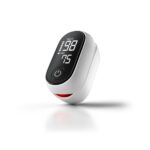
Zewa Advanced Fingertip Pulse Oximeter With LED Screen
Zewa Medical Technology
You're viewing this
Zewa Advanced Fingertip Pulse Oximeter With LED Screen You're viewing this device
Zewa Medical Technology
Clinical Context
Our #1-ranked fingertip pulse oximeters device demonstrated superior performance across key clinical metrics. Compare detailed specifications to make an evidence-based selection.
Clinical Recommendation
Final assessment and prescribing guidance
The Zewa Advanced Fingertip Pulse Oximeter is a top-tier connected medical device. By transforming the oximeter into an edge-computing node that seamlessly integrates with major digital health ecosystems, it provides unparalleled value for chronic tracking.
Recommend If
You want your oxygen and pulse rate readings automatically beamed to your smartphone's health diary for permanent, holistic tracking.
Avoid If
You just want a simple, budget-friendly device for occasional spot-checking and don't care about Bluetooth apps or Apple HealthKit integration.
Clinical Summary
Composite Score
Recommendation
Price Point
Where to Buy
Verified purchase options and current availability
CVS Pharmacy
FSA/HSA eligible; ID.me identity verification required for online procurement
Important Information
- • Prices and availability subject to change
- • Some devices may require a prescription
- • HSA / FSA eligibility: Usually Eligible
- • Purchase from authorized retailers for warranty protection
Alternative Devices
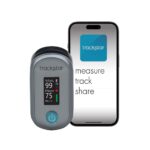
It competes heavily with the Trackstar Smart Pulse Oximeter. While the Trackstar offers 50-slot offline memory, the Zewa Advanced distinguishes itself with robust Apple HealthKit and Google Fit OS-level interoperability.