The premier non-wearable solution for long-term sleep apnea screening and cardiac monitoring, combining medical-grade accuracy with zero user burden.
Withings Sleep Analyzer Review: A Breakthrough in Non-Wearable Clinical Sleep Monitoring
The Withings Sleep Analyzer (marketed as Sleep Rx in the U.S. for clinical applications) represents a shift in home sleep diagnostics by eliminating the need for wearables. Placed discreetly under the mattress, it utilizes advanced pneumatic sensors to measure heart activity via ballistocardiography (BCG), respiratory rate, and body movement, while an embedded microphone identifies snoring and breathing cessation events. Clinical validation studies, including those conducted at Hôpital Béclère, demonstrated that its 'Withings Index' matches gold-standard polysomnography (PSG) with 88% sensitivity and 88.6% specificity for moderate-to-severe sleep apnea (AHI ≥ 15). The device is particularly effective for longitudinal monitoring, as its passive nature ensures high patient adherence over months rather than just a single night. While it lacks the direct brain-wave tracking of EEG-based devices, its ability to provide shareable clinical PDF reports and integrate with smart home environments through IFTTT makes it an exceptionally versatile tool for both patients and clinicians.
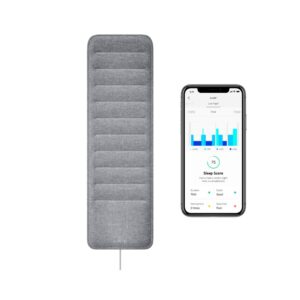
Table of Contents
Clinical Summary
Clinical Performance Metrics
Quantitative assessment based on clinical testing protocols
Diagnostic Accuracy
Medically cleared in the U.S. and EU for sleep apnea detection, showing high sensitivity (88%) for moderate-to-severe cases.
Ease of Use
Offers a true 'set-and-forget' experience with a one-time setup under the mattress and automatic syncing after wake-up.
Wearing Comfort
Maximum comfort score due to its 100% contactless design; there is nothing for the user to wear or charge.
Value for Money
Retails around $170-$200 with no mandatory monthly subscription for core sleep and apnea data.
Quick Take
Key findings from our clinical evaluation
+
Strengths
- FDA-cleared for obstructive sleep apnea (OSA) diagnosis support in adults.
- Completely contactless operation requires zero user maintenance after initial setup.
- Clinically validated heart rate monitoring through ballistocardiography.
- Generates shareable medical PDF reports for direct clinician review.
- FSA and HSA eligible, improving financial accessibility for medical screening.
−
Limitations
- Requires an electrical outlet near the bed and stable Wi-Fi for data sync.
- Limited to monitoring one person per mat; partner movements may occasionally interfere.
- Not indicated for active monitoring or life-threatening situations due to lack of alarms.
Real-World Usage
Practical considerations for daily operation
Daily Routine Impact
Has zero impact on daily or nightly routines as it remains hidden under the mattress; data syncs automatically upon waking.
Learning Curve
Use right out of the box
Maintenance
Occasional outer fabric cover washing; firmware updates are handled wirelessly via the app.
Portability
Low; although foldable, it requires a wall outlet and recalibration if moved to a new mattress.
Manual Use
The device has no physical interface; all data must be accessed through the Withings app or web portal.
Cost & Coverage Analysis
Financial considerations and HSA / FSA eligibility
Pricing Breakdown
HSA/FSA Guidance
In the U.S., it is available by prescription (as Sleep Rx) for clinical sleep management programs.
Cost Comparison
Highly competitive; offers clinical-grade apnea screening at a fraction of the cost of traditional HSAT kits.
Patient Suitability
Clinical indications and contraindications
Indicated For
- • Individuals who find wearing wrist or ring trackers irritating at night.
- • Users with clinical concerns regarding moderate-to-severe sleep apnea.
- • Long-term monitoring of resting heart rate and snoring habits.
Contraindications
- • Users weighing over 350 lbs (weight limit for sensors).
- • Athletes requiring high-resolution heart rate variability (HRV) or body temperature recovery metrics.
Age Considerations
Indicated for use in adults (18+ in EU; 22+ in US for certain clinical features).
Clinical Efficacy Assessment
Evidence-based evaluation of clinical performance
AHI Detection Accuracy
Measures accuracy in identifying Apnea-Hypopnea Index levels.
Clinical studies confirmed 88% sensitivity for AHI ≥ 15 and 86% for AHI ≥ 30.
Sleep Stage Identification
Assesses the accuracy of identifying REM, Light, and Deep sleep states.
Validated for sleep-wake classification with 83% accuracy, though less granular than EEG-based trackers.
Respiratory Event Detection
Evaluates accuracy in detecting individual breathing disturbances.
The snoring algorithm is 94.4% precise, and breathing disturbances are monitored in real-time via pneumatic variations.
In-Lab PSG Correlation
Measures how the device results correlate with in-lab polysomnography.
Validation against manually scored PSG shows high predictive performance (AUC of 0.926 for moderate apnea).
Comparative Performance
Highest-rated device in Home Sleep Tests category
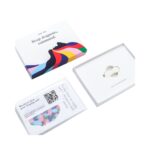
Withings Sleep Analyzer
Withings
Withings Sleep Analyzer Current Top Rated
Withings
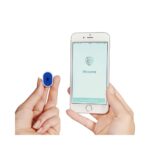
Sunrise Home Sleep Test
Sunrise SA
Highest Clinical Rating
This device achieved the highest overall score among 25 clinically evaluated home sleep tests devices, demonstrating superior performance across key testing protocols and real-world validation metrics.
Clinical Recommendation
Final assessment and prescribing guidance
The Withings Sleep Analyzer is a gold-standard consumer diagnostic for those seeking clinical sleep apnea screening without the discomfort of wearables. Its pneumatic precision and physician-ready reports make it a high-value medical accessory.
Recommend If
You want clinically validated sleep apnea data but refuse to wear anything on your wrist or finger while you sleep.
Avoid If
You need SpO2 blood oxygen readings or want to track athletic recovery metrics like HRV.
Clinical Summary
Composite Score
Recommendation
Price Point
Where to Buy
Verified purchase options and current availability
Withings Official Store
FSA/HSA eligible. [cite: 1230]
Amazon
Standard consumer version; not the Sleep Rx model.
Best Buy
Requires Wi-Fi connection for initial setup and data sync.
Important Information
- • Prices and availability subject to change
- • Some devices may require a prescription
- • HSA / FSA eligibility: Usually Eligible
- • Purchase from authorized retailers for warranty protection
Alternative Devices
Offers significantly higher ease of use than the Oura Ring or SleepImage due to zero wearability, though it lacks oximetry data.