An exceptional pediatric-specific oximeter that abandons standard adult clamp designs in favor of a gentle, anti-pinch hinge to deliver accurate readings without causing distress.
Veridian Healthcare Pediatric Pulse Oximeter Review: Tailored Comfort for Small Digits
Pediatric pulse oximetry requires highly specialized physical hardware to ensure adequate signal acquisition on small digits without causing pain, tissue ischemia, or physical distress. Veridian's Model 11-50Q1 abandons the standard adult clamp architecture, featuring instead a smooth, contoured interior and a modified low-tension spring-hinge that scales down appropriately for child-sized digits. Designed for ultimate portability in pediatric care settings, the device weighs only 1.7 oz with batteries. The digital TFT (Thin-Film-Transistor) display clearly shows illuminated color digits, offering rapid visual confirmation of vital signs. It provides reliable clinical accuracy for both SpO2 and pulse rate in a format that children can tolerate easily.
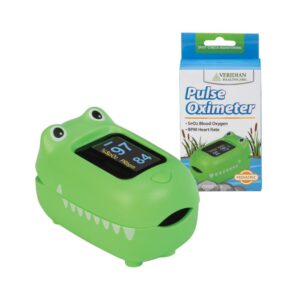
Veridian Healthcare Pediatric Pulse Oximeter
Veridian Healthcare
Our Score
Table of Contents
Clinical Summary
Clinical Performance Metrics
Quantitative assessment based on clinical testing protocols
Accuracy
Provides a reliable ±2% accuracy within the 70% to 100% SpO2 bracket and tracks pulse rate with a highly reliable ±2 BPM tolerance.
Ease of Use
Incredibly easy to apply to a restless child thanks to the anti-pinch hinge, and the auto shut-off feature preserves battery life effortlessly.
Hardware Quality
Features a vivid, multi-color digital TFT display that provides rapid visual confirmation of vitals, housed in an ultra-lightweight 1.7 oz casing.
Value for Money
Priced around $40, it is a highly affordable investment for a specialized pediatric medical device that greatly reduces patient distress.
Quick Take
Key findings from our clinical evaluation
+
Strengths
- Child-friendly smooth internal contouring
- Modified low-tension anti-pinch spring-hinge
- Highly energy-efficient logic board providing 20 hours of continuous runtime
- Compact and ultra-lightweight design weighing only 1.7 oz
- Vivid digital TFT display for rapid visual confirmation
−
Limitations
- No Perfusion Index (PI) display available
- Lacks Bluetooth connectivity or data logging features
- Not suitable for standard adult finger circumferences
Real-World Usage
Practical considerations for daily operation
Daily Routine Impact
Provides quick, tear-free spot-checking for children, making daily vital tracking significantly less stressful for both parents and pediatric patients.
Learning Curve
Use right out of the box
Maintenance
Requires replacing the two AAA batteries after approximately 20 hours of continuous runtime. The internal sensor should be gently wiped with a soft, dry cloth or alcohol prep pad.
Portability
Extremely portable. Measuring a compact 2.3 x 1.5 x 1.4 inches and weighing just 1.7 oz, it easily fits into any diaper bag or first-aid kit.
Manual Use
Operation is exceptionally straightforward. The low-tension hinge makes application easy on small fingers, delivering stabilized results in under 10 seconds. An automatic shut-off protocol triggers after 5 seconds of sensor inactivity.
Cost & Coverage Analysis
Financial considerations and HSA / FSA eligibility
Pricing Breakdown
HSA/FSA Guidance
Often eligible for FSA/HSA reimbursement. Check with your plan administrator for specific details regarding the coverage of pediatric medical tracking devices.
Cost Comparison
At approximately $40, it is priced competitively alongside standard adult oximeters, providing targeted pediatric design features that generic models completely lack.
Patient Suitability
Clinical indications and contraindications
Indicated For
- • Children weighing approximately 22 lbs to 88 lbs (10-40kg)
- • Parents needing a comfortable, stress-free spot-checking device
- • Pediatric care settings requiring high portability and rapid vitals confirmation
Contraindications
- • Adults or individuals with larger finger circumferences
- • Users who require smartphone data synchronization or continuous overnight tracking
Age Considerations
Engineered explicitly for children. It adapts to small digit circumferences without pinching, accommodating user weights from 22 lbs up to 88 lbs.
Clinical Efficacy Assessment
Evidence-based evaluation of clinical performance
Oxygen Saturation Accuracy
Evaluates the precision of blood oxygen saturation readings.
Maintains ±2% accuracy within the 70% to 100% SpO2 threshold, meeting strict clinical testing protocols for pediatric spot-checking.
Heart Rate Accuracy
Measures the reliability of heart rate monitoring.
Dynamically and efficiently tracks pulse rates from 30 to 250 BPM, with a highly reliable ±2 BPM tolerance.
Low Perfusion Performance
Assesses the ability to capture readings in patients with poor circulation.
The device does not display a Perfusion Index (PI) metric, but the specialized contouring helps secure a signal on small capillary beds.
Comparative Performance
Ranked #6 of 9 clinically evaluated fingertip pulse oximeters devices
Oxiline Pulse 9S Pro
Oxiline
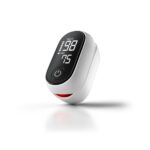
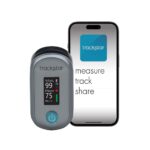
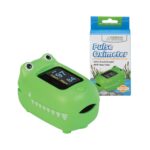
Veridian Healthcare Pediatric Pulse Oximeter
Veridian Healthcare
You're viewing this
Veridian Healthcare Pediatric Pulse Oximeter You're viewing this device
Veridian Healthcare
Clinical Context
Our #1-ranked fingertip pulse oximeters device demonstrated superior performance across key clinical metrics. Compare detailed specifications to make an evidence-based selection.
Clinical Recommendation
Final assessment and prescribing guidance
The Veridian Healthcare Pediatric Pulse Oximeter is an essential tool for parents and pediatricians. By thoughtfully redesigning the hardware to accommodate small digits without squeezing the capillary bed, it ensures high-accuracy readings and tear-free spot-checking.
Recommend If
You need a reliable, comfortable, and accurate spot-checking device specifically designed for a child's smaller fingers.
Avoid If
You are an adult looking for a personal monitor, or you need advanced features like Bluetooth connectivity and long-term data logging.
Clinical Summary
Composite Score
Recommendation
Price Point
Where to Buy
Verified purchase options and current availability
CVS Pharmacy
FSA/HSA eligible; identity verification via ID.me may be required
Important Information
- • Prices and availability subject to change
- • Some devices may require a prescription
- • HSA / FSA eligibility: Usually Eligible
- • Purchase from authorized retailers for warranty protection
Alternative Devices
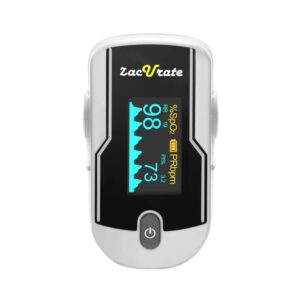
Unlike standard adult oximeters like the Zacurate 500E-B or connected devices like the Trackstar Smart, this model foregoes advanced connectivity and adult sizing in favor of specialized pediatric comfort and a distress-free physical design.