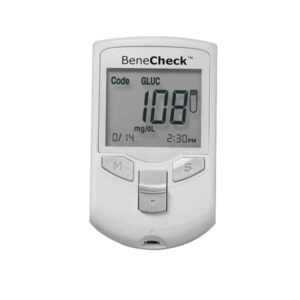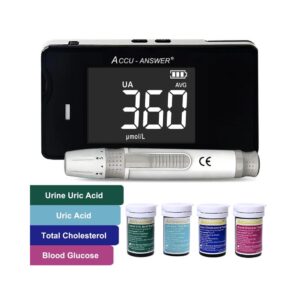
The Q.STEPS Biometer is a proven, no-frills dual-monitoring tool that offers a reliable way to track glucose and cholesterol trends concurrently.
Q.STEPS Biometer G/C Dual Monitoring System Review: Reliable Dual-Parameter Metabolic Tracking
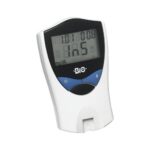
The Q.STEPS Biometer G/C Dual Monitoring System is an established handheld diagnostic tool designed to measure whole blood glucose and total cholesterol levels. It was among the first systems to successfully miniaturize enzymatic reduction-oxidation reactions for cholesterol using silver electrodes. The system utilizes separate, specialized strips for each analyte: a circular spot for cholesterol and a half-circle spot for glucose. Each vial of strips is packaged with a lot-specific EEPROM chip that automatically establishes the calibration curve when inserted into the meter, significantly reducing the risk of manual coding errors. While the device does not provide a full lipid profile, its high-speed detection-delivering glucose results in 15 seconds and cholesterol in 30 seconds-makes it a practical choice for proactive health tracking. Clinical evaluations demonstrate that it achieves an accuracy within 10 to 15 percent of laboratory reference methods, providing a reliable baseline for home users and healthcare professionals in non-traditional settings.
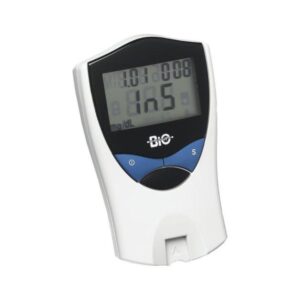
Q.STEPS Biometer Dual Monitoring System
Biomedix, Inc. (Kerma)
Our Score
Table of Contents
Clinical Summary
Clinical Performance Metrics
Quantitative assessment based on clinical testing protocols
Accuracy
Analytical accuracy is benchmarked at plus or minus 10 to 15 percent versus CRMLN reference methods.
Ease of Use
Features a large, high-contrast digital display and automated calibration via lot-specific chips.
Reliability
Includes a dedicated check strip for system validation and demonstrates consistent within-run precision.
Value for Money
Provides a robust dual-parameter solution with reasonable recurring strip costs of approximately $2.50.
Quick Take
Key findings from our clinical evaluation
+
Strengths
- Dual monitoring of glucose and cholesterol in one compact device.
- Fast results: 15 seconds for glucose and 30 seconds for cholesterol.
- Automated calibration via lot-specific EEPROM chips for improved accuracy.
- Large, high-contrast analog-style digital display for easy reading.
- Includes a dedicated check strip for regular system validation.
−
Limitations
- Does not provide a full lipid profile (no HDL, Triglycerides, or LDL calculation).
- Lower precision (±10-15%) compared to professional photometric analyzers.
- Strips must not be refrigerated, which may limit storage options in humid climates.
Real-World Usage
Practical considerations for daily operation
Daily Routine Impact
Fits efficiently into morning routines due to its rapid testing times and ability to check two markers with a single unit.
Learning Curve
Master in an hour
Maintenance
Periodic validation using the provided check strip and ensuring the measuring port is kept free of blood contamination.
Portability
Highly portable handheld unit with a compact carrying case and standard AAA battery operation.
Manual Use
The meter provides a straightforward manual experience with simple result recall for up to 99 tests.
Cost & Coverage Analysis
Financial considerations and HSA / FSA eligibility
Pricing Breakdown
HSA/FSA Guidance
Generally not covered by health insurance but typically eligible for HSA/FSA reimbursement.
Cost Comparison
Priced competitively for a dual-meter system, offering higher reliability than non-regulated generic alternatives.
Patient Suitability
Clinical indications and contraindications
Indicated For
- • Diabetes patients needing frequent cholesterol trend monitoring.
- • Users who prefer simple, high-contrast digital displays.
- • Budget-conscious individuals needing proven electrochemical technology.
Contraindications
- • Users requiring a complete lipid panel (HDL/LDL/TG).
- • Individuals who require smartphone app synchronization for data logging.
Age Considerations
Intended for use in adults; not validated for neonatal testing.
Clinical Efficacy Assessment
Evidence-based evaluation of clinical performance
Metabolic Marker Quantification
The ability to accurately quantify metabolic health markers in whole blood.
Successfully provides quantitative measurements for Total Cholesterol and Glucose with plasma-equivalent results.
Calibration Accuracy
The effectiveness of the system in maintaining calibration across different strip lots.
Lot-specific EEPROM chips ensure the meter is correctly calibrated for every strip lot, minimizing user error.
Comparative Performance
Ranked #17 of 18 clinically evaluated cholesterol test kits devices

Labcorp OnDemand Lipid Panel
Labcorp OnDemand
Everlywell Cholesterol & Lipids Test
Everlywell
Q.STEPS Biometer Dual Monitoring System
Biomedix, Inc. (Kerma)
You're viewing this
Q.STEPS Biometer Dual Monitoring System You're viewing this device
Biomedix, Inc. (Kerma)
Clinical Context
Our #1-ranked cholesterol test kits device demonstrated superior performance across key clinical metrics. Compare detailed specifications to make an evidence-based selection.
Clinical Recommendation
Final assessment and prescribing guidance
The Q.STEPS Biometer is a reliable, established choice for dual-parameter monitoring. While it lacks the breadth of a full lipid panel, its electrochemical speed and robust calibration make it a solid tool for metabolic trend tracking.
Recommend If
You want a simple, proven handheld unit to track your glucose and total cholesterol trends concurrently.
Avoid If
You need a comprehensive lipid profile or modern wireless data management features.
Clinical Summary
Composite Score
Recommendation
Price Point
Where to Buy
Verified purchase options and current availability
GoSupps
International shipping available; ships from United States.
Important Information
- • Prices and availability subject to change
- • Some devices may require a prescription
- • HSA / FSA eligibility: Not Typically Eligible
- • Purchase from authorized retailers for warranty protection
Alternative Devices
It offers a more clinically grounded history than newer generic multi-meters, though it tracks fewer parameters (2 vs 4 or 6).