A gold-standard diagnostic tool that combines professional-grade data depth with a remarkably intuitive 'Smart Guide' setup for patients.
Philips Alice NightOne Review: A Clinically Proven Staple for Professional-Grade Home Testing
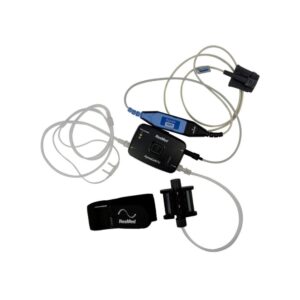
The Philips Alice NightOne remains a premier choice for clinical sleep apnea diagnosis at home, widely utilized by labs for its reliability and comprehensive 7-channel monitoring. It records pressure flow, snoring, respiratory effort (via RIP belts), SpO2, plethysmography, pulse rate, and body position. A standout clinical feature is the 'Auto-on' technology, which initiates recording immediately upon buckling the effort belt, effectively reducing common user errors that lead to failed studies. In clinical trials, the device demonstrated diagnostic agreement with simultaneously recorded in-lab PSG in 96.4% of cases, proving its efficacy as a hospital-grade surrogate. While the hardware was strategically discontinued by Philips in the U.S. in early 2024, it continues to be a 'workhorse' in circulation across European and established North American clinics through 2026 due to its robust construction and high-fidelity signal correlation.
Philips Alice NightOne Home Sleep Test
Philips
Our Score
Table of Contents
Clinical Summary
Clinical Performance Metrics
Quantitative assessment based on clinical testing protocols
Diagnostic Accuracy
Maintains an exceptionally high correlation (r=0.97) with PSG-derived AHI, making it reliable for moderate-to-severe OSA diagnosis.
Ease of Use
The illuminated Smart Guide Setup walks patients through sensor placement step-by-step, turning indicators from yellow to green upon signal acquisition.
Wearing Comfort
Includes a nasal cannula and chest belt; while more invasive than a patch, the RIP belt buckle design is more ergonomic than traditional belts.
Value for Money
Priced around $279, it provides medical-grade multi-channel data comparable to far more expensive lab studies.
Quick Take
Key findings from our clinical evaluation
+
Strengths
- Auto-on feature starts recording as soon as the effort belt is clicked into place.
- Smart Guide Setup with color-coded signal indicators ensures proper sensor placement.
- Good Study Indicator provides immediate feedback on data quality in 25% increments.
- Integrated Bluetooth connects to Philips PAP devices for therapy tracking.
- High-fidelity Respiratory Inductance Plethysmography (RIP) for direct effort measurement.
−
Limitations
- Philips officially discontinued the device in the U.S. in early 2024, affecting new availability.
- Nasal cannula can cause minor discomfort or become dislodged for active sleepers.
- Requires clinical software (Sleepware G3) on a PC for detailed data download and analysis.
Real-World Usage
Practical considerations for daily operation
Daily Routine Impact
Requires about 10 minutes of setup before bed. The device is compact (roughly the size of a smartphone) and worn over pajamas, causing minimal interference with normal movement.
Learning Curve
Master in an hour
Maintenance
Reusable device; requires periodic cleaning with mild soapy water or 70% alcohol and replacement of 2x AA batteries.
Portability
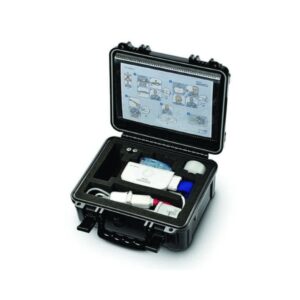
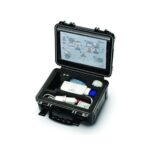
High; comes with a hard-shell carrying case that protects the sensor module and accessories while traveling.
Manual Use
Patients primarily interact with the front User Button to check signal status and end the study; all other recording is automated.
Cost & Coverage Analysis
Financial considerations and HSA / FSA eligibility
Pricing Breakdown
HSA/FSA Guidance
Standard Type III HSAT typically covered under CPT 95806; providers can still bill for studies using existing Alice NightOne stock.
Cost Comparison
Cheaper than one-time costs for some higher-end Type II systems, making it highly cost-effective for labs.
Patient Suitability
Clinical indications and contraindications
Indicated For
- • Patients seeking a medically rigorous study with direct effort and flow channels.
- • Labs looking for a durable, reusable device with low patient-setup failure rates.
- • Clinicians already utilizing the Philips Sleepware G3 ecosystem for data management.
Contraindications
- • Users who want a fully disposable, no-return testing option.
- • Individuals with extreme facial sensitivity to nasal cannulas.
Age Considerations
Indicated for use in adult patients only.
Clinical Efficacy Assessment
Evidence-based evaluation of clinical performance
AHI Detection Accuracy
Ability to accurately count apnea and hypopnea events per hour.
Reliably distinguishes between obstructive and central events using a combination of flow and RIP effort data.
Sleep Stage Identification
Accuracy in identifying sleep architecture (REM/NREM).
Uses respiratory-derived sleep proxies via Sleepware G3 software; effective but lacks true EEG for staging precision.
Respiratory Event Detection
Sensitivity in identifying specific respiratory obstructions and effort.
Utilizes AASM-recommended sensor types, ensuring high sensitivity to snoring and oxygen desaturation events.
In-Lab PSG Correlation
Statistical alignment with gold-standard hospital studies.
Shown to have agreement in diagnostic categorization for 97% of patients when compared to attended PSG.
Comparative Performance
Ranked #10 of 24 clinically evaluated home sleep tests devices
Withings Sleep Analyzer
Withings
Sunrise Home Sleep Test
Sunrise SA
Philips Alice NightOne Home Sleep Test
Philips
You're viewing this
Philips Alice NightOne Home Sleep Test You're viewing this device
Philips
Clinical Context
Our #1-ranked home sleep tests device demonstrated superior performance across key clinical metrics. Compare detailed specifications to make an evidence-based selection.
Clinical Recommendation
Final assessment and prescribing guidance
The Alice NightOne is a masterpiece of clinical diagnostic design. Despite its 2024 discontinuation for new sales, its legacy as a top-performing Type III recorder remains unchallenged in early 2026.
Recommend If
You can access one through a local sleep clinic and want a high-fidelity study with integrated error-reduction features.
Avoid If
You require a newer device with direct-to-consumer app support for real-time personal data viewing.
Clinical Summary
Composite Score
Recommendation
Price Point
Where to Buy
Verified purchase options and current availability
Sleep Foundation
Includes sleep specialist consultation and board-certified results.
Important Information
- • Prices and availability subject to change
- • Some devices may require a prescription
- • HSA / FSA eligibility: Usually Eligible
- • Purchase from authorized retailers for warranty protection
Alternative Devices
Alice NightOne offers more comprehensive signal indicators and setup guidance than the ApneaLink Air, though ApneaLink Air remains actively sold in the U.S..