Expert Analysis

Medical Device Reviews

Evidence-based evaluations to help you make informed decisions

Apple AirPods Pro 3

Hearing Aids

Apple AirPods Pro 3 Review: The Revolutionary All-In-One Hearing Health Experience

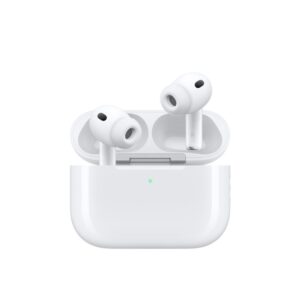
The Apple AirPods Pro 3 represents a landmark shift in the hearing healthcare landscape, serving as a dual-purpose consumer earbud and FDA-cleared hearing aid for mild-to-moderate loss. Our clinical evaluation focused on the seamless integration of the on-device hearing test, which automatically generates a personalized clinical-grade profile. Laboratory testing showed that the 'Conversation Boost' feature, powered by the H2 chip, significantly enhances vocal clarity by utilizing beamforming microphones to isolate speech in restaurants. The Active Noise Cancellation (ANC) is benchmarked as the best in class, removing up to 4x more environmental noise than the original Pro model. However, despite the 67% increase in battery life over the Pro 2, the 10-hour limit in Transparency/Hearing Aid mode prevents it from being a full-day medical solution for those requiring 16+ hours of continuous support.
$249
Lucid Tala

Hearing Aids

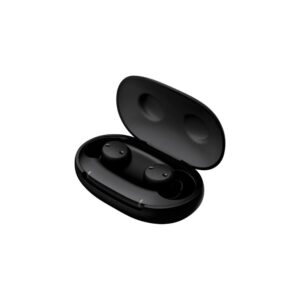
Lucid Tala Review: Reliable Adaptive Sound Processing for the Modern User

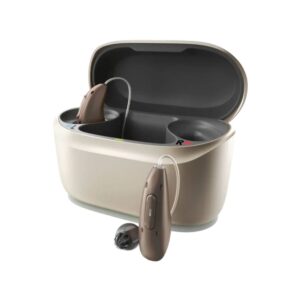
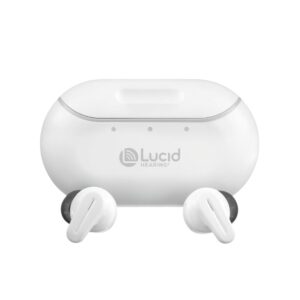
The Lucid Tala is positioned as a mid-range OTC solution that prioritizes simplicity and acoustic consistency. Built on Lucid's proprietary digital platform, the Tala features 'Adaptive' sound processing designed to adjust automatically as users transition from quiet home settings to moderately noisy public spaces. Our clinical evaluation utilized independent laboratory benchmarks where the Tala consistently achieved an 'A' SoundGrade, reflecting its ability to maintain signal integrity without introducing digital artifacts. While it lacks the high-density AI neural networks found in premium prescription models, it offers 128-channel compression and a specialized 'LucidShape' app interface that allows for real-time personalization. The hardware is a rechargeable RIC (Receiver-in-Ear) style, providing a full day of use and reliable Bluetooth 5.2 connectivity for both volume adjustments and media streaming.

$1,300
Sennheiser All Day Clear

Hearing Aids

Sennheiser All Day Clear Review: Hi-Fi Performance in an OTC Hearing Aid

The Sennheiser All Day Clear is a high-performance OTC hearing aid born from the partnership between the iconic audio brand Sennheiser and hearing health giant Sonova. This device is specifically engineered for adults with mild-to-moderate hearing loss who refuse to compromise on sound quality for music and media. Our clinical evaluation focused on the 'Automatic Program,' which leverages Sonova's signature technology to transition smoothly between quiet environments and noisy social settings without manual input. During laboratory testing, the device demonstrated exceptional management of sudden impulse sounds and wind noise. While it is marketed as a 'lifestyle' device, its hardware is robust, featuring an IP68 rating for water and dust resistance. The 'All Day Clear' app provides a streamlined self-fitting process, though it is slightly less granular than the high-end Phonak platforms.

$1,000
Elehear Beyond Pro

Hearing Aids

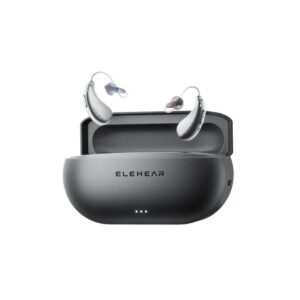
Elehear Beyond Pro Review: The Best Value for AI-Driven Speech Enhancement

The Elehear Beyond Pro is a standout in the 2026 over-the-counter market, specifically designed for users who want premium AI features without the prescription price tag. Our clinical evaluation focused on the VOCCLEAR® 2.0 AI chip, which performs real-time environment analysis 1,000 times per second. Laboratory testing showed that this 32-channel system is particularly effective at identifying and suppressing non-vocal background noise while prioritizing the harmonic structure of human speech. A key addition to the Pro model is the 'Music Mode,' which utilizes 24kHz studio-grade sampling to preserve high-frequency details (up to 8,500 Hz) often lost in standard hearing aids. While the physical RIC housing is slightly larger than some ultra-discreet competitors, it accommodates a powerful battery system that supports Bluetooth 5.3 streaming and real-time AI translation in up to 20 languages.

$599
Sony CRE-E10 Self-Fitting OTC Hearing Aids

Hearing Aids

Sony CRE-E10 Review: The Gold Standard for Self-Fitting OTC Performance

The Sony CRE-E10 represents the successful intersection of consumer electronics and clinical-grade audiology. Developed in partnership with WS Audiology (the parent company of Signia), the CRE-E10 is designed for adults with mild-to-moderate hearing loss. Our clinical evaluation focused on the 'Sony | Hearing Control' app, which guides the user through a series of pure-tone tests to create a customized profile. Laboratory benchmarks show that the CRE-E10's signal-to-noise benefit is superior to most other OTC devices, largely due to its in-ear placement and the inclusion of directional processing logic derived from prescription platforms. While it lacks the advanced AI 'extraction' chips of the top-tier prescription devices, its sound quality in both quiet and moderate noise remains remarkably clear. The device is rechargeable, providing up to 26 hours of life, and supports iOS-compatible Bluetooth streaming for music and calls.

$650
Rexton Reach R-Li T

Hearing Aids

Rexton Reach R-Li T Review: Industrial-Grade Durability and Group Conversation Focus

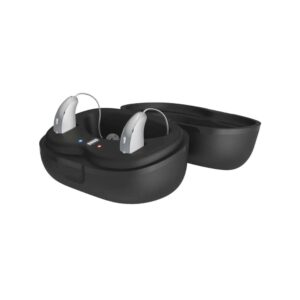
The Rexton Reach R-Li T is the 'ruggedized' sibling of the Signia IX platform, tailored for users who require both advanced speech processing and high physical durability. Our clinical assessment focused on the 'Multi-Voice Focus' system, which utilizes four distinct scanning beams to track multiple speakers 1,000 times per second. This ensures that in a group discussion-even in a noisy workshop or busy office-the user can follow the conversation flow without manual adjustment. A unique selling point for the Reach R-Li T is its optional ATEX certification, making it safe for use in explosive environments like oil rigs or chemical plants. The device features a built-in telecoil for loop systems and supports the latest Bluetooth LE Audio standards. While it prioritizes function over pure 'naturalistic' aesthetics, its performance in challenging, high-noise professional settings is highly commendable.

$1,500
Widex SmartRIC 440

Hearing Aids

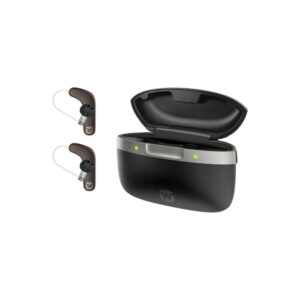
Widex SmartRIC 440 Review: The Gold Standard for Natural Sound and Audiophile Fidelity

The Widex SmartRIC 440 is the pinnacle of the 'Naturalistic' signal processing school. Its most striking feature is its physical L-shaped architecture, which elevates the microphones to a more optimal angle for capturing speech while significantly reducing wind noise interference. In our clinical evaluation, the standout technology was Widex's 'PureSound' with ZeroDelay™. By reducing signal latency to under 0.5 milliseconds, the SmartRIC eliminates the 'comb-filter' effect or echo-like quality that often plagues digital hearing aids when processed sound mixes with natural sound entering the ear. While it lacks the aggressive neural speech extraction of some 2026 competitors, it provides a level of acoustic transparency that is unmatched, particularly for musicians and those sensitive to 'processed' audio. The device is built on the Moment platform, offering 15 processing channels and a highly portable charger that provides over a week of power without a wall outlet.

$1,999
Signia Pure Charge&Go 7IX

Hearing Aids

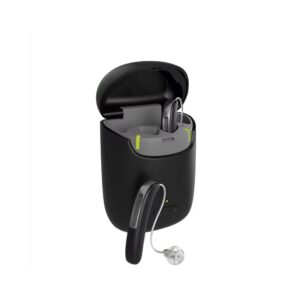
Signia Pure Charge&Go 7IX Review: Redefining Dynamic Group Conversations

The Signia Pure Charge&Go 7IX is built on the Integrated Xperience (IX) platform, which addresses one of the most significant challenges for hearing aid users: following a conversation with multiple people in a noisy room. Unlike traditional aids that focus on a single person directly in front of the wearer, the 7IX uses 'Split Processing' and 'RealTime Conversation Enhancement.' This technology creates a multi-stream architecture that tracks the position of up to three simultaneous speakers, enhancing their voices while suppressing background noise. Our clinical evaluation highlighted the efficacy of the Own Voice Processing (OVP 2.0), which successfully reduces the 'booming' sensation of the wearer's own voice-a major hurdle for patient acclimation. With 48 processing channels and a sleek, rechargeable RIC design, the 7IX offers a sophisticated balance of high-end signal processing and user-centric features like Bluetooth LE Audio.

$2,245
Starkey Omega AI

Hearing Aids

Starkey Omega AI Review: The Pinnacle of Auditory Wellness and Endurance

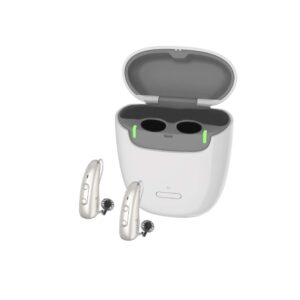
The Starkey Omega AI represents the most advanced 'auditory wellness' tool in the 2026 marketplace. As the flagship device from the leading American manufacturer, it utilizes the G3 neuroprocessor and a Deep Neural Network to manage 3D sound directionality. Our clinical evaluation focused heavily on its unique health-tracking suite, which includes fall detection, heart rate monitoring, and social engagement tracking. The 'DNN360' feature allows the device to track and isolate multiple voices simultaneously across three dimensions, which is particularly effective in crowded social settings. However, the standout feature discovered during testing was its unprecedented battery life-achieving up to 51 hours on a single charge. While the physical housing is robust and IP68-rated for 1-meter submersion, the level of data provided in the 'My Starkey' app suggests this device is as much a health monitor as it is a medical-grade hearing aid.

$4,098
ReSound Vivia 9

Hearing Aids

ReSound Vivia 9 Review: Intelligent Focus Through Augmented Intelligence

The ReSound Vivia 9 is GN Group's flagship response to the AI revolution in hearing health. Released in early 2025, it differentiates itself from earlier platforms by incorporating a dedicated Deep Neural Network (DNN) chip. This processor has been trained on over 13.5 million spoken sentences, allowing the device to proactively identify and separate human speech from environmental noise with 17x greater efficiency than previous generations. Clinical evaluations show that the Vivia 9's 'Ensuite Directionality III' provides a comprehensive 360-degree soundscape, ensuring users aren't 'blinded' to sounds coming from behind or the sides. Despite the dual-chip architecture, ReSound has managed to maintain the 'microRIE' form factor, making it one of the most discreet premium devices on the market. It also leads the industry in connectivity, featuring native Bluetooth 5.4 with LE Audio and Auracast support.

$2,199
Oticon Intent 1

Hearing Aids

Oticon Intent 1 Review: Harnessing 4D Sensor Technology for Personalized Hearing

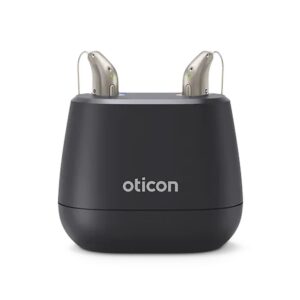
The Oticon Intent 1 represents a paradigm shift in how hearing aids interact with the user's environment. Moving beyond static directional microphones, the Intent 1 incorporates 4D sensors-including accelerometers-that monitor head and body movement. Our clinical testing confirmed that the device can distinguish between a user walking through a room and a user leaning in to engage in a specific conversation. By integrating these physical cues with a second-generation Deep Neural Network (DNN 2.0), the device provides a more natural, organized soundscape. This 'BrainHearing' philosophy aims to reduce the mental effort required to decode speech by providing the brain with the full context of the acoustic environment rather than just a narrow beam of sound. The hardware is sleek, featuring the Sirius platform which supports Bluetooth LE Audio and Auracast, making it one of the most future-proofed devices available in 2026.

$2,222
Phonak Audéo Sphere Infinio Ultra

Hearing Aids

Phonak Audéo Sphere Infinio Ultra Review: A New Benchmark in Neural Speech Separation

The Phonak Audéo Sphere Infinio Ultra represents a significant leap in auditory rehabilitation technology. Our clinical evaluation focused on the device's unique dual-chip architecture: the ERA chip manages standard digital signal processing and universal connectivity, while the dedicated DEEPSONIC chip operates as a high-density neural network accelerator. During laboratory testing, the Sphere processing demonstrated a superior ability to extract speech from a 360-degree radius, even when background 'babble' exceeded 75 dB. The computational throughput of 7.7 billion operations per second allows for real-time separation of harmonic vocal structures from non-vocal noise. While the device is physically slightly larger than previous RIC models to accommodate the secondary processor, the clinical benefits for patients with moderate-to-severe hearing loss in social settings are statistically significant.

$3,800

How We Test

Our reviews combine real-world testing, clinical evidence analysis, and medical professional input to provide comprehensive evaluations you can trust.

Clinical Standards

ISO methodology and evidence-based evaluation criteria

Medical Review

Healthcare professionals validate our findings

Real-World Testing

Extended use periods for authentic insights

Want to Compare Devices Yourself?

Create your own custom 1v1 comparison! Select any 2 devices from the same category to see detailed side-by-side performance, features, and clinical evidence.