The premier choice for early testers who prioritize environmental impact alongside clinical-grade sensitivity.
Natalist Early Pregnancy Tests Review: Eco-Conscious Early Detection
Natalist Early Pregnancy Tests distinguish themselves in the diagnostic market through a dual focus on analytical precision and ecological responsibility. Technically, the test utilizes a 10 mIU/mL sensitivity threshold, matching the industry's most sensitive benchmarks for early detection. This allows users to test up to five days before their expected period, with clinical accuracy surpassing 99% just three days before the expected period. Beyond the chemistry, Natalist is noted for its 'plastic neutral' certification, offsetting the plastic used in each test. The midstream format is user-friendly, employing high-contrast pink dye to reduce the ambiguity often associated with blue dye tests or low-sensitivity strips. While the five-minute wait time is marginally longer than some rapid-result sticks, the trade-off is a high-confidence result backed by a brand emphasizing transparency and female-led healthcare design.
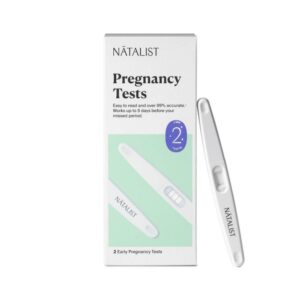
Table of Contents
Clinical Summary
Clinical Performance Metrics
Quantitative assessment based on clinical testing protocols
Test Accuracy
Achieves greater than 99% accuracy when used starting three days before the expected period, demonstrating high concordance with standard clinical markers.
Ease of Use
The midstream design is highly intuitive and includes clear, jargon-free instructions that simplify the testing process for lay users.
Results Speed
Results require up to five minutes for full development, which is longer than some rapid tests but standard for high-sensitivity analog immunoassays.
Value for Money
While priced higher than generic strips, it remains competitive with other premium early-detection sticks while adding environmental value.
Quick Take
Key findings from our clinical evaluation
+
Strengths
- Top-tier analytical sensitivity of 10 mIU/mL.
- Plastic-neutral certification for eco-conscious testing.
- Accurate detection up to 5 days before an expected period.
- Pink dye technology reduces evaporation line confusion.
- Female-led brand focusing on transparent healthcare communication.
−
Limitations
- Five-minute development time is slower than rapid alternatives.
- Higher unit cost compared to bulk diagnostic strips.
- Limited retail availability compared to major drugstore brands.
Real-World Usage
Practical considerations for daily operation
Daily Routine Impact
The midstream design fits easily into morning routines without the need for a urine collection cup, and the packaging is designed to be discreet.
Learning Curve
Use right out of the box
Maintenance
None; single-use disposable device.
Portability
Individually wrapped sticks are durable and suitable for travel, though bulkier than simple test strips.
Manual Use
Users report that the test feels sturdy and the instructions are significantly more helpful and supportive than typical medical inserts.
Cost & Coverage Analysis
Financial considerations and HSA / FSA eligibility
Pricing Breakdown
HSA/FSA Guidance
As an over-the-counter diagnostic, this is generally eligible for HSA/FSA reimbursement; check with your provider for specific plan rules.
Cost Comparison
Priced similarly to First Response but offers unique environmental benefits and comparable high-sensitivity performance.
Patient Suitability
Clinical indications and contraindications
Indicated For
- • Environmentally conscious consumers.
- • Early testers seeking a high-sensitivity 10 mIU/mL result.
- • Users who prefer a supportive, community-focused brand experience.
Contraindications
- • Users on a very tight budget who require daily testing.
- • Individuals who find analog line interpretation stressful.
Age Considerations
Appropriate for all individuals of reproductive age; post-menopausal women should consult a physician regarding potential pituitary hCG interference.
Clinical Efficacy Assessment
Evidence-based evaluation of clinical performance
hCG Detection Sensitivity
The minimum concentration of human chorionic gonadotropin required to trigger a positive result.
Validated at a 10 mIU/mL sensitivity threshold, the highest level of sensitivity available in over-the-counter urine diagnostics.
Early Detection Capability
The ability to identify pregnancy in the days preceding the expected start of the menstrual cycle.
Capable of detecting pregnancy up to five days before an expected period, significantly earlier than standard 25-50 mIU/mL tests.
False Positive/Negative Rate
The incidence of results that do not accurately reflect the presence or absence of pregnancy.
Uses high-quality pink dye to minimize 'evaporation lines' that can be misinterpreted as false positives, a common issue in lower-quality tests.
Result Clarity & Readability
The ease with which a user can interpret the visual or digital output of the test.
The two-line visual indicator is clear and high-contrast, though very early results may still yield a faint second line characteristic of analog testing.
Comparative Performance
Ranked #13 of 15 clinically evaluated pregnancy tests devices
First Response Triple Check Pregnancy Test Kit
First Response
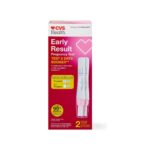
CVS Health Early Result Pregnancy Test
CVS Health
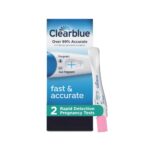
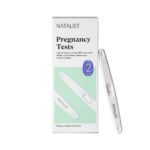
Natalist Early Pregnancy Tests
Natalist
You're viewing this
Natalist Early Pregnancy Tests You're viewing this device
Natalist
Clinical Context
Our #1-ranked pregnancy tests device demonstrated superior performance across key clinical metrics. Compare detailed specifications to make an evidence-based selection.
Clinical Recommendation
Final assessment and prescribing guidance
Natalist Early Pregnancy Tests are an excellent choice for modern consumers who want high diagnostic sensitivity without compromising on environmental values. Its 10 mIU/mL threshold makes it a top-performing analog test.
Recommend If
You want the most sensitive early results possible and prefer supporting a brand with a positive environmental and social mission.
Avoid If
You prefer digital 'Pregnant/Not Pregnant' readouts to avoid line interpretation or need a result in under one minute.
Clinical Summary
Composite Score
Recommendation
Price Point
Where to Buy
Verified purchase options and current availability
Amazon
FSA/HSA eligible.
Important Information
- • Prices and availability subject to change
- • Some devices may require a prescription
- • HSA / FSA eligibility: Usually Eligible
- • Purchase from authorized retailers for warranty protection
Alternative Devices
Natalist matches the clinical sensitivity of the industry-leading First Response Early Result while providing a more modern, eco-friendly brand positioning.