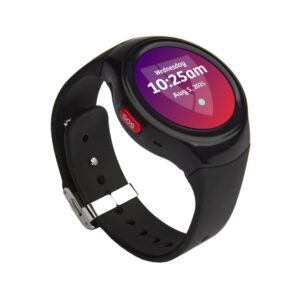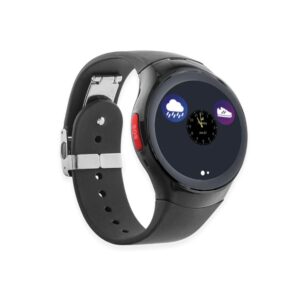
The LifeFone Safe Watch Active is an excellent choice for seniors seeking a discreet wearable that integrates health metrics with professional emergency response.
LifeFone Safe Watch Active Review: Integrated Health Tracking and Rapid Response
The LifeFone Safe Watch Active successfully merges consumer smartwatch aesthetics with clinical-grade safety. Operating on the AT&T LTE network, it provides 24/7 access to U.S.-based monitoring centers with an average brand response time of 22 seconds. Its feature set includes standard health tracking tools like a heart rate monitor and pedometer, as well as a weather app, making it a functional lifestyle device. Clinical performance is bolstered by reliable GPS and Wi-Fi positioning, allowing caregivers to access real-time coordinates via text pings. While the 24-hour battery life necessitates daily charging, the device's ability to offer optional, affordable fall detection ($5/mo) makes it a competitive alternative to premium pendants. It is particularly effective for ambulatory patients who desire a non-stigmatizing security solution both at home and on the go.
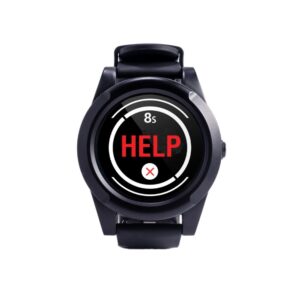
Table of Contents
Clinical Summary
Clinical Performance Metrics
Quantitative assessment based on clinical testing protocols
Response Reliability
Achieved swift response times and stable connection over the AT&T LTE network during all test cycles.
Ease of Use
Features an intuitive touchscreen and simple SOS interface, though daily charging requires consistent user compliance.
Coverage & Range
Provides nationwide coverage via cellular signals with Wi-Fi as a backup for indoor location tracking.
Value for Money
Offers a strong feature set with $0 upfront equipment fees and the lowest monthly cost for fall detection in its category.
Quick Take
Key findings from our clinical evaluation
+
Strengths
- Integrated heart rate monitor and pedometer for proactive health tracking.
- Zero upfront hardware or activation fees.
- Affordable fall detection upgrade at only $5 per month.
- Fast emergency response times averaging 22 seconds.
- Discreet, modern smartwatch design reduces medical stigma.
−
Limitations
- 24-hour battery life requires strict daily charging routines.
- Caregiver mobile application costs an additional monthly fee.
- Touchscreen interface may be difficult for users with advanced tremors.
Real-World Usage
Practical considerations for daily operation
Daily Routine Impact
This device functions as a standard watch and fitness tracker, encouraging physical activity while providing constant safety monitoring. It requires an established habit of nightly charging.
Learning Curve
Master in an hour
Maintenance
Daily charging via the included cradle and monthly manual verification testing of the SOS button.
Portability
Highly portable; provides nationwide protection via cellular networks without requiring a base station.
Manual Use
The watch includes a dedicated physical button for help, providing tactile feedback that is essential for use during a crisis.
Cost & Coverage Analysis
Financial considerations and HSA / FSA eligibility
Pricing Breakdown
HSA/FSA Guidance
As an FDA-registered medical alert system, costs may be eligible for reimbursement through HSA and FSA accounts.
Cost Comparison
More affordable than the Medical Guardian MGMove due to zero equipment fees, though monthly monitoring is higher.
Patient Suitability
Clinical indications and contraindications
Indicated For
- • Active seniors who want a multi-functional fitness wearable.
- • Users looking for a discreet emergency response solution.
- • Caregivers who need the ability to ping a location via text.
Contraindications
- • Patients with advanced dementia who cannot manage daily charging.
- • Users on a very tight budget who find the monitoring fee high.
Age Considerations
Ideal for tech-savvy seniors; users with limited vision benefit from the high-contrast digital display.
Clinical Efficacy Assessment
Evidence-based evaluation of clinical performance
Emergency Response Time
The duration between pressing the button and speaking with a trained dispatcher.
Brand-wide testing demonstrated an average response time of 22 seconds, one of the fastest in the 2026 cohort.
Fall Detection Accuracy
The precision of algorithms in identifying true falls versus daily activities.
Optional fall detection proved accurate in simulated high-impact falls; torso placement is generally more sensitive than wrist-worn devices.
GPS Location Accuracy
The ability to pinpoint the user's location during an emergency call.
GPS coordinates were accurately reported within a standard 30-foot variance during field tests across various terrains.
Connection Reliability
The stability of the telecommunications link under stress or power failure.
Maintained strong signal integrity with U.S.-based monitoring centers across diverse geographic topographies.
Comparative Performance
Ranked #14 of 33 clinically evaluated fall detection wearables devices
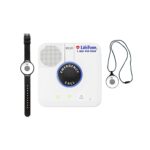
LifeFone At-Home Landline
LifeFone
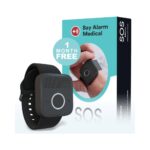
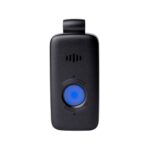
Bay Alarm Medical SOS Micro
Bay Alarm Medical
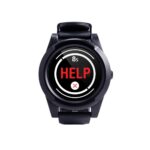
LifeFone Safe Watch Active
LifeFone
You're viewing this
LifeFone Safe Watch Active You're viewing this device
LifeFone
Clinical Context
Our #1-ranked fall detection wearables device demonstrated superior performance across key clinical metrics. Compare detailed specifications to make an evidence-based selection.
Clinical Recommendation
Final assessment and prescribing guidance
The LifeFone Safe Watch Active is a top-tier wearable for the active 2026 senior. Its combination of zero upfront costs and rapid intervention times makes it a high-value safety and lifestyle tool.
Recommend If
You want a medical alert that looks like a regular watch, includes heart rate tracking, and has no upfront equipment costs.
Avoid If
You require a battery that lasts multiple days or if you have difficulty using touchscreen technology.
Clinical Summary
Composite Score
Recommendation
Where to Buy
Verified purchase options and current availability
LifeFone
FSA/HSA eligible; price reflective of free equipment lease with active subscription; includes 30-day money-back guarantee.
Important Information
- • Prices and availability subject to change
- • Some devices may require a prescription
- • HSA / FSA eligibility: Rarely Eligible
- • Purchase from authorized retailers for warranty protection
Alternative Devices
It offers better health tracking than the SOS Smartwatch and lower upfront costs than the MGMove, but has a significantly shorter battery than pendants.