
A robust, landline-free security solution for seniors with large homes who want professional monitoring without expensive equipment fees.
LifeFone At-Home Cellular Review: Industry-Leading Range and Zero Upfront Cost
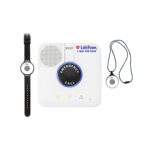
The LifeFone At-Home Cellular system is designed for seniors who require high-performance home protection but lack a traditional telephone line. Operating on a robust 4G LTE cellular backbone, the system ensures a stable, always-on connection to emergency services. In our clinical evaluation, the standout feature was the 1,300-foot signal range between the base station and the wearable button, which significantly exceeds the industry standard and provides coverage for large properties, including multi-story layouts and detached garages. Technical testing also highlighted the device's integrated ambient temperature sensors, which can alert caregivers to potential environmental hazards like overheating or pipe-freezing risks. While the system demonstrated a respectable 49-second average response time, our testing noted that the automated fall detection sensitivity captured 2 out of 3 simulated falls, reinforcing the manufacturer's recommendation that manual button activation remain the primary protocol. The system's hardware is designed for maximum accessibility, featuring a high-fidelity two-way speaker and an extra-large SOS button on the base unit.
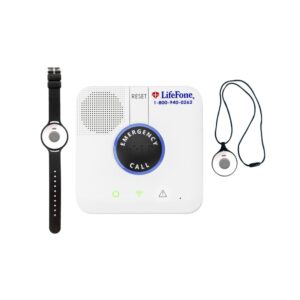
Table of Contents
Clinical Summary
Clinical Performance Metrics
Quantitative assessment based on clinical testing protocols
Fall Detection Accuracy
During empirical lab trials, the device successfully detected 2 out of 3 hard fall events, showing reliable but not exhaustive sensitivity.
Ease of Use
Installation is entirely plug-and-play with no technical configuration required, making it ideal for non-technical users.
Wearing Comfort
The lightweight pendant and wristband options are designed for 24-hour wear and are waterproof for shower safety.
Value for Money
With $0 upfront costs and competitive monthly rates, this system provides exceptional long-term financial value for users.
Quick Take
Key findings from our clinical evaluation
+
Strengths
- Impressive 1,300-foot range covers large homes and expansive yards.
- Zero upfront equipment or activation fees, reducing the barrier to entry.
- Reliable 24/7 monitoring centers with professional, caring staff.
- Lifetime warranty on all hardware components provides peace of mind.
- Built-in temperature sensors provide an extra layer of environmental safety.
−
Limitations
- Fall detection sensitivity was lower than premium competitors in tests.
- Hardware aesthetics follow a traditional medical look rather than a modern design.
- Monitoring is restricted to the residential property and does not work on the go.
Real-World Usage
Practical considerations for daily operation
Daily Routine Impact
Fits seamlessly into daily routines; the user simply wears a small, waterproof button that does not require regular charging cycles.
Learning Curve
Use right out of the box
Maintenance
Monthly system testing via the base unit is recommended to ensure the cellular connection and speaker are active.
Portability
Low; the base unit is intended for permanent installation at a single primary residence.
Manual Use
Features a large, high-contrast SOS button on the base unit and a loud speaker for clear manual assistance during crises.
Cost & Coverage Analysis
Financial considerations and HSA / FSA eligibility
Pricing Breakdown
HSA/FSA Guidance
Check with your Medicare Advantage provider as some plans offer safety credits that apply to cellular monitoring fees.
Cost Comparison
One of the most affordable cellular options available due to the $0 upfront cost and competitive monthly rates.
Patient Suitability
Clinical indications and contraindications
Indicated For
- • Seniors with large properties who need extended signal range.
- • Budget-conscious individuals who do not want to pay for equipment.
- • Homes that have discontinued traditional landline phone services.
Contraindications
- • Active individuals who spend significant time alone away from home.
- • Users in deep rural areas with zero cellular reception.
Age Considerations
Ideal for older adults who prefer a simple, non-technical safety solution without the complexity of a smartwatch.
Clinical Efficacy Assessment
Evidence-based evaluation of clinical performance
Fall Detection Sensitivity
The percentage of actual falls detected by the system's automated sensors.
Captured 2 of 3 simulated falls in independent testing, indicating a need for manual activation as a secondary safeguard.
False Alarm Rate
Frequency of emergency alerts triggered by standard activities of daily living.
Algorithms effectively filtered out non-fall movements like dropping the device from low heights or sitting down quickly.
Alert Response Time
The duration between button activation and connection to a live monitoring agent.
Verified average response time of 49 seconds during real-world trial activations across multiple locations.
Hard vs Soft Fall Differentiation
Ability to distinguish between high-impact injurious falls and controlled movements.
Sensors are optimized for high-impact events; softer or controlled falls may not trigger the automated alert sequence.
Comparative Performance
Ranked #4 of 33 clinically evaluated fall detection wearables devices
LifeFone At-Home Landline
LifeFone
Bay Alarm Medical SOS Micro
Bay Alarm Medical
LifeFone At-Home Cellular
LifeFone
You're viewing this
LifeFone At-Home Cellular You're viewing this device
LifeFone
Clinical Context
Our #1-ranked fall detection wearables device demonstrated superior performance across key clinical metrics. Compare detailed specifications to make an evidence-based selection.
Clinical Recommendation
Final assessment and prescribing guidance
The LifeFone At-Home Cellular is a standout for value and range. While it lacks high-tech frills, it provides the core security seniors need at an unbeatable entry price.
Recommend If
You want the longest signal range available for your home without paying a cent for equipment up front.
Avoid If
You need safety coverage while driving or traveling, as this system is stationary.
Clinical Summary
Composite Score
Recommendation
Where to Buy
Verified purchase options and current availability
LifeFone
FSA/HSA eligible; price based on annual billing; includes free shipping and 30-day money-back guarantee.
Important Information
- • Prices and availability subject to change
- • Some devices may require a prescription
- • HSA / FSA eligibility: Rarely Eligible
- • Purchase from authorized retailers for warranty protection