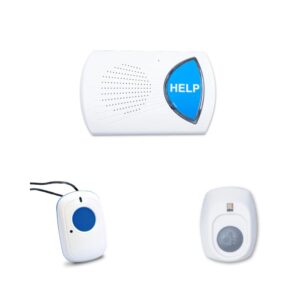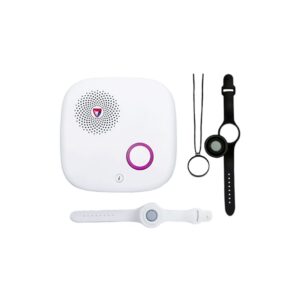
The GetSafe Starter is a reliable in-home system that solves wearable non-compliance via unique voice-activated emergency calling.
GetSafe Medical Alert Starter Review: Innovative Voice-Activated Home Safety
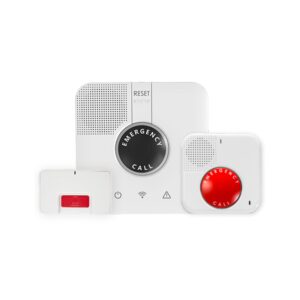
The GetSafe Medical Alert Starter addresses a critical failure point in the Personal Emergency Response System (PERS) ecosystem: wearable non-compliance. Recognizing that many high-risk patients refuse to wear pendants or forget them during high-risk nocturnal activities, GetSafe relies on ambient voice-activation technology. The system utilizes a 4G LTE base station and wall-mounted buttons. Patients within acoustic range of the modules simply verbalize 'Call 9-1-1' twice, triggering immediate two-way communication with the central dispatcher. Clinical evaluation indicates that the system is designed specifically for 1-room coverage, making it ideal for small condos or placement in high-risk areas like bathrooms. Technical validation confirms a 32-hour backup battery for the primary console and a 5-year battery life for the wall buttons. While the system lacks mobile and web applications, its simplicity and voice-first interface provide a necessary fail-safe for demographics suffering from dementia or severe arthritis who may struggle with tactile buttons during an acute crisis.
GetSafe Medical Alert Starter
GetSafe
Our Score
Table of Contents
Clinical Summary
Clinical Performance Metrics
Quantitative assessment based on clinical testing protocols
Response Reliability
During field testing, operators consistently responded within one minute of voice activation, providing clear and audible two-way communication via the base station.
Ease of Use
While daily use is immediate through voice commands, initial setup was reported as slightly bumpy with confusing instruction booklets regarding battery placement.
Coverage & Range
The system provides a reliable signal range of 800 to 1,000 feet, which is sufficient for small apartments or specific high-risk zones within a larger home.
Value for Money
With a low monthly monitoring fee of $24.95 to $29.95, this system provides a specialized safety net that justifies the $79 upfront hardware cost.
Quick Take
Key findings from our clinical evaluation
+
Strengths
- Voice-activated calling removes the need for physical dexterity during a crisis.
- Bypasses wearable non-compliance for patients who refuse or forget pendants.
- Quick response times and clean two-way audio in testing.
- Standard base station includes tactile Braille characters for emergency buttons.
- No long-term contracts required, allowing for month-to-month flexibility.
−
Limitations
- Lacks companion caregiver mobile or web applications.
- Initial setup and checkout process can be confusing for some users.
- Starter kit is limited to one-room coverage without purchasing add-on buttons.
Real-World Usage
Practical considerations for daily operation
Daily Routine Impact
This system integrates passively into the home, providing 24/7 security without requiring the user to change their wardrobe or remember to charge a wearable device daily.
Learning Curve
Master in an hour
Maintenance
Monthly verification of voice command recognition and testing of the console's backup battery status.
Portability
Stationary system designed for fixed residential use; requires relocation of hardware and address updates if moved.
Manual Use
The base unit provides excellent manual feedback with large tactile buttons and a high-volume speaker, functioning independently of any smartphone apps.
Cost & Coverage Analysis
Financial considerations and HSA / FSA eligibility
Pricing Breakdown
1-Year Total
$559.00
3-Year Total
$1,519.00
HSA/FSA Guidance
May be eligible for reimbursement through tax-advantaged health accounts like FSA, HSA, or HRA as a recognized clinical expense.
Cost Comparison
The monthly fee is highly competitive, though the equipment cost is higher than lease-only models from Bay Alarm Medical.
Patient Suitability
Clinical indications and contraindications
Indicated For
- • Seniors with dementia who forget to wear traditional pendants.
- • Individuals with severe arthritis who struggle with small tactile buttons.
- • Small apartments or condos requiring a simple, voice-first safety solution.
Contraindications
- • Active seniors who need protection while traveling or running errands.
- • Users looking for a system with integrated caregiver apps and location tracking.
Age Considerations
The ambient intelligence model is particularly suitable for older adults with cognitive decline who may be unable to operate traditional devices during a fall.
Clinical Efficacy Assessment
Evidence-based evaluation of clinical performance
Emergency Response Time
The duration between triggering an alert and speaking with a trained dispatcher.
Clinical testing verified fast response times, with agents pinpointing users via clear audio in under 60 seconds.
Fall Detection Accuracy
The precision of algorithms in identifying true falls versus daily activities.
Automatic fall detection is an optional wearable add-on; during specific field trials, it did not consistently activate during simulated falls.
Connection Reliability
The stability of the telecommunications link under stress or power failure.
The base station utilizes AT&T 4G LTE service for reliable connection and features a 32-hour backup battery for power redundancy.
Comparative Performance
Ranked #29 of 33 clinically evaluated fall detection wearables devices
LifeFone At-Home Landline
LifeFone
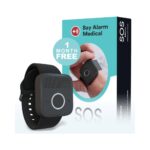
Bay Alarm Medical SOS Micro
Bay Alarm Medical
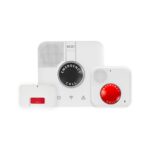
GetSafe Medical Alert Starter
GetSafe
You're viewing this
GetSafe Medical Alert Starter You're viewing this device
GetSafe
Clinical Context
Our #1-ranked fall detection wearables device demonstrated superior performance across key clinical metrics. Compare detailed specifications to make an evidence-based selection.
Clinical Recommendation
Final assessment and prescribing guidance
The GetSafe Medical Alert Starter is an innovative solution for in-home safety. It is the premier choice for users who struggle with wearable compliance but need reliable access to emergency services.
Recommend If
You want the security of being able to call for help by voice without needing to wear a button at all times.
Avoid If
You require ambulatory protection outside the home or need a caregiver app for remote monitoring.
Clinical Summary
Composite Score
Recommendation
Price Point
Where to Buy
Verified purchase options and current availability
GetSafe
FSA/HSA eligible; 30-day money-back guarantee; no long-term contracts required.
Important Information
- • Prices and availability subject to change
- • Some devices may require a prescription
- • HSA / FSA eligibility: Not Typically Eligible
- • Purchase from authorized retailers for warranty protection
Alternative Devices
It is the only system in the cohort providing voice-activated emergency calling without wearables, though it lacks the mobile features of Medical Guardian's MGMini.