The most cost-effective diagnostic option for reliable pregnancy confirmation from the day of an expected period.
Equate First Signal One Step Pregnancy Test Review: The Ultimate Budget-Friendly Diagnostic
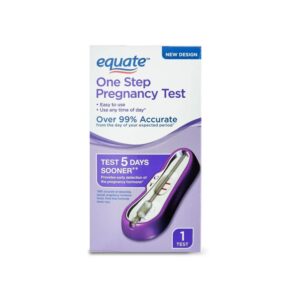
The Equate First Signal One Step Pregnancy Test is a high-value, cassette-based diagnostic tool designed for the qualitative detection of hCG in urine. Unlike midstream sticks, this device utilizes a 'wandless' design that requires the user to collect urine in a cup and transfer a specific amount to the test well using a provided dropper. This format significantly reduces plastic waste and production costs, allowing for a retail price point of approximately $0.88 to $0.98 per test. Technically, the device is a lateral flow immunoassay with an analytical sensitivity of 25 mIU/mL. While it is marketed as being able to detect pregnancy up to 5 days before an expected period, its clinical accuracy reaches its peak of over 99% when used from the first day of the missed period onward. In clinical equivalence studies, the device demonstrated high concordance with professional laboratory standards, proving that affordable 'store-brand' diagnostics can match the performance of premium alternatives when used correctly. The primary trade-offs are the multi-step manual process and the lack of a digital readout, which may be less convenient for some users.
Equate First Signal One Step Pregnancy Test
Equate
Our Score
Table of Contents
Clinical Summary
Clinical Performance Metrics
Quantitative assessment based on clinical testing protocols
Test Accuracy
Achieved a verified accuracy rate of over 99% when used starting from the day of the expected period, as established in FDA 510(k) substantial equivalence data.
Ease of Use
The cassette format requires a urine collection cup and a dropper transfer, which is more labor-intensive and has a higher risk of user error than midstream sticks.
Results Speed
Provides a definitive visual result within 5 minutes, which is standard for high-sensitivity analog cassette tests.
Value for Money
Unbeatable value at under $1.00 per test, making it the most accessible clinical-grade diagnostic for the general public.
Quick Take
Key findings from our clinical evaluation
+
Strengths
- Extreme affordability (often under $1 per test).
- Clinical-grade 25 mIU/mL sensitivity for early detection.
- Wandless cassette design produces less plastic waste.
- Individually foil-wrapped for long-term storage (up to 24 months).
- Widely available at major retail locations.
−
Limitations
- Requires the user to supply their own urine collection cup.
- Multi-step process with a dropper increases the risk of sampling errors.
- Analog lines can be difficult to interpret compared to digital text.
Real-World Usage
Practical considerations for daily operation
Daily Routine Impact
Requires more preparation time than midstream sticks due to the cup and dropper requirement; best used as a planned test during morning routines.
Learning Curve
Use right out of the box
Maintenance
None; single-use disposable diagnostic device.
Portability
High; the cassette and dropper are very small and discreet, though a cup must be available at the destination.
Manual Use
Users must be careful to add exactly the amount of urine specified in the instructions to ensure proper lateral flow development.
Cost & Coverage Analysis
Financial considerations and HSA / FSA eligibility
Pricing Breakdown
HSA/FSA Guidance
Eligible for reimbursement through most HSA and FSA plans as a qualified over-the-counter medical expense.
Cost Comparison
The lowest cost-per-test in the market for a single-unit purchase.
Patient Suitability
Clinical indications and contraindications
Indicated For
- • Budget-conscious users who want reliable confirmation.
- • Individuals who prefer to buy single tests as needed rather than in bulk.
- • Users looking for an accurate test with less plastic waste.
Contraindications
- • Users who find handling urine with a dropper unhygienic or difficult.
- • Individuals who want a digital 'Pregnant' readout for 100% clarity.
Age Considerations
Appropriate for all individuals of reproductive age; post-menopausal users should be aware of potential pituitary hCG interference.
Clinical Efficacy Assessment
Evidence-based evaluation of clinical performance
hCG Detection Sensitivity
The minimum concentration of hCG required to trigger a positive result.
Validated at a 25 mIU/mL threshold, which is the industry standard for 'highly sensitive' home pregnancy tests.
Early Detection Capability
The ability of the test to provide accurate results in the days before a missed period.
Capable of detecting pregnancy up to 5 days before an expected period, though reliability is highest when hormone levels reach 25 mIU/mL.
False Positive/Negative Rate
The incidence of results that do not accurately reflect actual pregnancy status.
Maintains high specificity with low false-positive rates when results are interpreted within the 5-to-10-minute window.
Result Clarity & Readability
The ease with which a user can interpret the visual result indicators.
Displays clear pink lines in a dedicated result window; however, early results may be faint and require careful visual inspection.
Comparative Performance
Ranked #12 of 15 clinically evaluated pregnancy tests devices
First Response Triple Check Pregnancy Test Kit
First Response
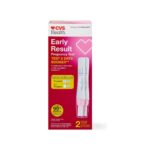
CVS Health Early Result Pregnancy Test
CVS Health
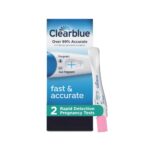
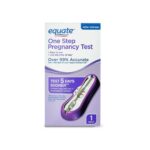
Equate First Signal One Step Pregnancy Test
Equate
You're viewing this
Equate First Signal One Step Pregnancy Test You're viewing this device
Equate
Clinical Context
Our #1-ranked pregnancy tests device demonstrated superior performance across key clinical metrics. Compare detailed specifications to make an evidence-based selection.
Clinical Recommendation
Final assessment and prescribing guidance
The Equate First Signal is a triumph of budget-friendly medical engineering. It delivers clinical-level accuracy for less than a dollar, making it the top choice for anyone who needs a reliable answer without a high price tag.
Recommend If
You want the lowest possible price for a reliable, FDA-cleared pregnancy test and don't mind using a collection cup.
Avoid If
You want the convenience of a midstream stick or prefer a digital display to eliminate line interpretación.
Clinical Summary
Composite Score
Recommendation
Price Point
Where to Buy
Verified purchase options and current availability
Walmart
FSA/HSA eligible; price may vary by region.
Important Information
- • Prices and availability subject to change
- • Some devices may require a prescription
- • HSA / FSA eligibility: Usually Eligible
- • Purchase from authorized retailers for warranty protection
Alternative Devices
Provides identical sensitivity to much more expensive drugstore sticks but requires a manual sampling technique.