The EMAY Portable ECG Monitor is a highly accessible, standalone tool for those who want a simple way to monitor heart rhythm without being tethered to a smartphone.
EMAY Portable ECG Monitor Review: The Standalone Solution for Simple Rhythm Tracking
The EMAY Portable ECG Monitor (EMG-20) is a single-lead, handheld device designed for the intermittent recording of Lead I ECG signals. Its primary strength is its standalone functionality; unlike many competitors, it features a built-in 1.77-inch color TFT-LCD screen that displays the real-time ECG waveform and heart rate during a 30-second recording session. Once complete, the device provides an instant analysis of the rhythm across 12 different categories, including AFib, Bradycardia, Tachycardia, and ST-segment changes. While the manufacturer explicitly states it is for 'initial evaluation' and not a substitute for clinical diagnostics, its 250 Hz sampling rate and clinical safety compliance (IEC 60601-1) make it a reliable reference tool. Data management is flexible, offering both a Bluetooth-connected mobile app for iOS and Android and a dedicated PC/Mac software for detailed report generation. Its memory capacity for 100 readings on-device and long-lasting rechargeable battery (~360 measurements per charge) make it a practical companion for health-conscious users who prefer physical controls and immediate visual feedback.
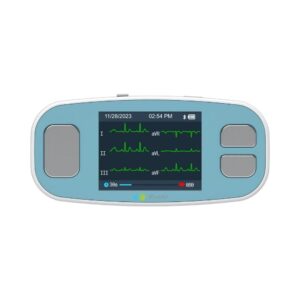
Table of Contents
Clinical Summary
Clinical Performance Metrics
Quantitative assessment based on clinical testing protocols
ECG Accuracy
Provides a clean 250 Hz single-lead signal; however, automated interpretations are intended for reference only and can be sensitive to motion artifacts.
Ease of Use
One of the easiest devices to use due to its standalone screen and physical power button; no smartphone pairing is required to take or view a measurement.
App & Data Quality
The app and PC software are functional and allow for unlimited PDF sharing, but the interface is more utilitarian compared to premium medical ecosystems.
Value for Money
Excellent value for a device with a built-in screen and no monthly fees, particularly for users who find smartphone apps cumbersome.
Quick Take
Key findings from our clinical evaluation
+
Strengths
- Truly standalone use with built-in color screen and internal storage
- No subscription fees or recurring costs for app/software use
- Stores up to 100 recordings on the device for later syncing
- Includes both mobile app and PC software for flexible data management
- Detects 12 types of heart rhythm situations, including ST-segment trends
−
Limitations
- Manufacturer disclaimer: Not for medical diagnostic use
- Single-lead only; cannot detect complex or localized heart issues
- Sensitive to motion artifacts; requires the user to be perfectly still
Real-World Usage
Practical considerations for daily operation
Daily Routine Impact
The device is small enough to be carried in a pocket or kept on a nightstand for quick checks. Its standalone nature makes it ideal for users who do not want to interact with their phone for every health check.
Learning Curve
Use right out of the box
Maintenance
Micro-USB charging (every ~300 measurements) and cleaning of metal electrodes with a damp cloth or alcohol wipe.
Portability
Highly portable; the compact, handheld design and integrated screen mean no extra peripherals are needed while traveling.
Manual Use
Excellent; the device is specifically designed for full functionality without needing to connect to an app for recording or result viewing.
Cost & Coverage Analysis
Financial considerations and HSA / FSA eligibility
Pricing Breakdown
HSA/FSA Guidance
Often eligible for FSA/HSA reimbursement. Check for compatibility with cardiovascular screening codes if used under physician guidance.
Cost Comparison
Priced lower than major brand-name medical devices while offering more built-in hardware features like the OLED screen.
Patient Suitability
Clinical indications and contraindications
Indicated For
- • Users who prefer a dedicated device with a screen over a phone app
- • Seniors seeking a straightforward, non-technical heart rhythm monitor
- • Individuals wanting a backup monitor for travel without subscription fees
Contraindications
- • Patients with implanted pacemakers or ICDs
- • Individuals needing clinical-grade diagnostic clearance for medical decisions
Age Considerations
Intended for adults above 20 years old. The standalone screen is particularly beneficial for users who find smartphone pairing frustrating.
Clinical Efficacy Assessment
Evidence-based evaluation of clinical performance
Arrhythmia Detection Accuracy
The ability of the device to correctly identify various heart rhythm abnormalities.
Capable of detecting up to 12 cardiac situations including AFib and PVC patterns, though accuracy depends heavily on user stillness during the 30-second window.
AFib Detection Sensitivity
How reliably the device identifies Atrial Fibrillation when it is present.
Identifies A-Fib markers effectively in stable waveforms; however, the lack of clinical-grade clearance for primary diagnosis means results must be physician-verified.
ECG Signal Quality
The clarity and stability of the ECG trace, minimizing interference and noise.
The 250 dots/s recording rate provides adequate detail for rhythm assessment, with an 'Orange to Green' indicator to signal a stable recording environment.
Clinical-Grade Correlation
The degree to which the device's output correlates with professional hospital equipment.
Correlates well with basic clinical Lead I rhythm strips for heart rate and rhythm identification but lacks the diagnostic validation of 6-lead or 12-lead systems.
Comparative Performance
Ranked #10 of 13 clinically evaluated personal ecg monitors devices
AliveCor KardiaMobile Card
AliveCor
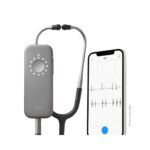
Eko DUO (ECG + Stethoscope)
Eko
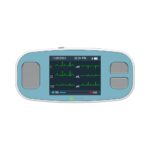
EMAY Portable ECG Monitor
EMAY
You're viewing this
EMAY Portable ECG Monitor You're viewing this device
EMAY
Clinical Context
Our #1-ranked personal ecg monitors device demonstrated superior performance across key clinical metrics. Compare detailed specifications to make an evidence-based selection.
Clinical Recommendation
Final assessment and prescribing guidance
The EMAY Portable ECG Monitor is a practical, user-friendly tool for personal heart rhythm surveillance. While it serves more as a reference than a diagnostic tool, its ease of use and standalone design make it a standout in its price bracket.
Recommend If
You want an easy-to-use ECG monitor that shows your heart rhythm on a built-in screen without needing to open a smartphone app.
Avoid If
You require a medically certified diagnostic device to manage a serious heart condition or need multi-lead EKG data.
Clinical Summary
Composite Score
Recommendation
Price Point
Where to Buy
Verified purchase options and current availability
EMAY Care Direct
FSA/HSA eligible; often includes free carrying case.
Amazon
One of the best-selling standalone ECG monitors on the platform.
Walmart
Sold by authorized third-party health suppliers.
Important Information
- • Prices and availability subject to change
- • Some devices may require a prescription
- • HSA / FSA eligibility: Rarely Eligible
- • Purchase from authorized retailers for warranty protection
Alternative Devices
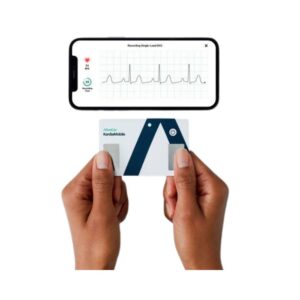
It provides more on-device feedback than the KardiaMobile or AliveCor Card, which rely entirely on a phone, but it lacks the clinical-grade diagnostic pedigree of the Apple Watch or Kardia systems.