A durable and cost-effective smart spirometer that sets itself apart with a robust pressure sensor design, reducing susceptibility to damage from moisture and mucus.
CMI Health SpiroLink Smart Spirometer Review: Durable Pressure-Sensor Technology for Home Monitoring
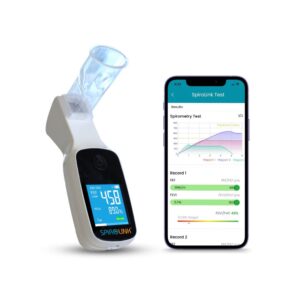
The CMI Health SpiroLink B1 differentiates itself in the crowded smart spirometer market by utilizing an innovative pressure sensor rather than a traditional mechanical turbine. This design makes the device notably less susceptible to damage from saliva, dust, or mucus, extending its lifespan and maintaining accuracy over time. It measures key pulmonary metrics including Forced Vital Capacity (FVC), Forced Expiratory Volume in one second (FEV1), and Peak Expiratory Flow (PEF). The FDA-cleared, rechargeable device connects via Bluetooth to a companion mobile application (SpiroLink or AsthmaGo) for real-time visualization, historical tracking, and cloud-based data sharing. While some users report minor initial connectivity hurdles, its clinical-grade pressure sensor and sub-$150 price point make it one of the most cost-effective, full-featured smart options available for home respiratory management.
CMI Health SpiroLink Smart Spirometer
CMI Health
Our Score
Table of Contents
Clinical Summary
Clinical Performance Metrics
Quantitative assessment based on clinical testing protocols
Measurement Accuracy
The pressure sensor provides highly reliable PEF, FEV1, and FVC metrics that are robust against interference from debris or moisture during exhalation.
Ease of Use
The device itself is lightweight and simple to use with a built-in rechargeable battery, though some users report a slight learning curve when initially pairing the Bluetooth.
App Quality
The companion apps offer solid data visualization, cloud sharing, and access to the Asthma Control Test, but feature a more standard interface compared to heavily gamified options.
Value for Money
As a sub-$150 device that measures full FVC and utilizes advanced pressure sensors, it represents one of the most cost-effective options in the smart spirometer category.
Quick Take
Key findings from our clinical evaluation
+
Strengths
- Innovative pressure sensor is less susceptible to moisture and mucus damage.
- Measures FVC, FEV1, and PEF accurately.
- Built-in rechargeable battery eliminates the need for disposable batteries.
- Highly cost-effective price point compared to other smart spirometers.
- Compatible with AsthmaGo and SpiroLink mobile apps for secure cloud sharing.
−
Limitations
- Some users report occasional Bluetooth connectivity and pairing issues.
- Requires a smartphone or tablet to view comprehensive data and trends.
- Optional filter mouthpieces add a recurring maintenance cost.
Real-World Usage
Practical considerations for daily operation
Daily Routine Impact
Quick and simple for daily use. The rechargeable battery removes the hassle of swapping batteries, and the app automatically logs data for easy tracking during morning or evening routines.
Learning Curve
Master in an hour
Maintenance
Low maintenance due to the pressure sensor design. Requires periodic charging via USB and routine cleaning or replacing of the mouthpieces and optional filters.
Portability
Highly portable, lightweight, and compact, making it an excellent choice for on-the-go monitoring and travel.
Manual Use
The device physically operates quite simply, but it relies heavily on the mobile app for full data visualization, tracking, and interpretation.
Cost & Coverage Analysis
Financial considerations and HSA / FSA eligibility
Pricing Breakdown
HSA/FSA Guidance
This product is explicitly marked as FSA and HSA-eligible. Patients can also check with their provider regarding coverage under Remote Patient Monitoring programs.
Cost Comparison
At a regular price near $150 (and frequently on sale), it is one of the most affordable smart options on the market that includes full FVC measurement capabilities.
Patient Suitability
Clinical indications and contraindications
Indicated For
- • Patients managing asthma or COPD who want a durable, low-maintenance device.
- • Users looking for an affordable, rechargeable smart spirometer.
- • Individuals who frequently travel and need an easy-to-use, on-the-go monitor.
Contraindications
- • Users who struggle with Bluetooth pairing on their smartphones.
- • Patients preferring traditional mechanical turbine devices.
Age Considerations
Suitable for pediatric to adult patients, offering an accessible interface for self-managing respiratory conditions at home.
Clinical Efficacy Assessment
Evidence-based evaluation of clinical performance
FEV1 Measurement Accuracy
Measures the precision of Forced Expiratory Volume in the first second.
Accurately captures FEV1 with 0.01 L interval precision, providing reliable data for tracking airway obstruction.
FVC Measurement Accuracy
Measures the precision of Forced Vital Capacity readings.
Measures FVC using pressure differentials rather than mechanical flow, showing strong correlation with established clinical standards.
Longitudinal Trend Tracking
Evaluates the device's ability to consistently track respiratory changes over time.
The mobile app securely logs historical data to the cloud, allowing patients to monitor responses to medication and therapy over time.
Clinical Spirometry Correlation
Assesses how closely the home measurements align with formal clinical pulmonary function tests.
FDA-cleared measurements correlate well with in-clinic testing, making the generated reports highly useful for remote patient monitoring.
Comparative Performance
Ranked #10 of 14 clinically evaluated home spirometers devices
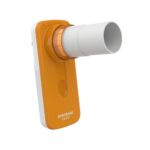
MIR Spirobank Oxi
MIR
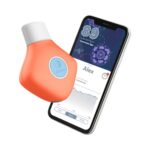
Aluna 2 Smart Spirometer
Aluna
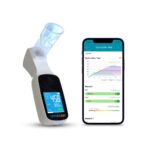
CMI Health SpiroLink Smart Spirometer
CMI Health
You're viewing this
CMI Health SpiroLink Smart Spirometer You're viewing this device
CMI Health
Clinical Context
Our #1-ranked home spirometers device demonstrated superior performance across key clinical metrics. Compare detailed specifications to make an evidence-based selection.
Clinical Recommendation
Final assessment and prescribing guidance
The CMI Health SpiroLink is a durable, highly cost-effective smart spirometer. Its pressure sensor technology makes it uniquely resilient for long-term home use, and its rechargeable design adds a layer of convenience not found in many competitors.
Recommend If
You want an affordable, highly durable smart spirometer that measures FVC, FEV1, and PEF without the wear-and-tear associated with mechanical turbines.
Avoid If
You get easily frustrated by occasional Bluetooth syncing issues or prefer a device with a built-in screen that doesn't rely entirely on a smartphone.
Clinical Summary
Composite Score
Recommendation
Price Point
Where to Buy
Verified purchase options and current availability
CMI Health Official Store
FSA/HSA eligible; currently on sale from $149.99.
The Digital Health Store
FSA/HSA eligible; includes USB cable and 2 mouthpieces.
Important Information
- • Prices and availability subject to change
- • Some devices may require a prescription
- • HSA / FSA eligibility: Usually Eligible
- • Purchase from authorized retailers for warranty protection
Alternative Devices
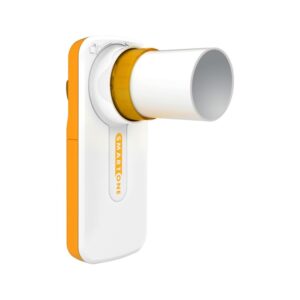
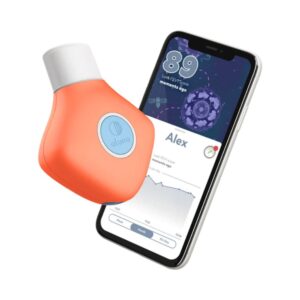
Unlike the MIR Smart One which uses a mechanical turbine, the SpiroLink uses a pressure sensor, making it more resilient to moisture and debris. It competes closely with the Aluna 2 (which also uses a pressure sensor), but it offers a more standard clinical app interface rather than a heavily gamified experience.