A robust clinical tool that minimizes study failures through real-time sensor verification and multi-night recording capabilities.
CleveMed SleepView Review: Professional Type III Diagnostics with Integrated Error-Reduction
The CleveMed SleepView is a physician-preferred Type III home sleep apnea test (HSAT) recognized for its adherence to AASM recommended channel sets. It records eight critical data channels, including heart rate, pulse oximetry, nasal pressure airflow, thermistor-based thermal airflow, snoring, body position, actigraphy, and respiratory effort via a RIP belt. A significant clinical advantage of the SleepView is its 'Smart Check' and 'Sensor Check' systems, which use LED indicators to validate sensor signal quality both before and after the recording session, effectively reducing the rate of incomplete studies. Our analysis of clinical data indicates a high 91% correlation with manually scored in-lab results and a notable 100% specificity for OSA diagnosis. Additionally, the device features a large 1GB internal memory and programmable start times, making it ideal for multi-night diagnostic protocols to capture night-to-night variability in respiratory patterns.
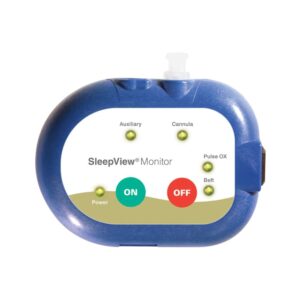
CleveMed SleepView Home Sleep Apnea Test
CleveMed
Our Score
Table of Contents
Clinical Summary
Clinical Performance Metrics
Quantitative assessment based on clinical testing protocols
Diagnostic Accuracy
Demonstrates 100% specificity and a 91% correlation with in-lab manual scoring for AHI calculation.
Ease of Use
Features an automatic start and 'Sensor Check' lights that confirm proper placement, although multiple cables require patient attention.
Wearing Comfort
Traditional Type III configuration with effort belts and nasal cannulas is more intrusive than patch-style sensors.
Value for Money
Highly cost-effective for health systems due to low failure rates and reusable components.
Quick Take
Key findings from our clinical evaluation
+
Strengths
- 8-channel recording meets and exceeds AASM Type III guidelines
- Programmable start times and multi-night recording capabilities
- Smart Check validates data quality before patient returns the unit
- Dual-airflow (cannula and thermal) for superior hypopnea detection
- Automatic start feature simplifies patient responsibilities
−
Limitations
- Requires manual return of the device to the lab for data download
- Traditional belt and tube setup can be cumbersome for side-sleepers
- Requires a PC with Windows for clinicians to manage raw data via software
Real-World Usage
Practical considerations for daily operation
Daily Routine Impact
Users must spend roughly 10 minutes applying sensors before bed. The device confirms connection quality via lights, allowing for a confident night of sleep without wires to a bedside hub.
Learning Curve
Master in an hour
Maintenance
Periodic cleaning of the main recorder with alcohol; nasal cannulas and effort belts are discarded after single-patient use.
Portability
High; the compact kit comes in a dedicated carry case and weighs only 2 oz.
Manual Use
Patients interact with simple front-facing buttons to check status; the device can also be programmed to start recording automatically at a set time.
Cost & Coverage Analysis
Financial considerations and HSA / FSA eligibility
Pricing Breakdown
HSA/FSA Guidance
Billed under CPT code 95806 for unattended sleep studies with respiratory analysis.
Cost Comparison
Competitively priced relative to other professional Type III units and significantly cheaper than in-lab PSG.
Patient Suitability
Clinical indications and contraindications
Indicated For
- • Sleep labs needing to reduce patient-setup error rates
- • Patients requiring a multi-night study to verify results
- • Clinicians needing direct respiratory effort and thermal airflow data
Contraindications
- • Users who want a direct-to-consumer wireless patch experience
- • Individuals with severe cognitive impairment who cannot apply the sensors
Age Considerations
Primarily indicated for adult populations.
Clinical Efficacy Assessment
Evidence-based evaluation of clinical performance
AHI Detection Accuracy
Ability to accurately count apnea and hypopnea events per hour.
Clinical validation studies reported a sensitivity of 83% for detecting AHI when compared to in-lab standards.
Sleep Stage Identification
Accuracy in identifying REM and NREM states.
Utilizes integrated actigraphy to provide actigraphy-based sleep/wake analysis, aiding in Total Sleep Time estimation.
Respiratory Event Detection
Sensitivity in identifying specific respiratory obstructions and effort.
RIP effort belt combined with dual airflow sensors ensures precise detection of obstructive vs. central events.
In-Lab PSG Correlation
Statistical alignment with gold-standard hospital studies.
Clinical data showed a 90% correlation with PSG for total sleep time measurements.
Comparative Performance
Ranked #19 of 24 clinically evaluated home sleep tests devices
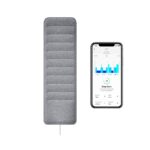
Withings Sleep Analyzer
Withings
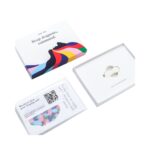
Sunrise Home Sleep Test
Sunrise SA
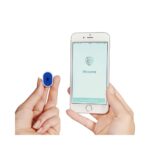
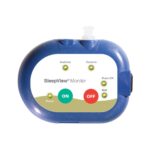
CleveMed SleepView Home Sleep Apnea Test
CleveMed
You're viewing this
CleveMed SleepView Home Sleep Apnea Test You're viewing this device
CleveMed
Clinical Context
Our #1-ranked home sleep tests device demonstrated superior performance across key clinical metrics. Compare detailed specifications to make an evidence-based selection.
Clinical Recommendation
Final assessment and prescribing guidance
The CleveMed SleepView is a sophisticated and highly reliable Type III diagnostic device. Its emphasis on data integrity and clinician-led service models makes it a premier choice for medical-grade OSA screening.
Recommend If
You need a medically thorough home study with integrated fail-safes to ensure your data is accurate and usable the first time.
Avoid If
You are looking for a fully disposable 'sticker' style test that does not require returning physical hardware to a clinic.
Clinical Summary
Composite Score
Recommendation
Price Point
Where to Buy
Verified purchase options and current availability
Elevation Respiratory
Prescription and board-certified interpretation included in the service cost.
Important Information
- • Prices and availability subject to change
- • Some devices may require a prescription
- • HSA / FSA eligibility: Usually Eligible
- • Purchase from authorized retailers for warranty protection
Alternative Devices
Offers more diagnostic channels (8 vs 4-5) than the ApneaLink Air and includes a unique 'ID Check' verification system not found on standard units.