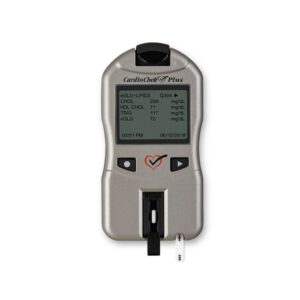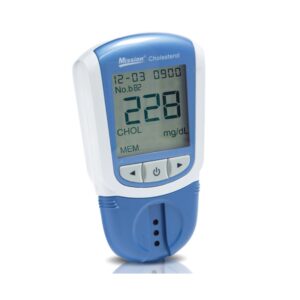
The Cholestech LDX is a professional-grade analyzer that offers unparalleled reliability for high-accuracy lipid and glucose monitoring.
Abbott Cholestech LDX System Review: The Clinical Benchmark for Lipid Precision
The Abbott Cholestech LDX System is widely recognized as the gold standard in point-of-care lipid diagnostics. Utilizing reflectance photometry, the system measures colorimetric changes across four reagent pads to quantify total cholesterol, HDL, triglycerides, and glucose. Engineering-wise, the device is characterized by sophisticated internal calibrations and automated fail-safe checks that mitigate user-dependent variability. Clinical evaluations indicate that the system achieves precision within ±3% of laboratory reference methods, meeting the rigorous performance goals of the National Cholesterol Education Program (NCEP). While the system is primarily positioned for professional clinical environments due to its high capital cost, its ease of use-requiring a simple three-step protocol and a 40uL sample-makes it a viable option for high-risk patients requiring clinical-grade home monitoring. However, users must be mindful of its environmental sensitivities and the requirement for refrigerated strip storage to maintain reagent integrity.
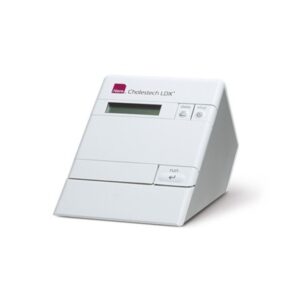
Table of Contents
Clinical Summary
Clinical Performance Metrics
Quantitative assessment based on clinical testing protocols
Accuracy
Maintains ±3% accuracy compared to clinical chemistry reference methods, the highest in the POC retail category.
Ease of Use
Features a simple 3-step protocol but requires precise blood volume delivery via a 40uL capillary tube.
Reliability
Automated checks ensure analyzer integrity before every test; certified by the CDC Lipid Standardization Program.
Value for Money
High initial capital cost ($1,800+) makes it a significant investment compared to consumer-grade meters.
Quick Take
Key findings from our clinical evaluation
+
Strengths
- Laboratory-equivalent accuracy (±3%) for professional-grade monitoring.
- Certified by the Cholesterol Reference Method Laboratory Network (CRMLN).
- Comprehensive panels: measures TC, HDL, TG, and Glucose simultaneously.
- Automated failsafe mechanisms prevent erroneous readings from system drift.
- Results delivered in 5 minutes via a portable handheld device.
−
Limitations
- High upfront device price (between $1,800 and $2,500 MSRP).
- Test cassettes require refrigeration (36-46°F) for long-term stability.
- Contraindicated for patients with hyperbilirubinemia or children under 2 years old.
Real-World Usage
Practical considerations for daily operation
Daily Routine Impact
Requires consistent storage temperature for cassettes; most suitable for once-monthly or once-quarterly deep health assessments rather than daily use.
Learning Curve
Master in an hour
Maintenance
Daily optics check using the provided check cassette and routine cleaning of the cassette drawer.
Portability
Portable and battery-operable for on-site examination, though cassettes must be kept cool if traveling long distances.
Manual Use
The system features a 32-character LCD and dedicated RUN, DATA, and STOP buttons for straightforward standalone operation.
Cost & Coverage Analysis
Financial considerations and HSA / FSA eligibility
Pricing Breakdown
HSA/FSA Guidance
Often covered for professional use via HCPCS codes; eligible for HSA/FSA reimbursement for home users.
Cost Comparison
Significantly more expensive than the CardioChek Plus ($949), but offers higher lab-certified precision.
Patient Suitability
Clinical indications and contraindications
Indicated For
- • Clinicians and wellness program managers.
- • Patients requiring highly precise data for medication titration.
- • Users who want the most reliable POC diagnostic currently available.
Contraindications
- • Patients with hyperbilirubinemia (elevated bilirubin levels).
- • Children under the age of 2 years.
Age Considerations
Not for use in infants or children under 2 years of age.
Clinical Efficacy Assessment
Evidence-based evaluation of clinical performance
Lipid Panel Precision
The ability to accurately quantify Total Cholesterol, HDL, and Triglycerides.
Meets NCEP performance goals for all lipid analytes; results are considered laboratory-equivalent.
Metabolic Profiling
Effectiveness in providing a broader metabolic health context.
Includes glucose measurement and calculated parameters like LDL, non-HDL, and TC/HDL ratios.
Comparative Performance
Ranked #10 of 18 clinically evaluated cholesterol test kits devices
Labcorp OnDemand Lipid Panel
Labcorp OnDemand
Everlywell Cholesterol & Lipids Test
Everlywell
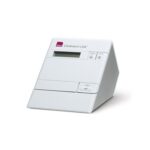
Abbott Cholestech LDX System
Abbott
You're viewing this
Abbott Cholestech LDX System You're viewing this device
Abbott
Clinical Context
Our #1-ranked cholesterol test kits device demonstrated superior performance across key clinical metrics. Compare detailed specifications to make an evidence-based selection.
Clinical Recommendation
Final assessment and prescribing guidance
The Abbott Cholestech LDX is the clinical gold standard for point-of-care lipid analysis. Its laboratory-grade precision makes it the premier choice for serious heart health management, despite its high cost and storage requirements.
Recommend If
You require the highest level of certified accuracy for long-term chronic disease management or clinical screenings.
Avoid If
You need an affordable, low-maintenance tool for occasional general cholesterol screening.
Clinical Summary
Composite Score
Recommendation
Price Point
Where to Buy
Verified purchase options and current availability
CLIA Waived
Full system kit with printer; FSA/HSA eligible; specializes in professional diagnostic equipment.
Medical Device Depot
Ships to medical or educational facilities only; national average reimbursement codes provided.
Important Information
- • Prices and availability subject to change
- • Some devices may require a prescription
- • HSA / FSA eligibility: Usually Eligible
- • Purchase from authorized retailers for warranty protection
Alternative Devices
It outperforms the CardioChek Plus in accuracy (±3% vs ±5%) but is considerably more expensive and takes longer to provide results (5m vs 90s).