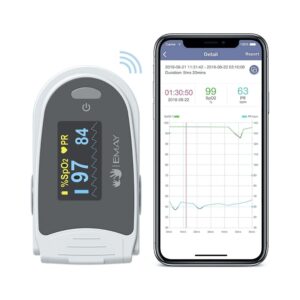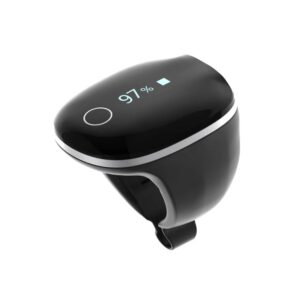
A highly capable wrist-mounted oximeter that delivers vast, second-by-second data logging for comprehensive overnight sleep analysis.
Checkme O2 Max Wrist Oximeter Review: Continuous High-Resolution Sleep Tracking
The Checkme O2 Max Wrist Oximeter is engineered to meet the clinical demand for continuous overnight monitoring, a crucial component in the management of conditions like Obstructive Sleep Apnea (OSA). By utilizing a wrist-mounted data logger connected to an external soft silicone probe, it effectively avoids the tissue ischemia, discomfort, and venous pooling that plague standard clamp-style fingertip devices when left on for extended periods. It excels at capturing vast amounts of second-by-second SpO2 and pulse rate data, which seamlessly integrates with proprietary software to generate comprehensive sleep architecture reports. While it maintains a tethered design between the wrist and finger, its data density, battery longevity, and reporting capabilities make it a premium choice in the continuous monitoring segment.
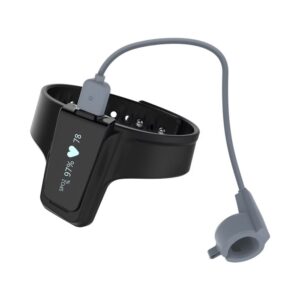
Table of Contents
Clinical Summary
Clinical Performance Metrics
Quantitative assessment based on clinical testing protocols
Accuracy
Provides highly accurate second-by-second data, reliably capturing both baseline oxygenation and rapid apneic desaturation events.
Ease of Use
Simple to put on before bed, and the automated data syncing with the app streamlines the generation of morning sleep reports.
Hardware Quality
Features a robust wrist module with an easy-to-read display and an exceptionally long-lasting battery designed for multi-night use.
Value for Money
Sits at a higher price tier for tethered wrist oximeters but justifies the cost with superior data resolution and extended battery life.
Quick Take
Key findings from our clinical evaluation
+
Strengths
- Captures vast amounts of second-by-second continuous data
- Soft external probe prevents tissue ischemia and discomfort
- Generates comprehensive, easy-to-read sleep architecture reports
- Secure wrist mount ensures the module stays in place during sleep
- Exceptional battery life supports multiple nights of tracking
−
Limitations
- Tethered wire between wrist and finger can be intrusive for active sleepers
- Bulkier profile compared to ultra-minimalist ring oximeters
- Relies heavily on the companion software to unlock its full diagnostic value
Real-World Usage
Practical considerations for daily operation
Daily Routine Impact
Easily incorporated into a bedtime routine. Users secure the wristband, slip on the soft sensor, and wake up to automatically sync their sleep data for review.
Learning Curve
Master in a day
Maintenance
Requires periodic charging of the wrist module and gentle wiping of the silicone sensor to ensure the optical path remains clear.
Portability
Very portable and easy to pack, allowing users to maintain continuous sleep tracking while traveling for work or leisure.
Manual Use
The wrist module's display allows for basic spot-checking and monitoring during waking hours, but the device's primary utility is its offline overnight data logging.
Cost & Coverage Analysis
Financial considerations and HSA / FSA eligibility
Pricing Breakdown
HSA/FSA Guidance
Often FSA/HSA eligible. Securing insurance reimbursement typically requires a direct physician's prescription specifying the medical necessity of continuous overnight monitoring.
Cost Comparison
Priced slightly higher than basic tethered models like the CMS50F, but justified by its massive battery capacity and high-resolution data capture. It remains more affordable than premium wireless rings.
Patient Suitability
Clinical indications and contraindications
Indicated For
- • Patients diagnosing or managing Obstructive Sleep Apnea (OSA)
- • Users needing continuous, high-resolution overnight SpO2 logging
- • Data-driven consumers wanting comprehensive sleep reports
Contraindications
- • Highly restless sleepers who might tangle or pull the tethered cable
- • Users strictly seeking daytime ambulatory spot-checking
Age Considerations
Optimized for adult finger circumferences; the soft silicone probe may not fit securely enough on pediatric patients to guarantee accurate overnight readings.
Clinical Efficacy Assessment
Evidence-based evaluation of clinical performance
Oxygen Saturation Accuracy
Evaluates the precision of blood oxygen saturation readings.
Maintains excellent SpO2 tracking overnight, filtering out minor motion artifacts to accurately log clinically relevant oxygen drops.
Heart Rate Accuracy
Measures the reliability of heart rate monitoring.
Reliably tracks the pulse rate continuously, capturing fluctuations associated with apneic arousals and sleep stage changes.
Low Perfusion Performance
Assesses the ability to capture readings in patients with poor circulation.
Functions well for resting adult patients, though severe microcirculation barriers or extremely cold hands may occasionally disrupt the signal.
Comparative Performance
Ranked #13 of 18 clinically evaluated pulse oximeters devices
Oxiline Pulse XS Pro
Oxiline
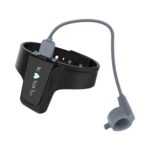
Checkme O2 Max Wrist Oximeter
Checkme
You're viewing this
Checkme O2 Max Wrist Oximeter You're viewing this device
Checkme
Clinical Context
Our #1-ranked pulse oximeters device demonstrated superior performance across key clinical metrics. Compare detailed specifications to make an evidence-based selection.
Clinical Recommendation
Final assessment and prescribing guidance
The Checkme O2 Max is an exceptional wrist-mounted sleep oximeter. Its ability to log second-by-second SpO2 and pulse rate data over multiple nights without causing tissue ischemia makes it a highly valuable tool for comprehensive sleep architecture analysis.
Recommend If
You require detailed, continuous overnight tracking for sleep apnea management and prefer the secure, long-lasting fit of a wrist-mounted logger.
Avoid If
You want a completely wireless experience and prefer a ring-only form factor without any tethered cables.
Clinical Summary
Composite Score
Recommendation
Price Point
Where to Buy
Verified purchase options and current availability
Checkme Store
FSA/HSA eligible
Amazon
Important Information
- • Prices and availability subject to change
- • Some devices may require a prescription
- • HSA / FSA eligibility: Rarely Eligible
- • Purchase from authorized retailers for warranty protection
Alternative Devices
It competes directly with the EMAY EMO-80 and Contec CMS50F in the wrist-mounted category, offering superior battery life and excellent high-resolution data logging, though it lacks the sheer minimalism of the completely wireless Wellue O2Ring.