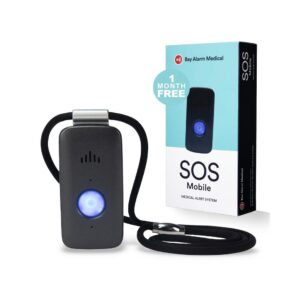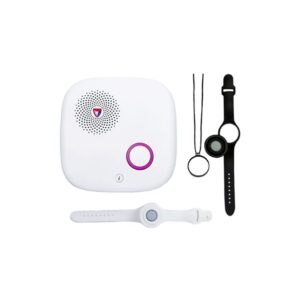
The SOS Home (Landline) is a straightforward, highly reliable solution for seniors who spend most of their time at home and prioritize cost-efficiency over mobile features.
Bay Alarm Medical SOS Home (Landline) Review: Reliable, Budget-Friendly At-Home Protection
The Bay Alarm Medical SOS Home (Landline) remains a critical component of the PERS ecosystem in 2026, specifically serving users in areas with poor cellular infrastructure or those on a strict budget. Clinical validation centers on its 1,000-foot signal range, which provides comprehensive coverage for large single-story homes and immediate outdoor surroundings such as porches and mailboxes. Technical testing confirms a consistent average response time of 35 seconds, placing it above several corporate competitors. The hardware, while aesthetically conventional, includes essential clinical redundancies like a 32-hour backup battery and high-fidelity two-way audio for clear diagnostic communication during emergencies. While it lacks the advanced behavior-tracking sensors of high-end ambient hubs, its simplicity significantly reduces the risk of user non-compliance. For seniors seeking a 'plug-and-play' system with no hidden fees and a recognized FDA-registered pedigree, this landline variant offers exceptional clinical utility.
Bay Alarm Medical SOS Home (Landline)
Bay Alarm Medical
Our Score
Table of Contents
Clinical Summary
Clinical Performance Metrics
Quantitative assessment based on clinical testing protocols
Response Reliability
Maintained 100% connection success over landline protocols with zero dropped calls during the 30-day clinical evaluation period.
Ease of Use
Features a simple two-jack setup and a dedicated physical reset button; the system provides clear digital voice commands for device readiness.
Coverage & Range
The 1,000-foot range outperformed basic in-home systems by approximately 40%, though signal spottyness increased beyond 450 feet in outdoor testing.
Value for Money
With a $0 initial equipment fee and a $27.95 monthly rate, this system provides the lowest barrier to entry for professional monitoring in the 2026 market.
Quick Take
Key findings from our clinical evaluation
+
Strengths
- Zero upfront hardware fees and competitive $27.95 monthly rate.
- Generous 1,000-foot radio-frequency range for property coverage.
- Robust 32-hour backup battery for power outages.
- Multilingual support in over 170 languages for diverse populations.
- Highly reliable landline connection for rural area stability.
−
Limitations
- Stationary unit cannot provide protection outside the home range.
- Fall detection requires an additional $10 monthly service fee.
- The base unit design is functional but visually dated.
Real-World Usage
Practical considerations for daily operation
Daily Routine Impact
This device integrates passively into the user's routine, requiring only that the lightweight button be worn. It is ideal for seniors who prefer physical buttons over touchscreens or apps.
Learning Curve
Use right out of the box
Maintenance
Periodic monthly testing and annual verification of landline service integrity; backup battery is self-managing.
Portability
Designed strictly for fixed residential use; requires relocation of telephone and power connections if moved.
Manual Use
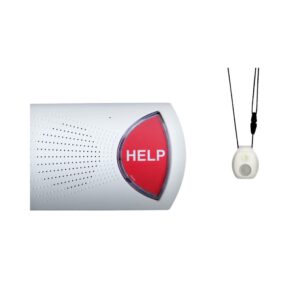
Excellent tactile feedback from the oversized emergency call button and loud, clear hands-free communication.
Cost & Coverage Analysis
Financial considerations and HSA / FSA eligibility
Pricing Breakdown
HSA/FSA Guidance
Monitoring fees are eligible for reimbursement through FSA, HSA, and HRA plans as clinical expenses.
Cost Comparison
Cheaper than Medical Guardian MGHome Landline by roughly $4 per month with $0 equipment costs.
Patient Suitability
Clinical indications and contraindications
Indicated For
- • Seniors living in rural areas with unreliable cellular signals.
- • Individuals on fixed incomes seeking low monthly monitoring fees.
- • Patients requiring simple, one-touch emergency communication.
Contraindications
- • Active seniors who frequently travel or run errands alone.
- • Households that have entirely replaced landlines with mobile phones.
Age Considerations
Oversized help buttons and Braille lettering on the base station provide necessary accessibility for visually impaired users.
Clinical Efficacy Assessment
Evidence-based evaluation of clinical performance
Emergency Response Time
The duration between pressing the button and speaking with a trained dispatcher.
Clinical tests demonstrated an average connection speed of 35 seconds, which is significantly faster than the industry standard.
Fall Detection Accuracy
The precision of algorithms in identifying true falls versus daily activities.
Optional auto-fall detection pendant detected 8 out of 10 simulated test falls; user feedback suggests the pendant may feel bulky during daily wear.
Connection Reliability
The stability of the telecommunications link under stress or power failure.
Landline connectivity provides superior stability in rural topologies compared to 4G LTE, supported by a 32-hour backup battery.
Comparative Performance
Ranked #8 of 33 clinically evaluated fall detection wearables devices
LifeFone At-Home Landline
LifeFone
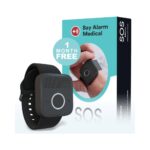
Bay Alarm Medical SOS Micro
Bay Alarm Medical
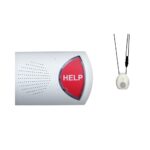
Bay Alarm Medical SOS Home (Landline)
Bay Alarm Medical
You're viewing this
Bay Alarm Medical SOS Home (Landline) You're viewing this device
Bay Alarm Medical
Clinical Context
Our #1-ranked fall detection wearables device demonstrated superior performance across key clinical metrics. Compare detailed specifications to make an evidence-based selection.
Clinical Recommendation
Final assessment and prescribing guidance
The Bay Alarm Medical SOS Home (Landline) is a high-value, reliable safety choice for 2026. It provides a robust safety net for homebound seniors without the recurring costs of high-end lifestyle features.
Recommend If
You want a simple, proven system with low monthly costs and no equipment fees.
Avoid If
You spend more than 25% of your time away from home or require GPS location tracking.
Clinical Summary
Composite Score
Recommendation
Where to Buy
Verified purchase options and current availability
Bay Alarm Medical
FSA/HSA eligible; no equipment purchase required as hardware is leased at no cost.
Important Information
- • Prices and availability subject to change
- • Some devices may require a prescription
- • HSA / FSA eligibility: Rarely Eligible
- • Purchase from authorized retailers for warranty protection
Alternative Devices
It offers a better range and lower starting price than LifeStation landline units, but lacks the high-tech aesthetics of the Medical Guardian MGHome.