A robust, clinical-grade diagnostic tool that excels in harsh environments and low perfusion states, offering exceptional durability at a budget-friendly price.
Zewa Deluxe Fingertip Pulse Oximeter Review: Rugged Clinical-Grade Monitoring
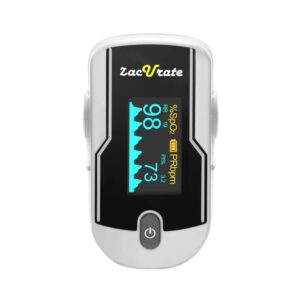
The Zewa Deluxe Fingertip Pulse Oximeter (Model 21601) is a clinical-grade diagnostic tool engineered for rigorous durability and accuracy across a variety of environments. It stands out with an IP22 waterproof rating that protects its internal logic board from dripping water, and a robust hardware build that tolerates extreme operational temperatures ranging from 14°F to 122°F. Clinically, it features a highly sensitive photodiode capable of detecting and processing signals with a minimum Perfusion Index threshold of 0.2%, making it highly effective for patients with poor circulation. Paired with a bright, dual-color OLED screen that automatically rotates for easy reading, this FDA 510(k) cleared device delivers premium reliability in a compact, accessible package.
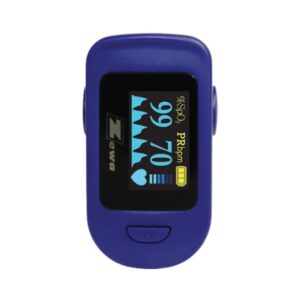
Zewa Deluxe Fingertip Pulse Oximeter with OLED Color Screen
Zewa Medical Technology
Our Score
Table of Contents
Clinical Summary
Clinical Performance Metrics
Quantitative assessment based on clinical testing protocols
Accuracy
Maintains a strict clinical accuracy of ±2% across a remarkably wide 50% to 100% SpO2 display limit.
Ease of Use
Features simple operation with a fast cold boot response time, rendering stabilized measurements in approximately 10 seconds.
Hardware Quality
Boasts an IP22 waterproof rating and an advanced dual-color OLED screen that provides exceptional brightness in harsh lighting conditions.
Value for Money
At around $35, it provides top-tier durability, FDA clearance, and low-perfusion capabilities that outpace many standard retail competitors.
Quick Take
Key findings from our clinical evaluation
+
Strengths
- IP22 waterproof grading enhances environmental durability
- Highly sensitive sensor reads a minimum 0.2% Perfusion Index
- Advanced dual-color OLED screen for high contrast in bright light
- Tolerates extreme atmospheric pressures and temperature ranges
- FDA 510(k) Cleared with strong clinical evidence
−
Limitations
- No Bluetooth connectivity or companion app integration
- Lacks internal memory for offline data logging
- Clamp-style design is not intended for continuous overnight use
Real-World Usage
Practical considerations for daily operation
Daily Routine Impact
Perfect for quick, highly accurate spot-checks in any environment, from a comfortable living room to extreme outdoor conditions.
Learning Curve
Use right out of the box
Maintenance
Minimal upkeep required. Replace the two AAA batteries as needed, and safely wipe the device clean, taking advantage of its water-resistant build.
Portability
Extremely portable and built specifically to withstand harsh transportation environments, making it an excellent travel companion.
Manual Use
Powers on quickly, rendering the measurement interface within 3 seconds of activation and delivering stabilized results in about 10 seconds. The 8-second auto-sleep mode preserves battery life efficiently.
Cost & Coverage Analysis
Financial considerations and HSA / FSA eligibility
Pricing Breakdown
HSA/FSA Guidance
Usually eligible for HSA/FSA spending accounts. Check with your insurance provider or plan administrator for specific reimbursement details for FDA-cleared home medical equipment.
Cost Comparison
At approximately $35, it offers clinical-grade accuracy and rugged durability that significantly outpaces basic un-regulated retail monitors at the exact same price point.
Patient Suitability
Clinical indications and contraindications
Indicated For
- • Patients needing reliable readings despite poor circulation or cold hands
- • Users wanting a highly durable device for outdoor or harsh environments
- • Consumers seeking an FDA-cleared diagnostic tool on a budget
Contraindications
- • Users needing continuous overnight sleep apnea tracking
- • Tech-savvy consumers wanting Bluetooth app connectivity to log health data automatically
Age Considerations
Features a standard adult clamp architecture; while padding is comfortable, it may not be suitable for very small pediatric digits.
Clinical Efficacy Assessment
Evidence-based evaluation of clinical performance
Oxygen Saturation Accuracy
Evaluates the precision of blood oxygen saturation readings.
Capable of mapping SpO2 with a wide display limit ranging from 50% to 100%, guaranteeing ±2% accuracy within the standard clinical brackets.
Heart Rate Accuracy
Measures the reliability of heart rate monitoring.
Spans an extensive functional range of 25 to 250 BPM, maintaining a tight accuracy tolerance.
Low Perfusion Performance
Assesses the ability to capture readings in patients with poor circulation.
Features a highly sensitive photodiode capable of processing a weak PI minimum threshold of 0.2%, drastically reducing algorithmic failure in cold or poorly perfused hands.
Comparative Performance
Ranked #7 of 9 clinically evaluated fingertip pulse oximeters devices
Oxiline Pulse 9S Pro
Oxiline
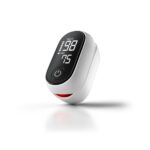
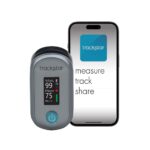
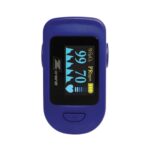
Zewa Deluxe Fingertip Pulse Oximeter with OLED Color Screen
Zewa Medical Technology
You're viewing this
Zewa Deluxe Fingertip Pulse Oximeter with OLED Color Screen You're viewing this device
Zewa Medical Technology
Clinical Context
Our #1-ranked fingertip pulse oximeters device demonstrated superior performance across key clinical metrics. Compare detailed specifications to make an evidence-based selection.
Clinical Recommendation
Final assessment and prescribing guidance
The Zewa Deluxe (Model 21601) is an exceptional, clinical-grade spot-checking tool. Its ability to function in extreme temperatures, resist water, and read low perfusion states makes it one of the most reliable and rugged fingertip devices available for under $40.
Recommend If
You want a highly durable, FDA-cleared pulse oximeter that can accurately read your oxygen levels even if you have poor circulation or cold extremities.
Avoid If
You require smartphone connectivity to log your health data or need a device specifically designed for overnight continuous monitoring.
Clinical Summary
Composite Score
Recommendation
Price Point
Where to Buy
Verified purchase options and current availability
CVS Pharmacy
FSA/HSA eligible; ID.me identity verification may be required for online checkout
Important Information
- • Prices and availability subject to change
- • Some devices may require a prescription
- • HSA / FSA eligibility: Usually Eligible
- • Purchase from authorized retailers for warranty protection
Alternative Devices
It lacks the Bluetooth features of connected models like the Zewa Advanced or Oxiline Pulse XS Pro, but its IP22 rating and 0.2% PI threshold make it vastly superior in durability and low-perfusion performance compared to standard drugstore options.