A highly functional, wrist-worn pulse oximeter that reliably captures continuous overnight SpO2 and pulse rate data, making it a staple for sleep apnea management.
Contec CMS50F Wrist Pulse Oximeter Review: Reliable Overnight Sleep Monitoring
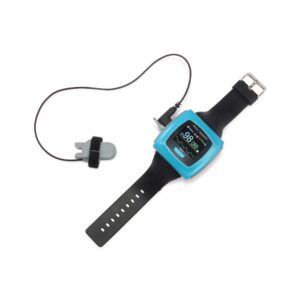
The Contec CMS50F Wrist Pulse Oximeter represents an early, highly successful iteration of the continuous wrist-worn form factor in the over-the-counter market. It is heavily utilized in sleep medicine to track apneic desaturation events during nocturnal movement. By tethering the main processing unit and display to a soft, silicone thumb or finger probe, the device effectively prevents the sensor from dislodging during sleep. While it lacks some of the hyper-miniaturization seen in newer ring-only oximeters, its robust data logging capabilities and comfortable probe make it an excellent choice for continuous overnight monitoring.
Contec CMS50F Wrist Pulse Oximeter
Contec
Our Score
Table of Contents
Clinical Summary
Clinical Performance Metrics
Quantitative assessment based on clinical testing protocols
Accuracy
Provides accurate overnight tracking of desaturation events, though excessive kinetic motion can occasionally introduce artifacts.
Ease of Use
Worn like a wristwatch with a tethered probe, it is comfortable for sleep but involves a wire that can take a night or two to get used to.
Hardware Quality
Features a functional display and a durable strap, representing a solid, albeit slightly older, iteration of consumer medical hardware.
Value for Money
Offers excellent value for patients requiring continuous overnight data logging without the premium price tag of newer ring-only models.
Quick Take
Key findings from our clinical evaluation
+
Strengths
- Soft silicone probe prevents dislodging during sleep
- Wrist-worn design is stable and comfortable for continuous use
- Excellent at logging apneic desaturation events
- Software parses data to generate comprehensive sleep architecture reports
- Eliminates tissue ischemia risks associated with standard clamp oximeters
−
Limitations
- Tethered wire connecting the wrist unit to the probe can be cumbersome
- Older form factor compared to modern, all-in-one ring oximeters
- Susceptible to kinetic motion artifacts if the user is highly active
Real-World Usage
Practical considerations for daily operation
Daily Routine Impact
Primarily used at night, it integrates easily into a bedtime routine. The user simply straps the unit to their wrist, inserts a digit into the soft silicone probe, and powers it on before going to sleep.
Learning Curve
Master in an hour
Maintenance
Requires routine charging of the internal battery and gentle cleaning of the silicone probe with medical wipes to maintain optical sensor clarity.
Portability
Highly portable, easily fitting into a travel pouch for uninterrupted sleep tracking while away from home.
Manual Use
The device features an integrated screen on the wrist module for real-time spot-checking, though its primary utility relies on recording data for retrospective analysis.
Cost & Coverage Analysis
Financial considerations and HSA / FSA eligibility
Pricing Breakdown
HSA/FSA Guidance
Often eligible for FSA/HSA reimbursement. May be partially covered by insurance if prescribed explicitly for the management of Obstructive Sleep Apnea (OSA).
Cost Comparison
More affordable than high-end continuous ring oximeters, offering a budget-friendly entry point into reliable overnight tracking.
Patient Suitability
Clinical indications and contraindications
Indicated For
- • Patients diagnosed with or suspected of having sleep apnea
- • Users needing continuous overnight SpO2 monitoring
- • Budget-conscious consumers seeking clinical-grade data logging
Contraindications
- • Users who toss and turn violently and might tangle the tethered wire
- • Patients with extremely low peripheral perfusion
Age Considerations
Designed for adult finger circumferences; the silicone probe must fit snugly without pinching to function correctly, so it is not optimized for pediatric use.
Clinical Efficacy Assessment
Evidence-based evaluation of clinical performance
Oxygen Saturation Accuracy
Evaluates the precision of blood oxygen saturation readings.
Maintains solid accuracy for tracking apneic events; however, thick nail beds or dark polish may interfere with the optical sensor.
Heart Rate Accuracy
Measures the reliability of heart rate monitoring.
Delivers consistent pulse rate tracking throughout the night, isolating the pulsatile AC signal effectively when the patient is at rest.
Low Perfusion Performance
Assesses the ability to capture readings in patients with poor circulation.
May struggle to establish a baseline in patients with profound microcirculation barriers or severe edema, similar to other mid-tier OTC devices.
Comparative Performance
Ranked #16 of 18 clinically evaluated pulse oximeters devices
Oxiline Pulse XS Pro
Oxiline
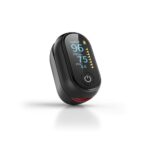
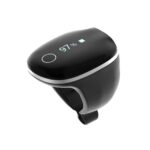
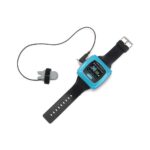
Contec CMS50F Wrist Pulse Oximeter
Contec
You're viewing this
Contec CMS50F Wrist Pulse Oximeter You're viewing this device
Contec
Clinical Context
Our #1-ranked pulse oximeters device demonstrated superior performance across key clinical metrics. Compare detailed specifications to make an evidence-based selection.
Clinical Recommendation
Final assessment and prescribing guidance
The Contec CMS50F is a tried-and-true workhorse in the continuous over-the-counter pulse oximetry market. It provides essential overnight data logging for sleep apnea management at a reasonable price point. While its tethered design is slightly dated compared to newer ring technology, its reliable performance keeps it highly relevant.
Recommend If
You need reliable, continuous overnight SpO2 and pulse rate monitoring to track sleep apnea events and want a proven, cost-effective device.
Avoid If
You prefer a completely wireless, ring-only form factor or need advanced daytime multi-parameter tracking.
Clinical Summary
Composite Score
Recommendation
Price Point
Where to Buy
Verified purchase options and current availability
Amazon
Vitality Medical
Important Information
- • Prices and availability subject to change
- • Some devices may require a prescription
- • HSA / FSA eligibility: Not Typically Eligible
- • Purchase from authorized retailers for warranty protection
Alternative Devices
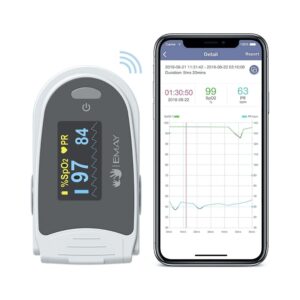
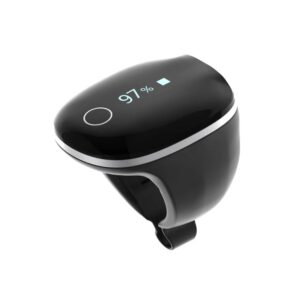
Compared to the EMAY EMO-80, the CMS50F offers a highly similar tethered wrist experience. While the Wellue O2Ring eliminates the wrist module entirely for a more streamlined, wire-free profile, the CMS50F remains a highly reliable and cost-effective classic for dedicated sleep tracking.