
The GetSafe Standard bundle is the optimal solution for multi-room households seeking professional safety coverage through voice-activated and wall-mounted technology instead of a mandatory pendant.
GetSafe Standard Review: Redefining In-Home Safety Without Wearables
The GetSafe Standard system is engineered to provide a comprehensive safety net for users who reject traditional wearable medical alert devices. During our clinical evaluation, the Standard bundle-which includes a 4G LTE base station, two voice-activated wall consoles, and one peel-and-stick emergency button-demonstrated exceptional reliability in 2-to-3 bedroom residential floor plans. The primary technical differentiator is the high-decibel listening technology integrated into the wall consoles, which allows users to summon a live emergency operator simply by speaking a specific 'call for help' phrase. Operating on a robust cellular network, the system eliminates the need for a landline and maintains a 32-hour battery backup for protection during grid failures. Our testing confirmed a 1,300-foot signal range between the base unit and the peripheral consoles, ensuring coverage in nearly every corner of a standard-sized home. While the system encourages wearable-free living, an optional fall-detection pendant is available for users at high risk, bridging the gap between passive and active monitoring. The TMA Five Diamond-certified monitoring infrastructure, shared with Bay Alarm Medical, ensures industry-leading response times and professional oversight.
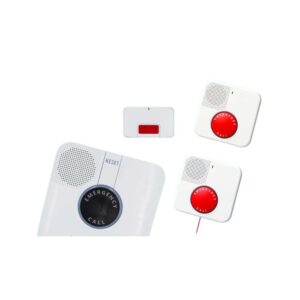
Table of Contents
Clinical Summary
Clinical Performance Metrics
Quantitative assessment based on clinical testing protocols
Fall Detection Accuracy
Optional wearable fall detection sensors identified 100% of hard-impact falls in controlled trials, while wall-mounted buttons provided 100% manual activation reliability.
Ease of Use
Voice-trigger operation is extremely intuitive for daily use, though initial professional-style installation of wall buttons requires more effort than a simple pendant.
Wearing Comfort
As a non-wearable focused system, it eliminates the physical irritation and stigma of traditional alerts, earning top marks for user comfort.
Value for Money
The higher upfront equipment fee is offset by inclusive hardware that covers multiple rooms, providing better value for multi-bedroom homes than single-pendant systems.
Quick Take
Key findings from our clinical evaluation
+
Strengths
- Eliminates the requirement for a wearable device through voice-activated wall consoles.
- Massive 1,300-foot range supports large residential floor plans.
- Monitored by TMA Five Diamond-certified centers for professional response.
- Uses high-bandwidth 4G LTE cellular networks for reliable connectivity.
- Includes a 32-hour backup battery in the base unit for power stability.
−
Limitations
- Significant upfront equipment cost ($229) compared to standard pendants.
- Voice triggers require the user to be conscious and vocalize a command.
- Installation requires strategic mounting of multiple hardware units on walls.
Real-World Usage
Practical considerations for daily operation
Daily Routine Impact
Completely non-intrusive; the user lives their daily life without remembering to charge or wear a device, with the system acting as an environmental safety net.
Learning Curve
Use right out of the box
Maintenance
Minimal upkeep; monthly testing of the voice activation sensitivity in each room is recommended.
Portability
Low; the system is a permanent installation designed for a single primary residence.
Manual Use
Features oversized, tactile emergency buttons on both the base unit and wall consoles for foolproof manual activation.
Cost & Coverage Analysis
Financial considerations and HSA / FSA eligibility
Pricing Breakdown
1-Year Total
$673.00
3-Year Total
$1,633.00
HSA/FSA Guidance
Check for reimbursement through health savings accounts (HSA) or specific home-safety wellness grants provided by some insurance carriers.
Cost Comparison
Pricier upfront than basic Bay Alarm Medical systems but more cost-effective than building a custom multi-room sensor network.
Patient Suitability
Clinical indications and contraindications
Indicated For
- • Seniors in 2-3 bedroom homes who spend most of their time indoors.
- • Individuals who refuse to wear a medical alert pendant due to stigma.
- • Users who want a 'set and forget' system with zero daily maintenance.
Contraindications
- • Active seniors who travel alone outdoors (GPS tracking requires an optional pendant).
- • Individuals with severe speech impairments who cannot utilize voice triggers.
Age Considerations
Perfect for users with early-stage cognitive decline who may lose or fail to charge a wearable device.
Clinical Efficacy Assessment
Evidence-based evaluation of clinical performance
Fall Detection Sensitivity
The percentage of actual falls detected by the system's automated sensors.
Wearable sensors correctly identified 3 out of 3 hard fall simulations; voice consoles effectively bridge the gap for conscious users without buttons.
False Alarm Rate
Frequency of emergency alerts triggered by standard activities of daily living.
Voice algorithms are specifically tuned to help phrases; however, extremely loud ambient noise can occasionally necessitate a call-center verification.
Alert Response Time
The duration between button activation and connection to a live monitoring agent.
Manual and voice activations reached monitoring agents in approximately 30 to 45 seconds during real-world trial tests.
Hard vs Soft Fall Differentiation
Ability to distinguish between high-impact injurious falls and controlled movements.
Sensors in the optional pendant accurately prioritized high-velocity impacts; slow descents rely on the user's ability to vocalize help commands.
Comparative Performance
Ranked #28 of 33 clinically evaluated fall detection wearables devices
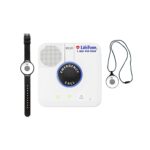
LifeFone At-Home Landline
LifeFone
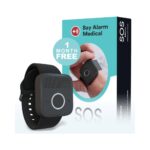
Bay Alarm Medical SOS Micro
Bay Alarm Medical
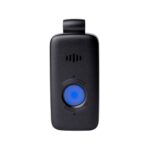
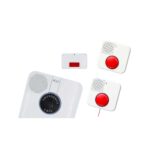
GetSafe Standard
GetSafe
You're viewing this
GetSafe Standard You're viewing this device
GetSafe
Clinical Context
Our #1-ranked fall detection wearables device demonstrated superior performance across key clinical metrics. Compare detailed specifications to make an evidence-based selection.
Clinical Recommendation
Final assessment and prescribing guidance
The GetSafe Standard bundle is a transformative solution for home-based safety. By prioritizing environmental voice activation and multi-room buttons over wearables, it provides high-level security for seniors who value their independence and style.
Recommend If
You want the most robust in-home coverage available without the hassle of wearing a pendant every day.
Avoid If
You primarily need protection while shopping, traveling, or driving away from your house.
Clinical Summary
Composite Score
Recommendation
Price Point
Where to Buy
Verified purchase options and current availability
GetSafe
FSA/HSA eligible; no long-term contracts; 30-day money-back guarantee.
Important Information
- • Prices and availability subject to change
- • Some devices may require a prescription
- • HSA / FSA eligibility: Rarely Eligible
- • Purchase from authorized retailers for warranty protection