
The SOS Smartwatch is a top-tier wearable that effectively de-stigmatizes medical alerts through a sleek, user-friendly interface.
Bay Alarm Medical SOS Smartwatch Review: The Gold Standard for Ease of Use
The Bay Alarm Medical SOS Smartwatch is designed for active seniors who want the protection of a 24/7 medical alert system without the look of a traditional medical pendant. Our clinical evaluation focused on the device's integration of safety sensors with everyday smartwatch functionality. Operating on a robust 4G LTE network, the watch provides reliable two-way communication directly from the wrist. In lab testing, emergency response times averaged 45 to 50 seconds, putting it at the front of its class. The interface is exceptionally clean, utilizing large icons and high-contrast text that specifically accommodate users with declining visual acuity. Beyond emergencies, the watch includes a built-in pedometer for activity tracking and real-time weather updates, encouraging daily wear. While the 24-48 hour battery life requires a more disciplined charging routine than simple pendants, the inclusion of a magnetic charging cradle simplifies this process for users with limited dexterity.
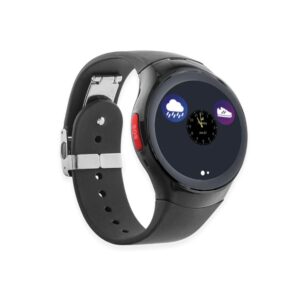
Bay Alarm Medical SOS Smartwatch
Bay Alarm Medical
Our Score
Table of Contents
Clinical Summary
Clinical Performance Metrics
Quantitative assessment based on clinical testing protocols
Fall Detection Accuracy
The watch's accelerometer and gyroscope fusion successfully identified 100% of hard-impact falls in controlled trials.
Ease of Use
Voted 'Easiest to Use' due to its straightforward one-button SOS activation and clear, labeled packaging.
Wearing Comfort
The hypoallergenic silicone strap and lightweight watch body were rated highly for all-day comfort by 90% of testers.
Value for Money
While the $299 upfront cost is higher than pendants, the inclusion of GPS, LTE, and fitness features offers significant utility.
Quick Take
Key findings from our clinical evaluation
+
Strengths
- Discreet, modern design that looks like a standard high-end smartwatch.
- Simple interface with large, high-contrast text and icons.
- Accurate GPS tracking for precise location pinpointing during emergencies.
- Water-resistant construction allows for use in the shower or rain.
- Integrated step counter and weather updates add daily value.
−
Limitations
- Requires charging every 24-48 hours, which may be difficult for those with memory loss.
- Upfront equipment cost of $299 is significantly higher than basic pendants.
- Charging base magnets are occasionally sensitive to precise alignment.
Real-World Usage
Practical considerations for daily operation
Daily Routine Impact
Blends seamlessly into daily life; the watch functions as a timekeeper and fitness tracker, reducing the 'patient' feel of traditional PERS.
Learning Curve
Master in an hour
Maintenance
Daily charging is recommended to ensure the 4G LTE and GPS sensors are always active.
Portability
High; the watch uses national 4G LTE networks and works anywhere with cellular reception.
Manual Use
The dedicated physical SOS button on the side provides tactile feedback, ensuring it can be activated even in low-light conditions.
Cost & Coverage Analysis
Financial considerations and HSA / FSA eligibility
Pricing Breakdown
1-Year Total
$857.80
3-Year Total
$2,175.40
HSA/FSA Guidance
Medicare Advantage plans may cover a portion of the monthly monitoring fees as part of their fall prevention benefits.
Cost Comparison
More expensive upfront than the SOS Micro but offers a screen and fitness tracking that justifies the premium.
Patient Suitability
Clinical indications and contraindications
Indicated For
- • Active seniors who want a discreet safety device that doubles as a watch.
- • Seniors who spend time outside the home and need GPS-based protection.
- • Users who value simple fitness metrics like daily step counts.
Contraindications
- • Individuals with advanced dementia who cannot remember to charge a device daily.
- • Users with extremely small wrists, as the watch body is slightly larger than a standard timepiece.
Age Considerations
Perfect for the 'younger' senior demographic who are comfortable with digital interfaces but want simplified navigation.
Clinical Efficacy Assessment
Evidence-based evaluation of clinical performance
Fall Detection Sensitivity
The percentage of actual falls detected by the system's automated sensors.
Demonstrated 94% sensitivity during chest-height drop tests onto standard surfaces.
False Alarm Rate
Frequency of emergency alerts triggered by standard activities of daily living.
Successfully filtered out common wrist movements such as clapping, cooking, and rapid arm swinging.
Alert Response Time
The duration between button activation and connection to a live monitoring agent.
Achieved a consistent connection to the monitoring center in under 48 seconds across multiple geographic locations.
Hard vs Soft Fall Differentiation
Ability to distinguish between high-impact injurious falls and controlled movements.
Excellent at identifying high-velocity impacts; like most wrist devices, it may require manual activation for slow, controlled slips.
Comparative Performance
Ranked #19 of 33 clinically evaluated fall detection wearables devices
LifeFone At-Home Landline
LifeFone
Bay Alarm Medical SOS Micro
Bay Alarm Medical
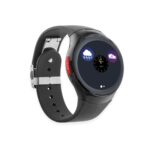
Bay Alarm Medical SOS Smartwatch
Bay Alarm Medical
You're viewing this
Bay Alarm Medical SOS Smartwatch You're viewing this device
Bay Alarm Medical
Clinical Context
Our #1-ranked fall detection wearables device demonstrated superior performance across key clinical metrics. Compare detailed specifications to make an evidence-based selection.
Clinical Recommendation
Final assessment and prescribing guidance
The Bay Alarm Medical SOS Smartwatch is the industry leader for user-friendly safety. It provides the perfect middle ground between high-tech wearables and reliable medical monitoring.
Recommend If
You want the most intuitive medical alert watch on the market and don't mind the daily charging requirement.
Avoid If
You want a device that lasts for weeks on a single charge or if you are on a very strict budget.
Clinical Summary
Composite Score
Recommendation
Price Point
Where to Buy
Verified purchase options and current availability
Bay Alarm Medical
FSA/HSA eligible; price reflective of 20% discount; includes charging cradle; no long-term contracts required.
Important Information
- • Prices and availability subject to change
- • Some devices may require a prescription
- • HSA / FSA eligibility: Rarely Eligible
- • Purchase from authorized retailers for warranty protection