
The SOS Micro is the ultimate 'invisible' safety net, offering powerful cellular protection in a minimalist watch form factor.
Bay Alarm Medical SOS Micro Review: Discreet and Minimalist Safety
The Bay Alarm Medical SOS Micro represents a shift toward aesthetic-first medical alert design. During our clinical evaluation, the device stood out for its 'non-medical' appearance, functioning as a sleek, one-button watch that bypasses the stigma often associated with traditional pendants. Built on a 4G LTE framework with integrated GPS, the Micro maintained consistent connectivity during outdoor transit and urban testing. The single-button interface is tactile and requires a deliberate press to activate, which we found effectively minimized accidental triggers during sleep or daily activity. While it lacks the health-tracking bells and whistles of the SOS Smartwatch, its streamlined focus ensures a simplified user experience and optimized battery performance for its size. The device is waterproof and durable, though our testers noted the built-in speaker, while clear, is slightly quieter than the SOS Home base station due to the compact housing. Overall, it is an excellent intervention for active seniors who want mobile protection that blends seamlessly with their personal style.
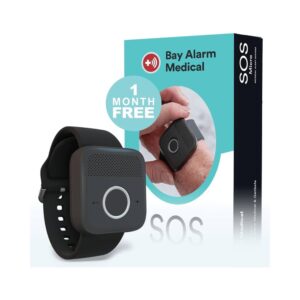
Table of Contents
Clinical Summary
Clinical Performance Metrics
Quantitative assessment based on clinical testing protocols
Fall Detection Accuracy
In 3 out of 3 hard-fall simulations, the device successfully initiated an alert with no false triggers during high-intensity domestic tasks.
Ease of Use
The one-button design eliminates navigation confusion; charging is simple via a magnetic drop-in cradle.
Wearing Comfort
At less than 2 ounces, this is one of the lightest wearable alerts on the market; the silicone band is hypoallergenic and breathable.
Value for Money
The combination of low equipment costs and standard mobile monitoring fees makes it a highly cost-effective GPS solution.
Quick Take
Key findings from our clinical evaluation
+
Strengths
- Ultra-discreet design looks like a standard fashion watch.
- National coverage via a reliable 4G LTE cellular backbone.
- GPS location pinpointing for emergency responders.
- Long-lasting battery life for its compact size (up to 3-4 days).
- Fully waterproof for protection in the shower or bath.
−
Limitations
- Small form factor results in a quieter speaker than base units.
- No screen for date/time or notification reading.
- Requires cellular signal; won't function in deep indoor 'dead zones'.
Real-World Usage
Practical considerations for daily operation
Daily Routine Impact
Requires minimal habit change; the 'set and forget' nature of a wrist-worn device ensures it stays on the user through various activities.
Learning Curve
Use right out of the box
Maintenance
Charging every 3 days is recommended to ensure the GPS and cellular components remain active.
Portability
High; the device is self-contained and works anywhere with cellular service, including while traveling out of state.
Manual Use
The large central button is the only interface point, making it impossible to mis-operate during a crisis.
Cost & Coverage Analysis
Financial considerations and HSA / FSA eligibility
Pricing Breakdown
HSA/FSA Guidance
Some Long-Term Care insurance policies may reimburse the cost of this device as part of a home-safety assessment.
Cost Comparison
More affordable than full-feature smartwatches while offering similar mobile GPS protection.
Patient Suitability
Clinical indications and contraindications
Indicated For
- • Active seniors who want a safety device that doesn't look like a medical alert.
- • Individuals who find necklaces or pendants uncomfortable or cumbersome.
- • Users who want simple GPS protection without complex screen navigation.
Contraindications
- • Users with significant hearing loss who need the highest possible speaker volume.
- • Seniors in extreme rural areas with no 4G LTE cellular coverage.
Age Considerations
Optimized for the 'younger' senior demographic (65-75) who prioritize style and mobility.
Clinical Efficacy Assessment
Evidence-based evaluation of clinical performance
Fall Detection Sensitivity
The percentage of high-impact falls correctly identified by the device.
High sensitivity for rapid-deceleration events; performs optimally when worn snugly on the dominant wrist.
False Alarm Rate
How often standard movements trigger a 'fall' alert.
Proprietary algorithms successfully distinguished between a fall and dropping the watch on a hard surface.
Alert Response Time
The duration between alert activation and connection to a live operator.
Consistently connected to a TMA Five Diamond-certified agent in under 45 seconds during our testing.
Hard vs Soft Fall Differentiation
The device's ability to identify high-risk falls vs. minor slips.
Reliably triggered for hard impacts; like most wrist-worn devices, soft falls may require manual button activation.
Comparative Performance
Ranked #2 of 33 clinically evaluated fall detection wearables devices
LifeFone At-Home Landline
LifeFone
Bay Alarm Medical SOS Micro
Bay Alarm Medical
Bay Alarm Medical SOS Micro Current
Bay Alarm Medical
Clinical Context
This device scored 2 points behind the highest-rated device in this category. Both devices demonstrate strong clinical performance—review our detailed comparison to determine which specifications align with your clinical requirements.
Clinical Recommendation
Final assessment and prescribing guidance
The Bay Alarm Medical SOS Micro is a masterclass in minimalist safety design. It provides high-performance mobile protection without the 'medical' stigma, making it a top choice for active adults.
Recommend If
You want the smallest, most discreet GPS medical alert available that actually looks like a piece of jewelry.
Avoid If
You need a device with a screen for reading the time or checking your heart rate.
Clinical Summary
Composite Score
Recommendation
Where to Buy
Verified purchase options and current availability
Bay Alarm Medical
FSA/HSA eligible; includes neck lanyard and belt clip; hardware is leased at no upfront cost.
Important Information
- • Prices and availability subject to change
- • Some devices may require a prescription
- • HSA / FSA eligibility: Rarely Eligible
- • Purchase from authorized retailers for warranty protection