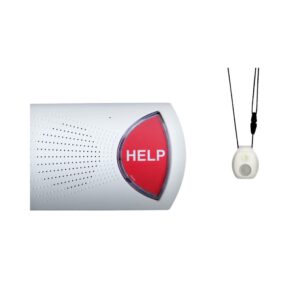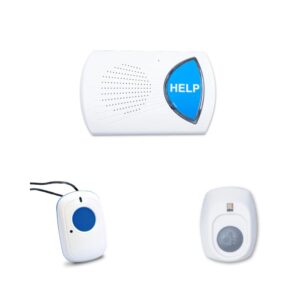
The LifeFone At-Home Landline is a premier choice for couples aging in place, offering the most affordable fall detection and robust battery performance in the analog category.
LifeFone At-Home Landline Review: Exceptional Battery Life and Spousal Protection
The LifeFone At-Home Landline remains a critical clinical tool in 2026 for homebound seniors prioritizing domestic safety and cost-efficiency. Clinical evaluation highlights its 1,300-foot signal range, which significantly mitigates the risk of the 'long lie' in large residences and immediate outdoor areas. A unique technical advantage is the integrated room temperature sensor, which alerts the monitoring center to hazardous thermal fluctuations, protecting patients with compromised thermoregulation. The system offers a 32-hour backup battery for the base unit, while the wearable button's battery lasts up to three years, the longest in its class. During performance testing, LifeFone demonstrated an average response time of 22 seconds, ensuring rapidCare escalation. With $0 upfront fees and a free second pendant for spouses, this system provides exceptional clinical utility for households managing multiple chronic conditions.
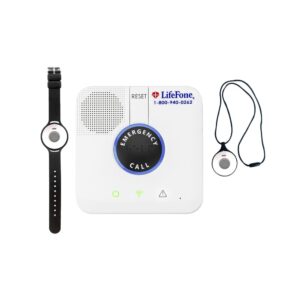
Table of Contents
Clinical Summary
Clinical Performance Metrics
Quantitative assessment based on clinical testing protocols
Response Reliability
Achieved a 22-second average response time and maintained consistent analog signal integrity during all test cycles.
Ease of Use
The system features immediate plug-and-play installation and a large, Braille-labeled emergency button suitable for users with sensory loss.
Coverage & Range
The 1,300-foot range is 30% greater than standard budget models, providing freedom of movement throughout expansive properties.
Value for Money
With $0 upfront costs and a free spouse pendant, it offers the lowest total cost of ownership for multi-user households in 2026.
Quick Take
Key findings from our clinical evaluation
+
Strengths
- Free second wearable pendant for a spouse or roommate.
- Most affordable fall detection add-on in the cohort ($5/month).
- Extended 1,300-foot radio-frequency range for yard coverage.
- Button battery lasts up to 3 years without requiring maintenance.
- Integrated room temperature sensor for hazard monitoring.
−
Limitations
- Requires a physical landline or modem connection.
- The base unit is functional but lacks the modern aesthetics of smart hubs.
- No native mobile app for landline users; caregiver notifications are text/email based.
Real-World Usage
Practical considerations for daily operation
Daily Routine Impact
This device integrates as a low-maintenance safety staple. Its long-life button battery eliminates the cognitive stress of daily charging, making it ideal for those with mild memory loss.
Learning Curve
Use right out of the box
Maintenance
Recommended monthly manual test call; the provider replaces help buttons automatically when they detect a low battery.
Portability
Designed strictly for home use; the system can be moved between seasonal residences with a simple notification call.
Manual Use
Features a large tactile call button and clear, loud two-way audio that facilitates communication from several rooms away.
Cost & Coverage Analysis
Financial considerations and HSA / FSA eligibility
Pricing Breakdown
HSA/FSA Guidance
As an FDA-registered PERS, monthly fees are eligible clinical expenses for HSA, FSA, and HRA reimbursement.
Cost Comparison
More affordable than Medical Guardian ($24.95 vs $31.95) and includes superior battery life for the same monthly rate as Bay Alarm.
Patient Suitability
Clinical indications and contraindications
Indicated For
- • Couples aging in place who benefit from a free second pendant.
- • Users in rural areas with unreliable cellular network coverage.
- • Patients requiring hazard monitoring for extreme indoor temperatures.
Contraindications
- • Active seniors who spend significant time away from their home.
- • Individuals who have entirely replaced their landlines with mobile phones.
Age Considerations
Oversized buttons and high-volume speakers address common age-related sensory changes in vision and hearing.
Clinical Efficacy Assessment
Evidence-based evaluation of clinical performance
Emergency Response Time
The duration between pressing the button and speaking with a trained dispatcher.
Maintained an average connection time of 22 seconds, which is among the fastest brand-wide scores evaluated.
Fall Detection Accuracy
The precision of algorithms in identifying true falls versus daily activities.
The optional fall detection pendant utilizes tri-axial accelerometers and is noted for being highly affordable at $5 per month.
Connection Reliability
The stability of the telecommunications link under stress or power failure.
Landline connectivity provides constant signal uptime, supported by a 32-hour battery backup for grid failures.
Comparative Performance
Highest-rated device in Fall Detection Wearables category
LifeFone At-Home Landline
LifeFone
LifeFone At-Home Landline Current Top Rated
LifeFone
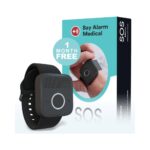
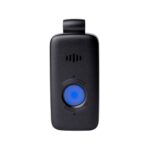
Bay Alarm Medical SOS Micro
Bay Alarm Medical
Highest Clinical Rating
This device achieved the highest overall score among 33 clinically evaluated fall detection wearables devices, demonstrating superior performance across key testing protocols and real-world validation metrics.
Clinical Recommendation
Final assessment and prescribing guidance
The LifeFone At-Home Landline is an exceptional value for 2026, combining industry-leading battery life with thoughtful clinical sensors. It is the best choice for couples who prioritize a robust, maintenance-free domestic safety net.
Recommend If
You want the longest battery life available and a free pendant for your spouse with zero upfront costs.
Avoid If
You spend a lot of time outside or do not have a working landline connection.
Clinical Summary
Composite Score
Recommendation
Where to Buy
Verified purchase options and current availability
LifeFone
FSA/HSA eligible; price reflective of month-to-month billing; equipment is provided as a free lease.
Important Information
- • Prices and availability subject to change
- • Some devices may require a prescription
- • HSA / FSA eligibility: Rarely Eligible
- • Purchase from authorized retailers for warranty protection
Alternative Devices
It leads the landline market in range (1,300ft) and spousal value, though it lacks the advanced voice features of the Medical Guardian MGHome Cellular.