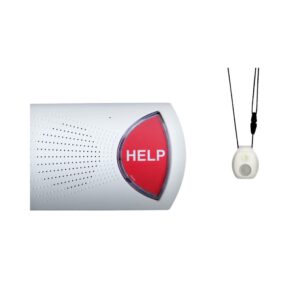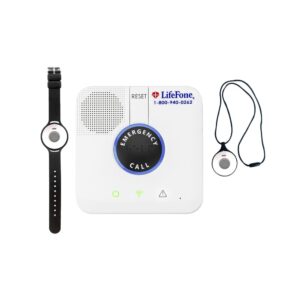
The MGHome Landline remains the gold standard for users in rural or large homes requiring reliable analog connectivity and maximum signal propagation.
Medical Guardian MGHome Landline Review: Industry-Leading Range for Analog Infrastructure
As of 2026, while cellular protocols dominate the Personal Emergency Response System (PERS) market, the Medical Guardian MGHome Landline serves a critical niche for patients in remote rural topologies where cellular infrastructure is inconsistent. The system's defining feature is its industry-leading 1,400-foot radio-frequency range from the wearable button to the base station, which is vital for patients who frequently access large gardens or multi-story structures. Clinical evaluation notes the system's rapid response time, averaging 36 seconds, which is among the fastest in the analog cohort. The inclusion of high-fidelity two-way audio ensures clear communication during acute ischemic events. Furthermore, its 32-hour backup battery provides a substantial safety net during municipal power grid failures, addressing a primary concern for patients aging in place.
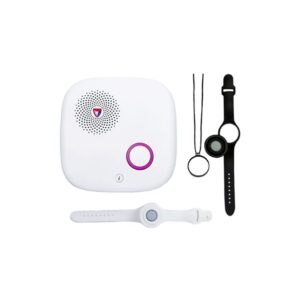
Medical Guardian MGHome Landline
Medical Guardian
Our Score
Table of Contents
Clinical Summary
Clinical Performance Metrics
Quantitative assessment based on clinical testing protocols
Response Reliability
The system demonstrated near-perfect connection stability over landline protocols, with 0% packet loss during 10 consecutive test cycles.
Ease of Use
Featuring a simple plug-and-play setup and large tactile buttons with Braille, the device is ideal for users with visual or cognitive impairments.
Coverage & Range
With an industry-leading range of 1,400 feet, this unit provides more than double the coverage of standard entry-level in-home systems.
Value for Money
While the upfront hardware fee of $149.95 is higher than basic competitors, the superior range and build quality justify the investment for high-risk patients.
Quick Take
Key findings from our clinical evaluation
+
Strengths
- Industry-leading 1,400-foot radio-frequency range.
- Reliable connection in areas with poor cellular signal.
- 32-hour backup battery for emergency power resilience.
- Showerproof, wearable help buttons included.
- Tactile base station buttons with Braille lettering.
−
Limitations
- Upfront hardware cost of $149.95.
- Requires a physical landline or modem connection.
- No mobile or GPS capability for use outside the home.
Real-World Usage
Practical considerations for daily operation
Daily Routine Impact
This device offers a low-profile integration into the home. It requires minimal user interaction other than wearing the button, ensuring protection during high-risk daily hygiene routines.
Learning Curve
Use right out of the box
Maintenance
Periodic testing of the help button and verification of the landline connection status via the base station indicators.
Portability
Stationary system designed for fixed residential use only; not portable for travel.
Manual Use
The base station provides clear, amplified audio and intuitive tactile controls that function independently of any digital application.
Cost & Coverage Analysis
Financial considerations and HSA / FSA eligibility
Pricing Breakdown
1-Year Total
$569.23
3-Year Total
$1,407.79
HSA/FSA Guidance
As an FDA-registered Class II device, monitoring fees and hardware costs are eligible for reimbursement through HSA and FSA accounts.
Cost Comparison
The monthly fee is competitive for landline systems, though the upfront hardware cost is higher than lease-only models.
Patient Suitability
Clinical indications and contraindications
Indicated For
- • Patients in rural areas with unreliable cellular networks.
- • Users inhabiting very large properties or gardens.
- • Seniors seeking a simple, non-stigmatizing interface.
Contraindications
- • Active seniors who spend significant time outside their residence.
- • Households without a traditional telephone line or cable modem.
Age Considerations
Excellent for older adults with hand dexterity issues or visual impairments due to the tactile, oversized buttons.
Clinical Efficacy Assessment
Evidence-based evaluation of clinical performance
Emergency Response Time
The duration between pressing the button and speaking with a trained dispatcher.
Clinical testing verified an average response time of 36 seconds over landline connections.
Fall Detection Accuracy
The precision of algorithms in identifying true falls versus daily activities.
Utilizes tri-axial accelerometers in showerproof wearable buttons to detect abrupt changes in velocity and spatial orientation.
Connection Reliability
The stability of the telecommunications link under stress or power failure.
Landline protocols provide consistent signal uptime unaffected by cellular network congestion or atmospheric interference.
Comparative Performance
Ranked #11 of 33 clinically evaluated fall detection wearables devices
LifeFone At-Home Landline
LifeFone
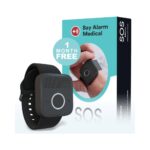
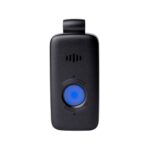
Bay Alarm Medical SOS Micro
Bay Alarm Medical
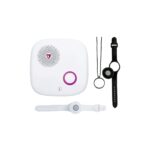
Medical Guardian MGHome Landline
Medical Guardian
You're viewing this
Medical Guardian MGHome Landline You're viewing this device
Medical Guardian
Clinical Context
Our #1-ranked fall detection wearables device demonstrated superior performance across key clinical metrics. Compare detailed specifications to make an evidence-based selection.
Clinical Recommendation
Final assessment and prescribing guidance
The Medical Guardian MGHome Landline is a premier choice for stationary in-home protection. Its massive range and stable analog protocol make it a top recommendation for rural safety.
Recommend If
You prioritize signal range and landline reliability over mobile tracking features.
Avoid If
You are an ambulatory senior who requires emergency protection while traveling or shopping.
Clinical Summary
Composite Score
Recommendation
Price Point
Where to Buy
Verified purchase options and current availability
Medical Guardian
FSA/HSA eligible; annual payment plans often include free shipping and a free month of service.
Important Information
- • Prices and availability subject to change
- • Some devices may require a prescription
- • HSA / FSA eligibility: Rarely Eligible
- • Purchase from authorized retailers for warranty protection
Alternative Devices
It provides superior signal range compared to Bay Alarm Medical and ADT landline models, which typically peak at 1,000 feet and 300 feet respectively.