An affordable, fully standalone spirometer with a built-in display that offers decent basic screening, though it lacks modern smartphone connectivity and strict ATS/ERS 2019 accuracy.
Contec SP10 Handheld Spirometer Review: A Standalone Budget Option for Basic FVC Monitoring
The Contec SP10 Handheld Spirometer is a straightforward, budget-conscious device designed for home use and basic clinical screening. Unlike modern smart spirometers that rely entirely on mobile applications, the SP10 functions as a completely standalone unit. It features a 1.8-inch color LCD that instantly displays flow-volume charts, volume-time graphs, and respiratory parameters including FVC, FEV1, FEV1%, PEF, and FEF25-75%. Compliant with ISO 26782 standards, it claims a volume accuracy of ±3% and a flow accuracy of ±10%, which is adequate for general trend monitoring but falls short of the rigorous ATS/ERS 2019 technical updates required for high-end clinical trials. The device operates on a rechargeable lithium battery and boasts an internal memory capable of storing up to 9,999 test records. While it lacks Bluetooth or Wi-Fi connectivity, users can download data to a PC via a USB cable for deeper analysis using Contec's proprietary software.
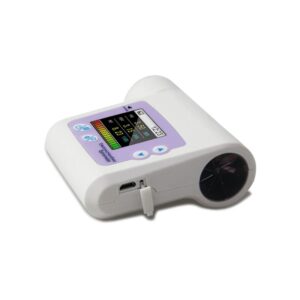
Table of Contents
Clinical Summary
Clinical Performance Metrics
Quantitative assessment based on clinical testing protocols
Measurement Accuracy
Meets older ISO 26782 standards with a flow accuracy of ±10%, which is noticeably wider than the ±5% ATS/ERS 2019 standards met by premium competitors.
Ease of Use
The standalone nature and built-in LCD make it incredibly easy to perform a test and see results instantly without pairing a secondary device.
App Quality
Does not feature a mobile smartphone app; relies on somewhat clunky, dated PC software via a physical USB connection for detailed trend analysis.
Value for Money
At roughly $200, it is one of the cheapest ways to get a device with a built-in color display and full FVC loop measurement capabilities.
Quick Take
Key findings from our clinical evaluation
+
Strengths
- Functions completely independently with a 1.8-inch color LCD display.
- Measures comprehensive parameters including FVC, FEV1, and FEF25-75%.
- Massive internal memory stores up to 9,999 patient records.
- Built-in rechargeable lithium battery eliminates disposable battery costs.
- Highly affordable upfront cost for an FVC-capable device.
−
Limitations
- No Bluetooth or smartphone app connectivity; relies on USB to PC.
- Flow accuracy (±10%) falls short of modern ATS/ERS 2019 standards.
- PC software feels outdated and can be difficult to navigate.
Real-World Usage
Practical considerations for daily operation
Daily Routine Impact
Very fast to use on a daily basis since no smartphone pairing is required. However, reviewing long-term trends requires the extra step of plugging it into a Windows PC.
Learning Curve
Master in a day
Maintenance
Requires periodic charging of the lithium battery via USB and standard replacement of the disposable mouthpieces for hygiene.
Portability
Highly portable. Weighing only 150g, it functions as a self-contained unit, making it excellent for travel without needing to pack additional smart devices.
Manual Use
The manual experience is where this device shines. The built-in color LCD instantly provides flow-volume charts, test scores, and performance ratios without any secondary devices.
Cost & Coverage Analysis
Financial considerations and HSA / FSA eligibility
Pricing Breakdown
HSA/FSA Guidance
May be reimbursable through FSA/HSA accounts, but its lack of modern cloud integration makes it harder to get covered under formal Remote Patient Monitoring (RPM) programs.
Cost Comparison
Significantly cheaper than other standalone devices featuring a built-in screen and full FVC capabilities, though you sacrifice modern wireless connectivity.
Patient Suitability
Clinical indications and contraindications
Indicated For
- • Budget-conscious users needing to measure FVC and FEV1.
- • Individuals who prefer standalone devices and do not want to use a smartphone app.
- • Clinics in low-resource settings requiring a basic, portable screening tool.
Contraindications
- • Users wanting seamless, automatic smartphone syncing and cloud storage.
- • Patients participating in strict clinical trials requiring ATS/ERS 2019 compliance.
Age Considerations
Suitable for adult and pediatric users who are capable of following instructions for a forced expiratory maneuver.
Clinical Efficacy Assessment
Evidence-based evaluation of clinical performance
FEV1 Measurement Accuracy
Measures the precision of Forced Expiratory Volume in the first second.
Adequate for general home monitoring and basic screening, though the ±10% flow tolerance introduces more variability than clinical-grade turbines.
FVC Measurement Accuracy
Measures the precision of Forced Vital Capacity readings.
Captures full vital capacity effectively for its price point, providing a basic FEV1/FVC ratio for obstructive vs. restrictive assessment.
Longitudinal Trend Tracking
Evaluates the device's ability to consistently track respiratory changes over time.
Massive internal memory (9,999 tests) ensures data is saved, but extracting and analyzing that data long-term is hindered by the cumbersome PC-only software.
Clinical Spirometry Correlation
Assesses how closely the home measurements align with formal clinical pulmonary function tests.
Lacks the ATS/ERS 2019 quality-of-blow prompts and high-precision sensors required to be fully interchangeable with formal lab spirometry.
Comparative Performance
Ranked #13 of 14 clinically evaluated home spirometers devices
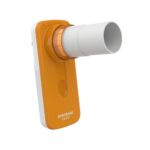
MIR Spirobank Oxi
MIR
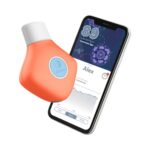
Aluna 2 Smart Spirometer
Aluna
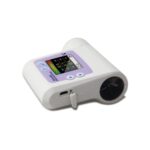
Contec SP10 Handheld Spirometer
Contec
You're viewing this
Contec SP10 Handheld Spirometer You're viewing this device
Contec
Clinical Context
Our #1-ranked home spirometers device demonstrated superior performance across key clinical metrics. Compare detailed specifications to make an evidence-based selection.
Clinical Recommendation
Final assessment and prescribing guidance
The Contec SP10 is a functional, budget-friendly standalone spirometer. While its PC-only connectivity and older ISO 26782 certification feel somewhat dated, its built-in color display and ability to measure FVC provide decent value for those avoiding smartphone reliance.
Recommend If
You need to measure FVC and FEV1 on a strict budget and strongly prefer a standalone device with a built-in screen over using a smartphone app.
Avoid If
You want seamless Bluetooth syncing to a modern mobile app, require ATS/ERS 2019 clinical accuracy, or use a Mac (as the software is generally PC-focused).
Clinical Summary
Composite Score
Recommendation
Price Point
Where to Buy
Verified purchase options and current availability
eBay
New condition from verified medical equipment sellers.
Important Information
- • Prices and availability subject to change
- • Some devices may require a prescription
- • HSA / FSA eligibility: Usually Eligible
- • Purchase from authorized retailers for warranty protection
Alternative Devices
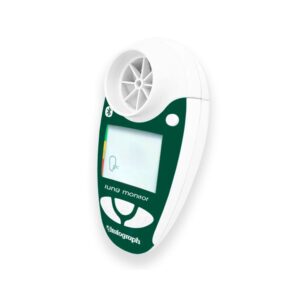
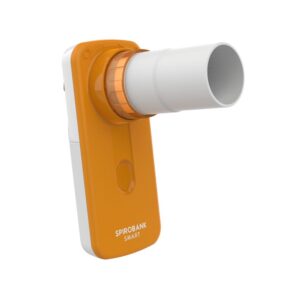
It is much cheaper than the MIR Spirobank Smart or Vitalograph Lung Monitor, but it trades away modern Bluetooth app connectivity and top-tier clinical accuracy for a legacy, USB-based PC workflow and a built-in screen.