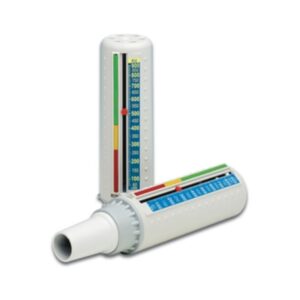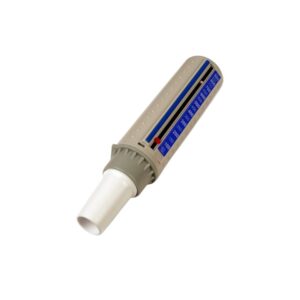
The Mini-Wright Standard remains the gold standard for mechanical peak flow monitoring, offering unmatched clinical pedigree and straightforward, battery-free reliability.
Clement Clarke Mini-Wright Standard Review: The Clinical Benchmark for Mechanical Peak Flow
The Clement Clarke Mini-Wright Standard is the most recognized mechanical peak flow meter in the world, serving as the benchmark for clinical and domiciliary respiratory monitoring for decades. As a Class II medical device, it is specifically engineered to measure Peak Expiratory Flow (PEF) with a focus on durability and precision. The device operates on a spring-loaded piston mechanism that captures the 'fast blast' of a forced exhalation. Our evaluation highlights its robust construction and high-contrast, easy-to-read scale, which follows the standardized EU or ATS measurement scales. A critical safety feature is the built-in one-way valve, which prevents the user from accidentally inhaling through the device, thereby protecting the internal mechanism from moisture and reducing cross-contamination risks. With a measurement range of 60 to 880 L/min, it provides sufficient headroom for the vast majority of adult subjects. While it lacks the digital logging features of modern electronic monitors, its status as a clinically validated tool makes it a primary choice for healthcare providers globally.
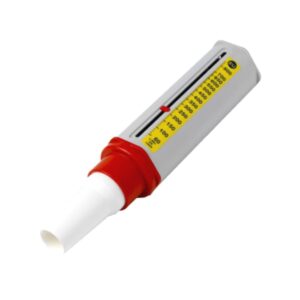
Clement Clarke Mini-Wright Standard Peak Flow Meter
Clement Clarke
Our Score
Table of Contents
Clinical Summary
Clinical Performance Metrics
Quantitative assessment based on clinical testing protocols
Measurement Accuracy
Individually calibrated to meet or exceed international standards, with a validated accuracy of +/- 10% or 10 L/min on the EU scale.
Ease of Use
Extremely user-friendly with zero setup required; the high-contrast markings and simple reset slider are highly intuitive for all age groups.
Build Quality
Reputation for exceptional durability; the mechanical components are designed for a 3-year service life for single users without loss of calibration.
Value for Money
Offers medical-grade accuracy and clinical pedigree at a highly competitive price point, providing long-term reliability without recurring battery costs.
Quick Take
Key findings from our clinical evaluation
+
Strengths
- The globally recognized gold standard for mechanical peak flow measurement.
- Internal one-way valve prevents accidental inhalation of contaminants.
- Wide measurement range (60-880 L/min) suitable for most adults.
- Requires no batteries or power, ensuring constant readiness.
- Durable and washable construction with high-contrast scale.
−
Limitations
- Purely mechanical; lacks digital memory or automatic data logging.
- Does not measure Forced Expiratory Volume (FEV1).
- Requires manual record-keeping in paper journals, which can reduce patient adherence.
Real-World Usage
Practical considerations for daily operation
Daily Routine Impact
Fits seamlessly into daily monitoring without the need for charging or smartphone pairing. Its simplicity encourages frequent morning and evening checks.
Learning Curve
Use right out of the box
Maintenance
Periodic cleaning with warm soapy water and thorough air drying; no mechanical calibration is required by the user.
Portability
Highly portable; self-contained and lightweight (76g), easily fitting into carry-on bags without concerns regarding electronic batteries.
Manual Use
Outstanding; the physical scale provides immediate and unambiguous feedback that is easy for patients to understand and record.
Cost & Coverage Analysis
Financial considerations and HSA / FSA eligibility
Pricing Breakdown
HSA/FSA Guidance
Covered under HCPCS code A4614. Highly eligible for HSA/FSA reimbursement as a primary diagnostic monitoring tool.
Cost Comparison
Priced slightly higher than generic mechanical meters, but offers significantly higher clinical trust and reliability.
Patient Suitability
Clinical indications and contraindications
Indicated For
- • Patients who want a reliable, clinically validated monitor without any electronic components.
- • Adults with asthma who require daily Peak Expiratory Flow tracking.
- • Healthcare settings needing a durable, portable screening tool.
Contraindications
- • Users who require automated digital logs or trends for their physician.
- • Patients needing advanced parameters like FEV1 for COPD management.
Age Considerations
Primarily intended for adults and adolescents; pediatric patients may require the specialized 'Low Range' model for better accuracy at lower flows.
Clinical Efficacy Assessment
Evidence-based evaluation of clinical performance
Peak Flow Accuracy
Measures the precision of Peak Expiratory Flow rate readings.
Maintains high fidelity across the 60-880 L/min range, making it reliable for detecting early-stage airway narrowing in adults.
Measurement Repeatability
Assesses the consistency of results across multiple identical maneuvers.
The internal spring mechanism is engineered for minimal fatigue, ensuring readings remain consistent throughout the device's lifespan.
Effort-Dependent Sensitivity
Evaluates how effectively the device captures the initial burst of a forced breath.
The internal vane is highly responsive to rapid pressure spikes, effectively capturing the peak flow from a valid 'fast blast'.
Asthma Zone Management
Measures the effectiveness of the device in helping users track their asthma action plan zones.
Features manually adjustable zone markers (Green, Yellow, Red) and includes a physical diary for recording and trending measurements.
Comparative Performance
Ranked #9 of 22 clinically evaluated peak flow meters devices
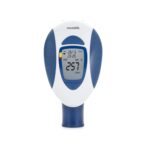
Microlife Digital Peak Flow Meter (PF-100)
Microlife
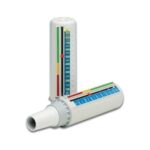
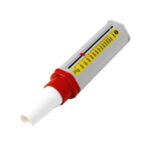
Clement Clarke Mini-Wright Standard Peak Flow Meter
Clement Clarke
You're viewing this
Clement Clarke Mini-Wright Standard Peak Flow Meter You're viewing this device
Clement Clarke
Clinical Context
Our #1-ranked peak flow meters device demonstrated superior performance across key clinical metrics. Compare detailed specifications to make an evidence-based selection.
Clinical Recommendation
Final assessment and prescribing guidance
The Clement Clarke Mini-Wright Standard is the definitive choice for mechanical monitoring. Its long-standing reputation for clinical precision and its rugged, battery-free design make it an essential tool for objective lung health assessment in 2026.
Recommend If
You want the most trusted, no-nonsense mechanical peak flow meter recommended by healthcare professionals worldwide.
Avoid If
You prefer digital tracking via a smartphone app or need to monitor your FEV1 value.
Clinical Summary
Composite Score
Recommendation
Price Point
Where to Buy
Verified purchase options and current availability
National Allergy Supply
FSA/HSA eligible; includes protective storage cover and recording chart.
Important Information
- • Prices and availability subject to change
- • Some devices may require a prescription
- • HSA / FSA eligibility: Usually Eligible
- • Purchase from authorized retailers for warranty protection
Alternative Devices
It provides a more clinically trusted measurement than entry-level mechanical brands, though it lacks the high-flow range (900 L/min) and infection control valve features of the Micro Direct MicroPeak.