
An effective and exceptionally quiet character-themed nebulizer that helps young children cooperate during essential respiratory sessions.
Drive Panda Pediatric System Review: Friendly Design with Clinical Power
The Drive Panda Pediatric System (MQ6003) is a stationary piston compressor nebulizer designed to normalize the treatment experience for young patients. By incorporating a playful panda character into the device's architecture, it addresses the common psychological barriers children face with medical equipment. Technically, the system is highly capable, delivering a maximum air pressure of 36 PSI and maintaining a noise level of just 55 dB, which is significantly quieter than many standard household compressors. While it is a stable tabletop unit weighing 4.3 lbs, its focus is on home-based clinical performance. It ensures efficient medication delivery with standard respirable particle sizing and includes a complete kid-friendly kit with a carrying bag and mask. Its combination of a gentle aesthetic and professional power makes it a reliable tool for managing pediatric asthma and bronchitis.
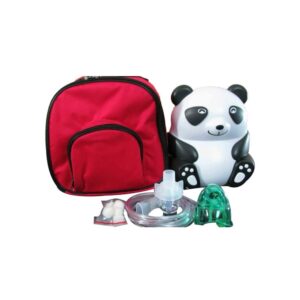
Drive Medical Airial Panda Pediatric Compressor Nebulizer System
Drive Medical
Our Score
Table of Contents
Clinical Summary
Clinical Performance Metrics
Quantitative assessment based on clinical testing protocols
Aerosol Output Quality
Produces a steady, clinical-grade respirable mist suitable for pediatric asthma and lower airway management.
Ease of Use
Features a simple one-button interface and standard secure tubing connections that are easy for caregivers to manage.
Noise Level
Rated at 55 dB, it is one of the quietest character-themed compressors available, reducing treatment anxiety.
Value for Money
Provides professional 36 PSI performance and a high-quality pediatric design at a very competitive entry-level price point.
Quick Take
Key findings from our clinical evaluation
+
Strengths
- Playful panda design significantly improves child cooperation
- Quiet 55 dB operation is less intimidating than standard units
- Strong 36 PSI motor for efficient drug delivery
- Highly affordable pricing for a medically-cleared device
- Comprehensive kit includes a custom carry bag and mask
−
Limitations
- Tabletop design is relatively heavy (4.3 lbs)
- Requires AC power and a permanent setup area
- Larger footprint than portable handheld or mesh models
Real-World Usage
Practical considerations for daily operation
Daily Routine Impact
The Drive Panda becomes a 'friendly' fixture in a child's environment, transforming a potentially scary clinical routine into a more manageable and predictable interaction.
Learning Curve
Use right out of the box
Maintenance
Requires standard cleaning of the nebulizer cup after every use and monthly replacement of the air intake filter.
Portability
Low; intended for home use as a stable tabletop station, though it includes a carry bag for car travel.
Manual Use
Features a robust manual power switch and straightforward assembly that works consistently without digital interference.
Cost & Coverage Analysis
Financial considerations and HSA / FSA eligibility
Pricing Breakdown
1-Year Total
$180.20
3-Year Total
$455.00
HSA/FSA Guidance
Commonly covered as standard durable medical equipment (DME) for pediatric respiratory diagnoses; use HCPCS code E0570.
Cost Comparison
Significantly more affordable than high-end medical units while offering better noise reduction than most budget competitors.
Patient Suitability
Clinical indications and contraindications
Indicated For
- • Parents of young children who resist medical treatments
- • Budget-conscious families needing a reliable home machine
- • Pediatric patients sensitive to loud mechanical noises
Contraindications
- • Teenagers or adults preferring a Clinical/Neutral design
- • Users needing a silent, battery-powered travel device
Age Considerations
Specifically cleared for pediatric use; suitable for infants and children when used with appropriate masks.
Clinical Efficacy Assessment
Evidence-based evaluation of clinical performance
Medication Delivery Efficiency
Measures the percentage of medication successfully converted to mist.
Reliable piston pump ensures the majority of the prescribed dose is effectively nebulized with standard residual levels.
Respirable Particle Fraction
The proportion of particles sized for deep lung absorption.
Maintains a particle size output consistent with Class II medical device requirements for lower respiratory tract delivery.
Treatment Time Efficiency
How quickly the device delivers a standard dose.
The 36 PSI motor supports faster treatments than insurance-issued 'white box' compressors, often shaving minutes off session times.
Lung Deposition Rate
The rate at which the medication is absorbed in the lungs.
Steady and consistent airflow supports effective delivery even when children have shallow or variable breathing patterns.
Comparative Performance
Ranked #9 of 22 clinically evaluated nebulizers devices
Aura Portable Mesh Nebulizer (Caring Mill)
Aura Medical
PARI eRapid Nebulizer System
PARI
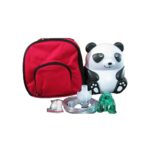
Drive Medical Airial Panda Pediatric Compressor Nebulizer System
Drive Medical
You're viewing this
Drive Medical Airial Panda Pediatric Compressor Nebulizer System You're viewing this device
Drive Medical
Clinical Context
Our #1-ranked nebulizers device demonstrated superior performance across key clinical metrics. Compare detailed specifications to make an evidence-based selection.
Clinical Recommendation
Final assessment and prescribing guidance
The Drive Panda Pediatric System is a top-tier choice for making home respiratory therapy stress-free for children. Its quiet motor and engaging design provide a high-value balance of performance and comfort.
Recommend If
You need a quiet, reliable, and kid-friendly home nebulizer for a child on a budget.
Avoid If
You require the portability of a handheld mesh device or the absolute silence of ultrasonic technology.
Clinical Summary
Composite Score
Recommendation
Price Point
Where to Buy
Verified purchase options and current availability
Sleeplay
FSA/HSA eligible; 2-year warranty
Vitality Medical
Prescription required; Free shipping over $49
Just Nebulizers
Includes reusable kit and carrying case
Important Information
- • Prices and availability subject to change
- • Some devices may require a prescription
- • HSA / FSA eligibility: Usually Eligible
- • Purchase from authorized retailers for warranty protection