While its minimalist design and 90-day AAA battery life are excellent for travel, the Quip's exceptionally weak motor functions more like a vibrating manual brush than a true sonic device.
Quip Sonic Review: Sleek Portability with Baseline Clinical Power
The Quip Sonic toothbrush aggressively targets the minimalist lifestyle and frequent traveler demographic through its sleek, metallic cylindrical design and an ecosystem built entirely around automated, direct-to-consumer subscriptions. Operating on a standard, user-replaceable AAA battery, the device impressively maintains a 90-day operational lifespan, entirely eliminating the need for cords or bulky charging docks. Unfortunately, this extreme portability demands a severe compromise in clinical prophylactic power. The internal micro-motor generates vibrations that are exceptionally weak, to the point where the device operates more like a vibrating manual toothbrush than a true fluid-dynamic sonic tool. Users must exert significant manual scrubbing effort to dislodge debris, directly contravening the primary clinical benefit of electromechanical toothbrushes. While it is superior to a purely manual brush, it occupies the absolute baseline of acceptable powered oral care.
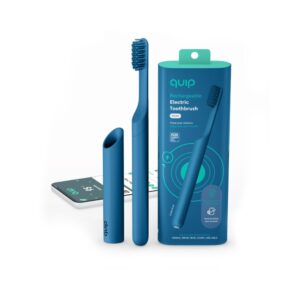
Table of Contents
Clinical Summary
Clinical Performance Metrics
Quantitative assessment based on clinical testing protocols
Cleaning Performance
The extremely weak micro-motor generates minimal fluid dynamics, requiring the user to manually scrub away plaque.
Ease of Use
Incredibly simple and lightweight, with a genius travel cover that doubles as a mirror mount, and zero charging cables to manage.
Reliability
The simple mechanical design and reliance on standard AAA batteries mean the device rarely suffers from the sealed-cell degradation of premium models.
Value for Money
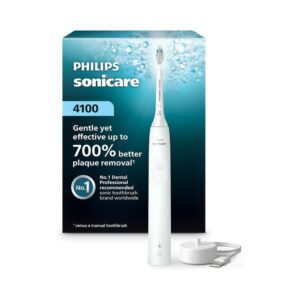
At $40, it costs the same as the vastly superior Philips Sonicare 4100, making it a poor financial investment for actual clinical cleaning power.
Quick Take
Key findings from our clinical evaluation
+
Strengths
- Sleek, highly aesthetic metallic cylindrical design
- 90-day operational life on a single AAA battery
- Zero charging cords or bulky bathroom docks required
- Convenient automated subscription for heads and batteries
- Travel cover cleverly doubles as a bathroom mirror mount
−
Limitations
- Exceptionally weak motor lacks true sonic cleaning power
- Requires identical manual scrubbing effort as a non-electric brush
- Completely lacks a visual pressure sensor
Real-World Usage
Practical considerations for daily operation
Daily Routine Impact
Completely unobtrusive in the bathroom, taking up no counter space and requiring zero cord management, but demanding a longer, more active physical brushing effort from the user.
Learning Curve
Use right out of the box
Maintenance
Replace the brush head and the AAA battery every 3 months, typically handled effortlessly via their automated subscription service.
Portability
Unmatched. It is effectively the size of a manual toothbrush and requires no chargers, making it the ultimate tool for minimalist backpackers or frequent flyers.
Manual Use
It essentially functions as a manual toothbrush with a built-in 2-minute vibrating timer. The user must provide the sweeping and scrubbing motion entirely on their own.
Cost & Coverage Analysis
Financial considerations and HSA / FSA eligibility
Pricing Breakdown
HSA/FSA Guidance
Not covered by dental insurance. Consumers may be able to use FSA/HSA funds, but it operates firmly in the consumer wellness space rather than as a strict clinical device.
Cost Comparison
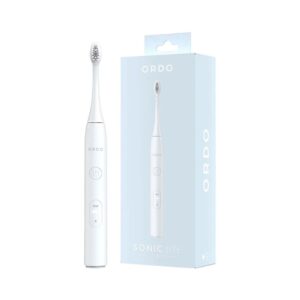
Priced identically to the Philips Sonicare 4100 and Ordo Sonic Lite, both of which offer exponentially more powerful and clinically effective motors.
Patient Suitability
Clinical indications and contraindications
Indicated For
- • Minimalists who absolutely refuse to have cables on their bathroom counter
- • Frequent travelers who want the smallest possible electric brush profile
- • Consumers who love automated subscription deliveries
Contraindications
- • Users seeking the deep, fluid-dynamic clean of a true sonic toothbrush
- • Individuals with heavy plaque buildup or orthodontic hardware
Age Considerations
Appropriate for all ages capable of standard manual brushing, as the weak motor poses virtually no risk of sensory overload for children.
Clinical Efficacy Assessment
Evidence-based evaluation of clinical performance
Primary Outcome
Measures the percentage reduction in whole-mouth plaque scores over the trial period.
Provides only a marginal improvement in plaque reduction compared to a highly compliant user with a standard manual toothbrush.
Secondary Outcome
Measures the reduction of gingival inflammation and bleeding on probing.
Lacks the high-frequency microstreaming necessary to clean subgingival pockets, and the lack of a pressure sensor means users can still easily cause recession by scrubbing too hard.
Comparative Performance
Ranked #20 of 22 clinically evaluated electric toothbrush devices
Laifen Wave Pro Electric Toothbrush
Laifen
Laifen Wave Electric Toothbrush
Laifen
Quip Sonic
Quip
You're viewing this
Quip Sonic You're viewing this device
Quip
Clinical Context
Our #1-ranked electric toothbrush device demonstrated superior performance across key clinical metrics. Compare detailed specifications to make an evidence-based selection.
Clinical Recommendation
Final assessment and prescribing guidance
The Quip Sonic is an aesthetic travel accessory masquerading as a high-performance clinical device. While its minimalist footprint and AAA battery are exceptionally convenient, its weak motor forces users to rely on manual scrubbing, defeating the primary purpose of an electric toothbrush.
Recommend If
You want a sleek, highly portable toothbrush for travel and appreciate the 'set-it-and-forget-it' convenience of automated battery and brush head deliveries.
Avoid If
You want the true plaque-disrupting power, fluid dynamics, and 'dentist-clean' feeling of a modern electromechanical toothbrush.
Clinical Summary
Composite Score
Recommendation
Price Point
Where to Buy
Verified purchase options and current availability
Quip Official Site
Requires opting into the automated refill subscription for the lowest pricing on replacement heads.
Target
FSA/HSA eligible. Available in multiple metallic finishes (Silver, Slate, Copper, Gold).
Walmart
FSA/HSA eligible.
Important Information
- • Prices and availability subject to change
- • Some devices may require a prescription
- • HSA / FSA eligibility: Not Typically Eligible
- • Purchase from authorized retailers for warranty protection
Alternative Devices
It occupies the absolute baseline of the market. It is severely underpowered compared to similarly priced models like the Ordo Sonic Lite or the Sonicare 4100, trading all mechanical power for aesthetic portability.