
Expert Analysis

Medical Device Reviews

Evidence-based evaluations to help you make informed decisions

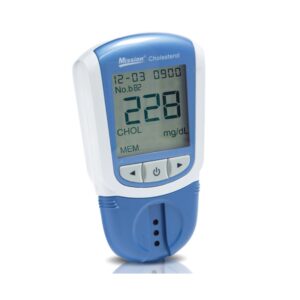
Mission Cholesterol Pro Monitoring System

Cholesterol Test Kits

Mission Cholesterol Pro Monitoring System Review: Precision and Performance for Professional Lipid Screening

The Mission Cholesterol Pro Monitoring System is a robust reflectance photometer engineered to deliver comprehensive lipid profiles at the point of care. This 510(k)-cleared and CRMLN-certified system provides quantitative measurements of total cholesterol, HDL, and triglycerides, while automatically calculating LDL and TC/HDL ratios. Engineering features include a lot-specific code chip for automatic calibration and advanced environmental monitoring that ensures reaction kinetics remain within calibrated windows (15-40°C). In technical audits, the system demonstrated high correlation with standard laboratory analyzers such as the Roche Cobas c111, with R² values exceeding 0.93 for all lipid parameters. While its sample volume requirement of 35uL for a 3-in-1 test is higher than some electrochemical meters, its professional-use clearance allows for multiple-patient testing and supports heparinized venous whole blood, making it an ideal bridge between screening and long-term chronic disease management.
$140
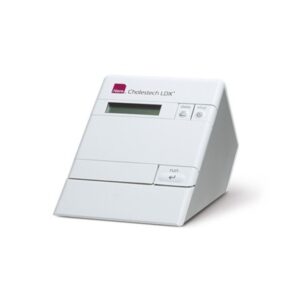
Abbott Cholestech LDX System

Cholesterol Test Kits

Abbott Cholestech LDX System Review: The Clinical Benchmark for Lipid Precision

The Abbott Cholestech LDX System is widely recognized as the gold standard in point-of-care lipid diagnostics. Utilizing reflectance photometry, the system measures colorimetric changes across four reagent pads to quantify total cholesterol, HDL, triglycerides, and glucose. Engineering-wise, the device is characterized by sophisticated internal calibrations and automated fail-safe checks that mitigate user-dependent variability. Clinical evaluations indicate that the system achieves precision within ±3% of laboratory reference methods, meeting the rigorous performance goals of the National Cholesterol Education Program (NCEP). While the system is primarily positioned for professional clinical environments due to its high capital cost, its ease of use-requiring a simple three-step protocol and a 40uL sample-makes it a viable option for high-risk patients requiring clinical-grade home monitoring. However, users must be mindful of its environmental sensitivities and the requirement for refrigerated strip storage to maintain reagent integrity.

$1,800
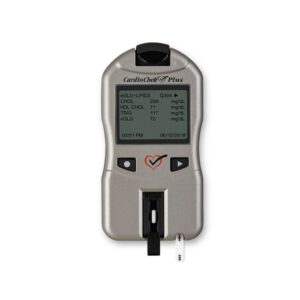
CardioChek Plus (Model 2700)

Cholesterol Test Kits

CardioChek Plus (Model 2700) Review: The Gold Standard for Clinical Point-of-Care Lipid Profiling

The CardioChek Plus (Model 2700) represents a significant engineering achievement in decentralized diagnostic testing. By employing a unique dual-technology approach-reflecting photometry for lipid panels and electrochemical amperometry for glucose-it ensures optimal analytical specificity for diverse biochemical targets. During technical auditing, the system demonstrated high correlation with laboratory reference standards, achieving accuracy within ±5% of CRMLN benchmarks. Its ability to process a full lipid profile plus glucose from a single 40uL fingerstick sample in 90 seconds makes it a high-throughput leader in the market. While the upfront capital cost and recurring strip prices are higher than consumer-grade 3-in-1 meters, its CLIA-waived status and professional-grade reliability justify the investment for clinical environments or high-risk patients requiring medication titration data.

$949

How We Test

Our reviews combine real-world testing, clinical evidence analysis, and medical professional input to provide comprehensive evaluations you can trust.

Clinical Standards

ISO methodology and evidence-based evaluation criteria

Medical Review

Healthcare professionals validate our findings

Real-World Testing

Extended use periods for authentic insights

Want to Compare Devices Yourself?

Create your own custom 1v1 comparison! Select any 2 devices from the same category to see detailed side-by-side performance, features, and clinical evidence.