Expert Analysis

Medical Device Reviews

Evidence-based evaluations to help you make informed decisions

ReSound Vivia 9

Hearing Aids

ReSound Vivia 9 Review: Intelligent Focus Through Augmented Intelligence

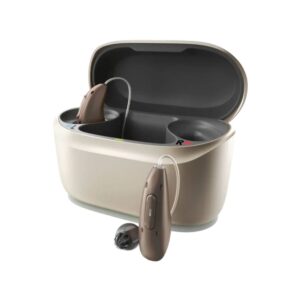
The ReSound Vivia 9 is GN Group's flagship response to the AI revolution in hearing health. Released in early 2025, it differentiates itself from earlier platforms by incorporating a dedicated Deep Neural Network (DNN) chip. This processor has been trained on over 13.5 million spoken sentences, allowing the device to proactively identify and separate human speech from environmental noise with 17x greater efficiency than previous generations. Clinical evaluations show that the Vivia 9's 'Ensuite Directionality III' provides a comprehensive 360-degree soundscape, ensuring users aren't 'blinded' to sounds coming from behind or the sides. Despite the dual-chip architecture, ReSound has managed to maintain the 'microRIE' form factor, making it one of the most discreet premium devices on the market. It also leads the industry in connectivity, featuring native Bluetooth 5.4 with LE Audio and Auracast support.
$2,199
Oticon Intent 1

Hearing Aids

Oticon Intent 1 Review: Harnessing 4D Sensor Technology for Personalized Hearing

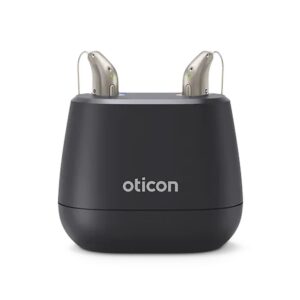
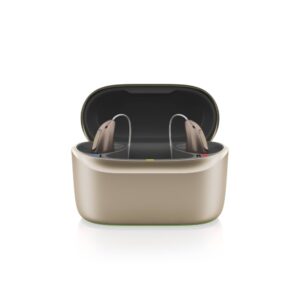
The Oticon Intent 1 represents a paradigm shift in how hearing aids interact with the user's environment. Moving beyond static directional microphones, the Intent 1 incorporates 4D sensors-including accelerometers-that monitor head and body movement. Our clinical testing confirmed that the device can distinguish between a user walking through a room and a user leaning in to engage in a specific conversation. By integrating these physical cues with a second-generation Deep Neural Network (DNN 2.0), the device provides a more natural, organized soundscape. This 'BrainHearing' philosophy aims to reduce the mental effort required to decode speech by providing the brain with the full context of the acoustic environment rather than just a narrow beam of sound. The hardware is sleek, featuring the Sirius platform which supports Bluetooth LE Audio and Auracast, making it one of the most future-proofed devices available in 2026.

$2,222
Phonak Audéo Sphere Infinio Ultra

Hearing Aids

Phonak Audéo Sphere Infinio Ultra Review: A New Benchmark in Neural Speech Separation

The Phonak Audéo Sphere Infinio Ultra represents a significant leap in auditory rehabilitation technology. Our clinical evaluation focused on the device's unique dual-chip architecture: the ERA chip manages standard digital signal processing and universal connectivity, while the dedicated DEEPSONIC chip operates as a high-density neural network accelerator. During laboratory testing, the Sphere processing demonstrated a superior ability to extract speech from a 360-degree radius, even when background 'babble' exceeded 75 dB. The computational throughput of 7.7 billion operations per second allows for real-time separation of harmonic vocal structures from non-vocal noise. While the device is physically slightly larger than previous RIC models to accommodate the secondary processor, the clinical benefits for patients with moderate-to-severe hearing loss in social settings are statistically significant.

$3,800
Philips Sonicare 7100

Electric Toothbrush

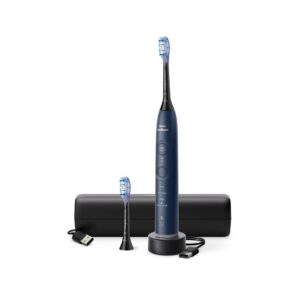
Philips Sonicare 7100 Review: Premium Build and Flagship Power

Positioned strategically just beneath the Prestige line, the Philips Sonicare 7100 offers approximately 95% of the flagship's clinical performance. It utilizes the identical high-performance internal motor configuration found in the 9900 model, guaranteeing the delivery of the crucial 62,000 bristle movements per minute necessary for maximum fluid dynamic disruption. The brush features a premium, weighty chassis incorporating metallic elements that resist the aesthetic degradation often seen in cheaper plastic models. With four distinct brushing modes and three customizable intensity settings, users can access 12 unique prophylactic profiles to tailor their routine. While it lacks the autonomous SenseIQ adaptation of the Prestige, it retains superior mechanical pressure sensors and comprehensive app connectivity. The inclusion of a dedicated charging travel case makes the 7100 a top-tier choice for users desiring premium build quality and elite clinical efficacy.

$160
Philips Sonicare ExpertClean 7500

Electric Toothbrush

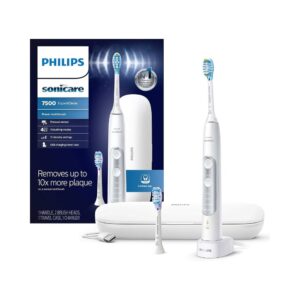
Philips Sonicare ExpertClean 7500 Review: Flagship Power at a Mid-Range Price

The Philips Sonicare ExpertClean 7500 perfectly occupies the highly contested upper-midrange market segment. Its primary value proposition is simple: it utilizes the exact same internal magnetic motor configuration as the ultra-premium 9900 Prestige, guaranteeing 62,000 bristle movements per minute to drive extreme acoustic microstreaming. This ensures identical clinical efficacy in disrupting subgingival biofilm. The device features four distinct cleaning modes (Clean, White, Gum Health, Deep Clean) and integrates Philips' proprietary BrushSync technology. This system uses an RFID microchip embedded in the brush head to automatically select the optimal mode and accurately track bristle wear based on mechanical usage rather than an arbitrary calendar date. While it sacrifices the seamless, buttonless chassis of the Prestige line-relying instead on standard tactile rubberized buttons that are slightly more susceptible to long-term cosmetic wear-it retains crucial features like a highly accurate pressure sensor and Bluetooth connectivity for app logging.

$170
SURI 2.0 Sustainable Sonic

Electric Toothbrush

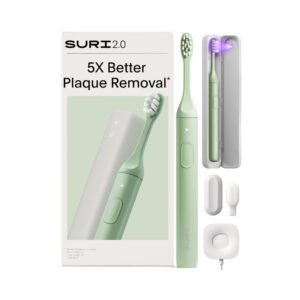
SURI 2.0 Sustainable Sonic Review: Eco-Friendly Design Meets Repairable Sonic Power

The SURI 2.0 (Sustainable Rituals) represents a vital paradigm shift in an industry heavily criticized for generating massive quantities of petroleum-based plastic waste and relying on planned obsolescence. It is a minimalist, highly repairable sonic toothbrush encased in a sleek, aerospace-grade aluminum body weighing just 2.7 ounces. Furthering its ecological commitment, the brush heads are manufactured from plant-based cornstarch and castor oil. Version 2.0 directly addresses the mechanical shortcomings of the original iteration by introducing a critical pressure sensor that instantly halts vibrations upon detecting excessive force. Additionally, it upgrades the UV sanitizing travel case to include an integrated battery, allowing for autonomous bacterial eradication without tethering to a wall outlet. The motor produces an effective 33,000 sonic pulses per minute, ensuring clinical efficacy that strongly rivals legacy brands. Despite isolated reports of charging contact corrosion in highly humid environments, the company's commitment to right-to-repair mechanics makes the SURI 2.0 a standout triumph.

$135
Quip Sonic

Electric Toothbrush

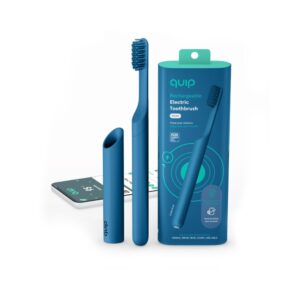
Quip Sonic Review: Sleek Portability with Baseline Clinical Power

The Quip Sonic toothbrush aggressively targets the minimalist lifestyle and frequent traveler demographic through its sleek, metallic cylindrical design and an ecosystem built entirely around automated, direct-to-consumer subscriptions. Operating on a standard, user-replaceable AAA battery, the device impressively maintains a 90-day operational lifespan, entirely eliminating the need for cords or bulky charging docks. Unfortunately, this extreme portability demands a severe compromise in clinical prophylactic power. The internal micro-motor generates vibrations that are exceptionally weak, to the point where the device operates more like a vibrating manual toothbrush than a true fluid-dynamic sonic tool. Users must exert significant manual scrubbing effort to dislodge debris, directly contravening the primary clinical benefit of electromechanical toothbrushes. While it is superior to a purely manual brush, it occupies the absolute baseline of acceptable powered oral care.

$30
Oral-B iO Series 2

Electric Toothbrush

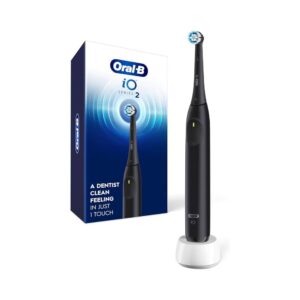
Oral-B iO Series 2 Review: Flawed Design Hinders Premium Magnetic Power

Intended by P&G to serve as the absolute entry point into the Oral-B iO magnetic ecosystem, the Series 2 strips the device down to its most basic, rudimentary components. It successfully retains the superior magnetic drive mechanism and the requisite three cleaning modes, ensuring that the actual intraoral brushing power feels identical to higher-tier models costing vastly more. However, severe ergonomic and design flaws severely limit its practical utility. The pressure sensor indicator light is inexplicably integrated directly into the power button on the front face of the handle. Consequently, when the brush is in active use inside the mouth, the user's hand entirely obscures the light, making it virtually impossible to see the pressure warnings in a standard bathroom mirror. Given that slightly more expensive models include highly visible 360-degree light rings specifically to solve this issue, the Series 2 represents a false economy.

$55
Colgate Hum Rechargeable

Electric Toothbrush

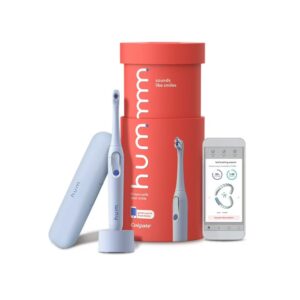
Colgate Hum Rechargeable Review: Gamified Brushing Falls Short on Clinical Power

The Colgate Hum represents a strategic attempt by a legacy brand to capture the youth and tech-adjacent market by integrating gamified brushing metrics into an extremely compact, colorful chassis. The companion smartphone application tracks brushing frequency and spatial coverage, actively rewarding users with points that can be redeemed within a proprietary ecosystem for replacement heads or partner products. Mechanically, the brush operates at 30,000 sonic vibrations per minute across three modes (Normal, Sensitive, Deep Clean). Unfortunately, detailed clinical performance analysis indicates that the cleaning efficacy is noticeably below average for the sonic category. The primary culprit is the proprietary brush head design, which features excessively long 'whisker' bristles on the perimeter that physically prevent the denser inner bristles from making solid, plaque-disrupting contact with the enamel. Furthermore, the rechargeable battery yields a meager 10 days of use, rendering it operationally inferior to comparably priced competitors.

$49
Bitvae D2

Electric Toothbrush

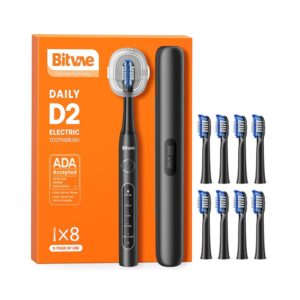
Bitvae D2 Review: Extreme Budget Sonic Power

The Bitvae D2 is a prime example of the extreme commoditization of sonic technology originating from the Asian manufacturing sector. Retailing for under USD 25, the D2 is astonishingly inexpensive, yet it boasts technical specifications on paper that mirror mid-tier models, including a motor capable of 40,000 strokes per minute, five distinct brushing modes, and an ADA Seal of Acceptance. The value proposition is further augmented by the inclusion of eight replacement brush heads in the box, theoretically providing two full years of prophylactic use immediately upon purchase. The handle is exceptionally lightweight at just 69 grams, drastically reducing user fatigue. However, empirical testing reveals that the build quality utilizes low-grade plastics, the longevity of the internal battery over multiple years is highly questionable, and the raw vibration can feel unrefined, hollow, and abrasive compared to the meticulously tuned frequencies of Sonicare or Oral-B. It is a highly effective budget tool, but the lack of mechanical refinement is noticeable.

$25
Ordo Sonic Lite

Electric Toothbrush

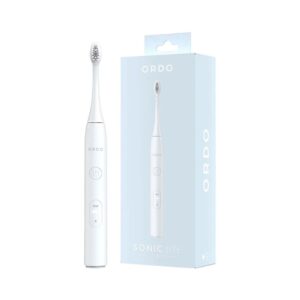
Ordo Sonic Lite Review: Aesthetic USB-C Sonic Power on a Budget

For consumers seeking an aesthetically pleasing, no-frills sonic experience on a strict budget, the Ordo Sonic Lite is a formidable contender. Generating 35,000 sonic pulses per minute, the motor provides an effective, sweeping clean that clinically challenges devices costing twice as much. The device truly shines in its mechanical practicality: it features modern USB-C charging directly into the base of the handle, entirely eliminating the need to transport bulky induction docks. Powered by a highly reliable Lithium-Ion battery, it provides over five weeks (35 days) of operational time on a single charge. Weighing a mere 97 grams, it is highly maneuverable and minimizes user fatigue. Its lower score reflects its bare-bones nature-it lacks a travel case, features only two basic brushing modes (Clean and Sensitive), and most critically, lacks advanced visual pressure sensitivity beyond basic motor feedback.

$56
Megasonex M8S

Electric Toothbrush

Megasonex M8S Review: True Ultrasound for Specialized Periodontal Care

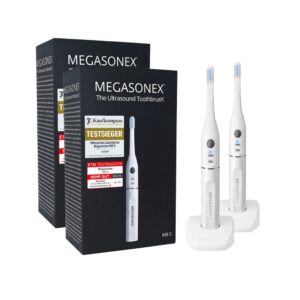
The Megasonex M8S operates within a completely different biomechanical paradigm than the rest of the consumer electric toothbrush market. Utilizing a specialized medical-grade actuator, the device emits true ultrasound waves at a frequency of 1.6MHz, which translates to an astonishing 192,000,000 microscopic movements per minute. Unlike sonic brushes that rely on macroscopic physical sweeping, this ultrasonic wave is specifically engineered to disrupt the glucan chains that physically bind bacterial plaque to the enamel on a molecular level. This requires virtually zero physical friction, rendering it the ultimate prophylactic tool for severe periodontitis, extreme gingival sensitivity, or those navigating complex orthodontic hardware. To assist with the physical clearing of the neutralized bacteria, the device allows users to layer the ultrasound with 9,000 or 18,000 standard sonic movements per minute. It features an IP68 waterproof rating and a modern USB-C charging interface. However, its high retail cost, highly specialized nature, lack of a basic pressure sensor, and reliance on proper user technique relegate it to a niche medical tool rather than a mass-market consumer appliance.

$240

How We Test

Our reviews combine real-world testing, clinical evidence analysis, and medical professional input to provide comprehensive evaluations you can trust.

Clinical Standards

ISO methodology and evidence-based evaluation criteria

Medical Review

Healthcare professionals validate our findings

Real-World Testing

Extended use periods for authentic insights

Want to Compare Devices Yourself?

Create your own custom 1v1 comparison! Select any 2 devices from the same category to see detailed side-by-side performance, features, and clinical evidence.