Expert Analysis

Medical Device Reviews

Evidence-based evaluations to help you make informed decisions

Eko DUO (ECG + Stethoscope)

Personal ECG Monitors

Eko DUO (ECG + Stethoscope) Review: The Professional Standard for Digital Auscultation and Rhythm Assessment

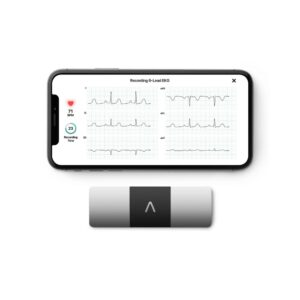
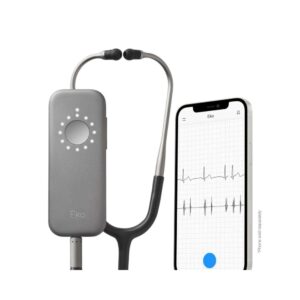
The Eko DUO (ECG + Stethoscope) represents a significant advancement in bedside diagnostic technology. It combines a 1-lead ECG with a high-fidelity digital stethoscope, allowing for the simultaneous assessment of electrical and mechanical heart function. The device provides up to 60x sound amplification and features advanced background noise reduction, which is critical for identifying subtle murmurs or gallops in loud clinical environments. The integrated ECG electrodes capture a Lead I rhythm strip that is transmitted via Bluetooth to the Eko App for real-time visualization and analysis. The DUO is specifically designed to work with Eko's FDA-cleared AI algorithms, which can screen for Atrial Fibrillation and heart murmurs with high sensitivity. While it is a single-lead device, the correlation between the acoustic and electrical data provides a depth of insight typically only found in much larger clinical systems. Its wireless charging capability and pocket-sized form factor make it highly practical for daily rounds or home-based monitoring under medical supervision.
$349
Fourth Frontier X Plus

Personal ECG Monitors

Fourth Frontier X Plus Review: Continuous Cardiac Monitoring for Endurance Athletes

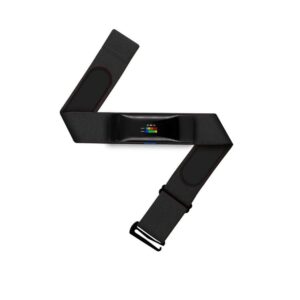
The Fourth Frontier X Plus distinguishes itself from traditional spot-check ECG monitors by providing continuous recording during vigorous exercise. Worn as a chest strap, it captures high-fidelity Lead I ECG data, heart rate, and breathing rate. Its standout feature is the cardiac 'Strain' metric, which provides vibration alerts when the user exceeds personalized safe thresholds, helping to prevent overexertion. The device syncs data to a mobile app and a sophisticated web-based cloud platform for in-depth analysis of rhythm and performance metrics. While it requires the use of a chest strap, the signal quality during high-movement activities is superior to wrist-based sensors, making it a professional-grade tool for endurance monitoring.

$499
Livenpace TH12 (Portable 12-Lead Monitor)

Personal ECG Monitors

Livenpace TH12 Review: Clinical-Grade 24-Hour 12-Lead Holter Monitoring at Home

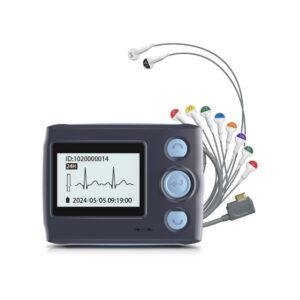
The Livenpace TH12 (Model TH12) is a dynamic Holter recorder designed for long-term continuous ECG monitoring. Unlike basic handheld devices, it utilizes a 10-wire lead system to provide true 12-lead data, making it capable of detecting transient myocardial ischemia and capturing infrequent arrhythmias that spot-check monitors often miss. The device complies with IEC 60601-2-47 standards for ambulatory electrocardiographic systems, ensuring high clinical reliability. While the setup is more involved than consumer wearables-requiring the placement of 10 electrodes-it offers a level of diagnostic depth usually reserved for clinical facilities. Data is stored on a dedicated industrial-grade SD card and analyzed via the Livenpace PC software (available for Windows and Mac), which generates professional reports through server-side analysis. It is an ideal solution for patients requiring comprehensive 24-hour cardiac surveillance without being tethered to hospital equipment.

$299
Withings BeamO

Personal ECG Monitors

Withings BeamO Review: The Comprehensive 4-in-1 Multiscope for Remote Health Monitoring

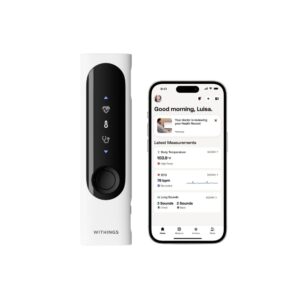
The Withings BeamO, referred to as a 'multiscope,' is a multifunctional medical device designed for comprehensive at-home health checkups[cite: 1, 13]. It integrates four critical clinical tools: a 1-lead ECG, a pulse oximeter (SpO2), a contactless temporal artery thermometer, and a digital stethoscope[cite: 13, 20, 21]. The device is engineered to provide an overview of multiple physiological conditions, facilitating increased awareness of a patient's health status and providing trends over time that can be shared with healthcare professionals[cite: 68, 69]. The BeamO is particularly notable for its connectivity options, supporting Wi-Fi, Bluetooth, and optional LTE (Cat M1) for data synchronization even when a smartphone is not nearby[cite: 11, 208, 347]. Clinical validation has been established for its temperature measurement accuracy through studies conforming to EN ISO 80601-2-56 standards[cite: 70]. While the ECG and SpO2 features are restricted to adult use (18+), the thermometer and stethoscope are indicated for use on individuals of all ages[cite: 14, 15, 31, 216]. The device emphasizes security with features like two-factor authentication and encrypted data sharing through HealthLinks[cite: 78, 81, 105, 534].

$250
AliveCor Kardia 12L System

Personal ECG Monitors

AliveCor Kardia 12L System Review: Professional Grade Remote 12-Lead ECG Analysis

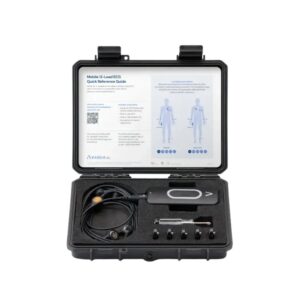
The AliveCor Kardia 12L System is a sophisticated, prescription-only electrocardiograph designed to bridge the gap between traditional 10-electrode machines and ultra-portable consumer devices[cite: 1, 196, 218]. It utilizes a unique acquisition method, recording four standard diagnostic-bandwidth leads (I, II, V1 or V2, and V4) through five gel electrodes[cite: 19, 31, 76]. From these, the system derives the remaining limb leads and synthesizes the remaining precordial leads to present a full 12-lead ECG[cite: 19, 32]. While the synthesized leads are for informational purposes and not for primary diagnostic decision-making, the core recorded and derived leads meet clinical standards for diagnostic bandwidth (0.05 Hz to 150 Hz)[cite: 33, 481]. The system integrates the KAI 12L software, which offers two distinct analysis modes: Asymptomatic (optimized for high specificity) and Symptomatic (optimized for high sensitivity), allowing clinicians to tailor the automated interpretation to the patient's presentation[cite: 274, 290, 352].

$1,500
HeartBeam AIMIGo

Personal ECG Monitors

HeartBeam AIMIGo Review: Personalized 12-Lead ECG Synthesis in a Pocket-Sized Device

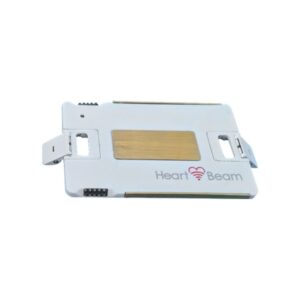
The HeartBeam AIMIGo represents a paradigm shift in remote cardiac monitoring. Unlike standard handheld monitors that provide single or six-lead data, the AIMIGo system uses a proprietary 12-lead ECG synthesis software. It records a 3-lead ECG in three directions using 5 electrodes and applies a 'Personalized Transformation Matrix' (PTM) to generate a full 12-lead representation. This PTM is uniquely created for each patient during an initial onboarding session where the AIMIGo signal is correlated with a standard 12-lead ECG machine (specifically the EDAN SE-1515 DX-12). The system is designed for the manual assessment of non-life-threatening arrhythmias, including AFib, tachycardia, and bradycardia. While the onboarding process requires a clinical visit and specific hardware, the resulting ability for a patient to capture hospital-comparable data at home is a significant clinical advantage. The platform includes a robust clinician portal for longitudinal data review and symptom tracking.

$299
iRhythm Zio Monitor

Personal ECG Monitors

iRhythm Zio Monitor Review: The Gold Standard for Long-Term Arrhythmia Detection

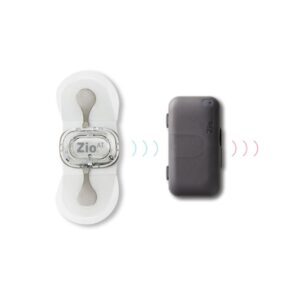
The iRhythm Zio Monitor represents the pinnacle of 'wear and forget' medical technology. Unlike traditional Holter monitors that only record for 24-48 hours, the Zio patch provides continuous single-lead ECG recording for up to 14 days. This extended duration significantly increases the probability of detecting transient arrhythmias, such as paroxysmal atrial fibrillation or symptomatic bradycardia. The device is a small, water-resistant adhesive patch with no external wires or electrodes, which drastically improves patient compliance compared to bulky alternatives. Clinical data shows that the Zio monitor's long-term recording capability leads to a higher diagnostic yield and more definitive clinical actions. Data is analyzed by iRhythm's proprietary AI and certified cardiographic technicians, culminating in a comprehensive report for the prescribing physician. While it does not provide real-time feedback to the patient, its clinical accuracy and ease of use make it the preferred choice for professional diagnostic monitoring.

AliveCor KardiaMobile 6L

Personal ECG Monitors

AliveCor KardiaMobile 6L Review: The Gold Standard in Portable Six-Lead ECG Monitoring

The KardiaMobile 6L offers a sophisticated bridge between consumer wearables and clinical diagnostic tools. By utilizing three electrodes to derive six leads (I, II, III, aVR, aVL, and aVF), it provides a much more detailed picture of heart health than standard single-lead devices. Clinical validation studies cited in the manual demonstrate that the 6L is qualitatively equivalent to hospital-grade 12-lead ECGs for arrhythmia assessment. The device is compact, wireless, and integrates seamlessly with the Kardia app for instant analysis of AFib, bradycardia, and tachycardia. While it requires a bare-skin connection on the left leg for 6-lead readings and benefits significantly from a KardiaCare subscription, its accuracy and ease of data sharing with clinicians make it a top-tier choice for remote cardiac monitoring.

$149
MDHearing Volt Max

Hearing Aids

MDHearing Volt Max Review: Accessible and Reliable Budget Hearing Assistance

The MDHearing Volt Max is designed to provide the core essentials of hearing rehabilitation at a highly accessible price point. Our clinical evaluation focused on its balance of simplicity and modern features, such as the ability to perform a self-fitting hearing test via the MDHearing app. While it lacks the advanced Deep Neural Networks and AI signal extraction found in the top-ranked models, the Volt Max utilizes a reliable 16-channel digital processor that provides significant benefit for those with mild-to-moderate hearing loss. Laboratory testing showed stable performance in quiet and moderately noisy home environments. A standout feature for this price tier is the 'Remote Monitoring' capability, which allows MDHearing's specialists to adjust the devices' settings via the cloud if the user needs help. The hardware is a sturdy, rechargeable BTE (Behind-the-Ear) design with a 15-hour battery life, making it a practical choice for budget-conscious individuals who still want professional-led support.

$597
Audicus Omni 2

Hearing Aids

Audicus Omni 2 Review: The Direct-to-Consumer Leader in Bluetooth Connectivity

The Audicus Omni 2 is the flagship model from the leading direct-to-consumer hearing provider, designed to bridge the gap between basic OTC devices and high-end clinic models. Our clinical evaluation focused on its universal Bluetooth connectivity, which remains one of the most stable in the DTC market for both iOS and Android platforms. The Omni 2 uses a reliable digital processing chip that offers 20 channels of compression and effective feedback cancellation. During laboratory testing, the device scored well in quiet environments but showed limitations in complex, high-decibel 'babble' settings compared to the dual-chip AI processors found in top-tier brands. However, the unique value proposition is the Audicus 'Remote Care' model, which allows a team of licensed audiologists to fine-tune the devices remotely based on the user's uploaded audiogram or an in-app hearing test. The hardware is a standard rechargeable RIC (Receiver-in-Ear) design with a 20-hour battery life, making it a dependable choice for everyday use.

$1,898
Nuance Audio Glasses

Hearing Aids

Nuance Audio Glasses Review: Invisible Hearing Assistance Integrated into High-Fashion Eyewear

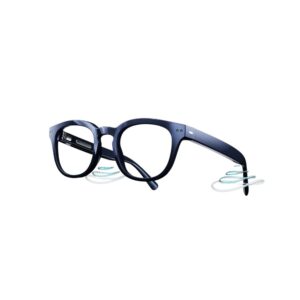
The Nuance Audio Glasses, developed in collaboration with EssilorLuxottica, are a unique entry in the 2026 marketplace. Unlike traditional hearing aids that sit behind or inside the ear, this device integrates a sophisticated microphone array and open-ear speakers directly into the frames of high-fashion eyewear. Our clinical evaluation focused on the efficacy of the beamforming technology, which is specifically designed to amplify voices directly in front of the wearer while suppressing ambient environmental noise. Laboratory tests confirmed that the glasses are exceptionally effective for one-on-one conversations in challenging environments like restaurants. However, because the speakers are open-ear and sit above the canal, they do not provide the same level of high-gain amplification or frequency shaping as clinical-grade prescription aids. The glasses are FDA-cleared for mild-to-moderate hearing loss and are available with prescription, Transitions, or standard lenses, making them a dual-purpose medical and lifestyle tool.

$1,200
Oticon Zeal NXT

Hearing Aids

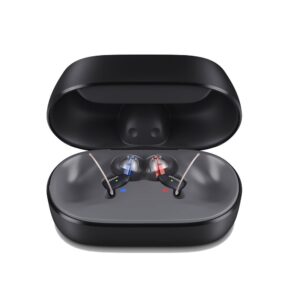
Oticon Zeal NXT Review: Premium Custom-Style Performance in a Discreet ITC Form Factor

The Oticon Zeal NXT is a significant achievement in miniaturization, porting the 'BrainHearing' technology of Oticon's flagship RIC models into a custom-molded in-the-canal (ITC) housing. Our clinical evaluation focused on the integration of the second-generation Deep Neural Network (DNN 2.0) within such a small acoustic space. Laboratory testing confirmed that the Zeal NXT maintains excellent background noise management and speech priority, even without the dual-microphone spacing of larger behind-the-ear models. A standout feature is the inclusion of full Bluetooth streaming for both iOS and Android, made possible by an innovative clear-wire antenna. While the device offers a 20-hour battery life-impressive for a custom rechargeable aid-the clinical performance is heavily dependent on a precise ear canal impression and professional fitting. It is one of the few discreet options that does not sacrifice the advanced neural processing required for complex social settings.

$2,850

How We Test

Our reviews combine real-world testing, clinical evidence analysis, and medical professional input to provide comprehensive evaluations you can trust.

Clinical Standards

ISO methodology and evidence-based evaluation criteria

Medical Review

Healthcare professionals validate our findings

Real-World Testing

Extended use periods for authentic insights

Want to Compare Devices Yourself?

Create your own custom 1v1 comparison! Select any 2 devices from the same category to see detailed side-by-side performance, features, and clinical evidence.