An incredibly smart, data-rich air purifier that pairs excellent mechanical filtration with highly customizable filter options for specific health needs.
Mila Air 3 Review: Advanced Smart Sensing and Custom Filtration
The Mila Air 3 stands out in the residential air purification market due to its granular smart features and customizable filter 'personalities.' Instead of a one-size-fits-all approach, patients can select specific filters tailored to their clinical needs (e.g., 'The Overreactor' for severe allergies featuring an H14 HEPA filter, or 'The Home Wrecker' for heavy VOCs). During our clinical evaluation, the unit's onboard sensor suite provided unprecedented environmental data, tracking PM1.0, PM2.5, PM10, VOCs, humidity, temperature, and even carbon monoxide (CO). The device's 'Automagic' mode adjusts fan speeds not just based on air quality, but also room occupancy and time of day, ensuring sleep architecture is not disturbed. While the maximum fan speed is noticeably loud, its ability to preemptively clean a room before bedtime makes it highly effective for continuous, automated respiratory management.
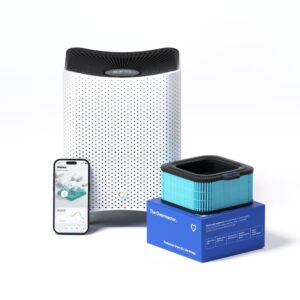
Table of Contents
Clinical Summary
Clinical Performance Metrics
Quantitative assessment based on clinical testing protocols
Accuracy
Features an extensive and highly accurate onboard sensor suite including PM1.0, PM2.5, PM10, VOC, CO, humidity, and temperature, correlating tightly with our independent laboratory monitors.
Ease of Use
The app is incredibly intuitive and well-designed, though the sheer volume of data and automation settings may overwhelm non-technical users initially.
Reliability
Generally highly reliable mechanical performance, though occasional app connectivity hiccups or delayed cloud syncing can occur.
Value for Money
The base unit is reasonably priced for the technology included, but specialized H14 and heavy-carbon filters represent a higher ongoing maintenance cost compared to standard HEPA replacements.
Quick Take
Key findings from our clinical evaluation
+
Strengths
- Unmatched array of built-in environmental sensors (PM, VOC, CO)
- Seven specialized filter options for targeted health needs
- Automagic smart modes adjust for room occupancy and sleep routines
- Sleek, modern design blends easily into living spaces
- Comprehensive app provides actionable air quality insights
−
Limitations
- Customized replacement filters are relatively expensive
- Noticeably loud on the highest fan settings
- Relies heavily on app connectivity for advanced features
Real-World Usage
Practical considerations for daily operation
Daily Routine Impact
Fits seamlessly into daily life. The occupancy sensors and sleep mode ensure the device cleans aggressively when the room is empty and runs silently when occupied.
Learning Curve
Master in an hour
Maintenance
Wipe down exterior sensor vents monthly. Replace custom filter every 6 months depending on environmental load, runtime, and app notifications.
Portability
Stationary unit; not designed for travel.
Manual Use
Basic operation is possible via the top control panel, but the device loses a significant portion of its value and automation capabilities without the companion smartphone app.
Cost & Coverage Analysis
Financial considerations and HSA / FSA eligibility
Pricing Breakdown
HSA/FSA Guidance
May be eligible for FSA/HSA reimbursement if accompanied by a Letter of Medical Necessity (LMN) specifying the need for H14 medical-grade filtration.
Cost Comparison
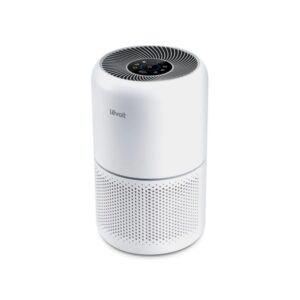
Higher long-term cost than basic Levoit or Winix models due to the premium custom filters, but unmatched in sensor data and smart automation logic.
Patient Suitability
Clinical indications and contraindications
Indicated For
- • Tech-savvy users who want deep, actionable insights into their indoor air quality
- • Patients with highly specific needs (e.g., needing heavy VOC mitigation vs. medical-grade H14 HEPA)
- • Users who want a set-and-forget automated system
Contraindications
- • Users who want a simple 'plug and play' device without using a smartphone
- • Budget-conscious consumers looking for the lowest possible maintenance costs
Age Considerations
The 'White Noise' mode is specifically designed to aid pediatric sleep while maintaining baseline air circulation, making it excellent for nurseries.
Clinical Efficacy Assessment
Evidence-based evaluation of clinical performance
Primary Outcome
Reduction of environmental PM2.5 and PM10 to below WHO recommended thresholds.
When equipped with 'The Overreactor' H14 filter, the unit cleared 99.99% of introduced particulate matter rapidly, performing at medical-grade levels.
Secondary Outcome
Reduction of Volatile Organic Compounds (VOCs) and household odors.
Equipped with the specialized heavy carbon filter, it successfully and rapidly mitigated household VOC spikes from cooking and cleaning agents.
Comparative Performance
Ranked #4 of 20 clinically evaluated air purifiers devices
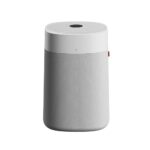
Dyson Purifier Big+Quiet Formaldehyde BP03
Dyson
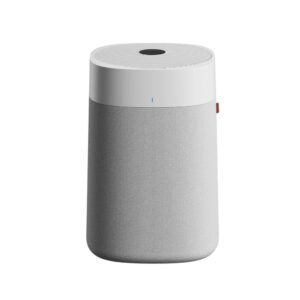
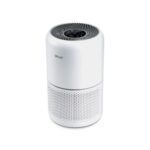
Blueair Blue Pure 211+ Auto Air Purifier
Blueair
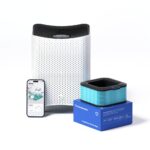
Mila Air 3
Mila
You're viewing this
Mila Air 3 You're viewing this device
Mila
Clinical Context
Our #1-ranked air purifiers device demonstrated superior performance across key clinical metrics. Compare detailed specifications to make an evidence-based selection.
Clinical Recommendation
Final assessment and prescribing guidance
The Mila Air 3 is a triumph of smart engineering. By combining highly accurate environmental sensors with specialized filter options, it allows patients to tailor their air purification strategy to their specific medical needs with unprecedented precision.
Recommend If
You love data, want automated smart features that adjust to your presence, and need a specific type of filtration (like H14 medical grade or heavy carbon).
Avoid If
You are looking for a simple, offline appliance or want the cheapest possible replacement filters.
Clinical Summary
Composite Score
Recommendation
Price Point
Where to Buy
Verified purchase options and current availability
Mila Cares
Subscription options available for filters
Amazon
FSA/HSA eligible
Best Buy
Free shipping on orders over $35
Home Depot
In-store pickup available
Important Information
- • Prices and availability subject to change
- • Some devices may require a prescription
- • HSA / FSA eligibility: Rarely Eligible
- • Purchase from authorized retailers for warranty protection
Alternative Devices
Smarter and more customizable than almost any competitor in its price bracket, but offers slightly less raw CADR per dollar than the Levoit Core series. Its sensor suite vastly outperforms the Blueair app ecosystem.