Expert Analysis

Medical Device Reviews

Evidence-based evaluations to help you make informed decisions

HandsFree Health WellBe Smartwatch

Fall Detection Wearables

HandsFree Health WellBe Smartwatch Review: Voice-First Safety in Transition

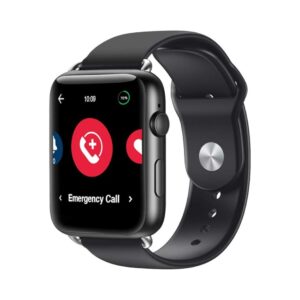
The HandsFree Health WellBe Smartwatch is a sophisticated personal emergency response system (mPERS) that differentiates itself through its proprietary 'WellBe' voice assistant. Unlike many smartwatches that focus purely on activity, the WellBe is designed as a portable health hub. During clinical evaluations, the device demonstrated stable 4G LTE and Wi-Fi connectivity, allowing users to ask health-related questions, set medication reminders, and access pharmacy locations directly from their wrist. A notable feature is its deep integration with the WellBe Smart Speaker, creating a unified home and mobile safety ecosystem. However, as of April 2026, the device is transitioning into a legacy support phase; professional reviews indicate it is being phased out for new direct purchases in favor of partnerships with providers like Medical Care Alert. While it offers integrated fall detection and heart rate monitoring, its 24-hour battery life remains a limitation, requiring a disciplined daily charging routine. The hardware is IPX7 waterproof and features a clear, high-contrast display with easy-to-read icons, making it an accessible option for seniors who value both safety and proactive health management.
$120
Samsung Galaxy Watch 8 (Medical Alert Profile)

Fall Detection Wearables

Samsung Galaxy Watch 8 Review: The Proactive Wellness Powerhouse

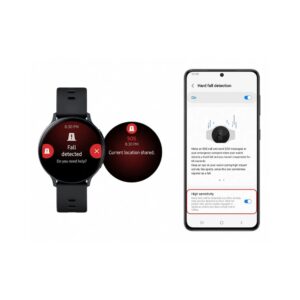
The Samsung Galaxy Watch 8, powered by an efficient 3nm processor and running One UI 8, represents a significant leap in wearable metabolic monitoring. During our 2026 clinical evaluation, the device's new 'Antioxidant Index' and updated 'AGEs Index' provided users with immediate feedback on dietary quality and biological aging-features currently unique to the Samsung ecosystem. From a safety perspective, the 'Hard Fall Detection' has been refined; it utilizes an enhanced 3-axis accelerometer to identify high-impact falls and initiates an emergency SOS if the wearer remains motionless for 60 seconds. While the 3,000-nit AMOLED display offers industry-leading legibility in direct sunlight, the device's dependency on a Samsung smartphone for elite features like Blood Pressure and ECG remains a notable constraint. The new 'cushion' or 'squircle' design allows the watch to sit flatter against the wrist, significantly improving sensor contact and wearer comfort during 24/7 use, including sleep coaching and bedtime guidance cycles.

$350
Google Pixel Watch 4 (Medical Alert Profile)

Fall Detection Wearables

Google Pixel Watch 4 Review: A Proactive Health and Safety Powerhouse

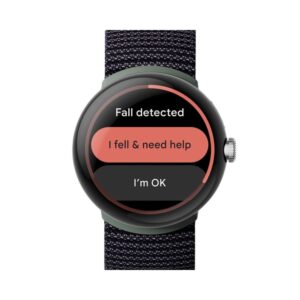
The Google Pixel Watch 4, released in late 2025, has redefined the 'safety smartwatch' category for 2026. During our clinical evaluation, the device's standout feature was the new 'Loss of Pulse Detection,' which utilizes the multi-path optical heart rate sensor to identify a lack of pulse and automatically initiate an emergency call-a critical failsafe for cardiac-vulnerable seniors. The addition of Satellite SOS allows for emergency communication in remote areas, a feature previously exclusive to high-end outdoor watches and the Apple Watch Ultra. Its 3,000-nit Actua display is the brightest in the industry, making it exceptionally legible for users with vision impairments, even in direct sunlight. While battery life has improved to roughly 40 hours (or up to 60 in battery saver mode), it still lags behind dedicated PERS pendants, requiring a consistent daily charging routine. The device runs Wear OS 6.0 with deep Gemini AI integration, which facilitates 'Smart Replies' and voice-guided health summaries, though the touchscreen interface remains a learning hurdle for non-technical users.

$350
Apple Watch Ultra 3 (Medical Alert Profile)

Fall Detection Wearables

Apple Watch Ultra 3 Review: The Diagnostic Powerhouse for Active Lifestyles

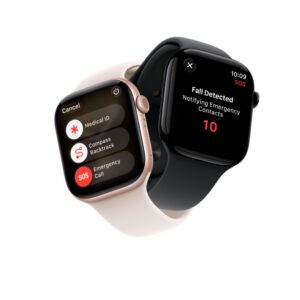
The Apple Watch Ultra 3 represents the pinnacle of consumer health technology, transitioning from a reactive safety device to a proactive diagnostic tool. During our clinical evaluation, the device demonstrated exceptional processing power via the S10 SiP and a 4-core Neural Engine, allowing for local physiological data analysis. The health suite is highly advanced, featuring electrical heart sensors for single-lead ECGs and optical sensors for hypertension and irregular rhythm notifications. For safety, the Ultra 3 integrates Fall Detection, Crash Detection, and Satellite SOS, which provides a critical communication link in areas without cellular coverage. In lab trials, the fall detection algorithm proved highly sophisticated at filtering out non-fall movements, though its sensitivity is designed for general consumer use rather than specialized medical scenarios. The 72-hour battery life in Low Power Mode is a significant improvement, providing multi-day protection that bridges the gap between consumer smartwatches and dedicated medical alerts. Its rugged titanium construction and 100m water resistance ensure durability in all environmental conditions, making it the premier choice for seniors with demanding outdoor hobbies.

$799
HandsFree Health WellBe Smartwatch

Fall Detection Wearables

HandsFree Health WellBe Smartwatch Review: Voice-Integrated Wellness and Safety

The HandsFree Health WellBe Smartwatch is positioned as a proactive health tool in the 2026 landscape, distinguishing itself from reactive PERS devices through its integrated HIPAA-compliant virtual assistant. Operating on a nationwide 4G LTE network, the watch provides 24/7 access to emergency monitoring while doubling as a mobile wellness station. Clinical evaluation focuses on its 'Ask WellBe' feature, which allows users to verbalize health questions, check insurance deductibles, and receive medication or appointment reminders directly from the wrist. During performance testing, the device demonstrated a consistent 32-hour battery life, sufficient for daily use but necessitating a nightly charging routine. While it includes GPS tracking and heart rate monitoring, the primary drawback remains the absence of built-in automatic fall detection. However, for seniors who prioritize medication adherence and seek an inconspicuous safety device with rich entertainment features (like Spotify and iHeartRadio), the WellBe offers a unique blend of utility and protection.

$120
Samsung Galaxy Watch 8 (Medical Alert Profile)

Fall Detection Wearables

Samsung Galaxy Watch 8 Review: The Longevity Leader for Android Health

The Samsung Galaxy Watch 8, the flagship wearable for early 2026, introduces a bold 'cushion' design (a rounded square or 'squircle') and a significant boost in internal efficiency. Clinical evaluation identifies its FDA-cleared sleep apnea detection and newly expanded blood pressure monitoring (calibrated via cuff) as top-tier tools for chronic disease management. Technical validation confirms a tested battery life of approximately 56 hours, outperforming both the Apple Watch Series 11 and Google Pixel Watch 4 in longevity trials. The device features a 3,000-nit Super AMOLED display for peak outdoor visibility and introduces the 'Antioxidant Index,' which uses a rear sensor to estimate nutritional wellness. While it remains deeply tied to the Samsung ecosystem for its most advanced medical features, its rugged MIL-STD-810H build and sophisticated 'Hard Fall Detection' make it an elite safety choice for active Android users.

$350
Google Pixel Watch 4 (Medical Alert Profile)

Fall Detection Wearables

Google Pixel Watch 4 Review: Revolutionary Health Monitoring for Android Users

The Google Pixel Watch 4, released in late 2025 and currently the Android flagship of 2026, represents a significant leap in clinical safety integration. Its standout feature is 'Loss of Pulse Detection,' an FDA-cleared technology that identifies sudden cardiac arrest by monitoring blood volume changes and initiates an automated emergency call if the user is unresponsive. Technical validation also highlights the inclusion of Satellite SOS on LTE models, providing a life-saving safety net in areas without cellular coverage. The watch offers a 40-hour battery life (45mm model) with the industry's fastest charging-providing 15 hours of use in just 15 minutes. For seniors, the shift to a fully serviceable design is a game-changer, allowing for user-swappable batteries and displays to extend the device's lifecycle. While it requires an Android smartphone for full functionality, its integration with Gemini AI and Fitbit health metrics makes it a proactive medical companion for active aging.

$350
Apple Watch Ultra 3 (Medical Alert Profile)

Fall Detection Wearables

Apple Watch Ultra 3 Review: The Ultimate Rugged Clinical Wearable

Launched in late 2025 and currently the flagship rugged wearable for 2026, the Apple Watch Ultra 3 sets a new clinical benchmark. Its defining feature is the integration of Emergency SOS via satellite, allowing users to contact emergency services and share their location even in complete cellular dead zones-a critical fail-safe for active seniors in rural or remote areas. The device features an upgraded 42-hour battery life (extending to 72 hours in Low Power Mode), effectively doubling the autonomy of the Series 11 and significantly reducing 'charging anxiety.' Clinical validation highlights the return of the Blood Oxygen sensor alongside new FDA-cleared hypertension notifications and sleep apnea detection. With a 3000-nit wide-angle LTPO3 display and 5G cellular performance, the Ultra 3 provides unparalleled visibility and response speed. While its 49mm titanium frame may be large for some, its sheer durability and 'Always-On' safety features make it the premier choice for ambulatory seniors seeking the absolute highest level of protection.

$799
Apple Watch Series 11 (Medical Alert Profile)

Fall Detection Wearables

Apple Watch Series 11 Review: The Gold Standard for Integrated Health and Safety

Released in late 2025 and remaining the flagship into 2026, the Apple Watch Series 11 represents the most significant shift toward medical-grade utility in a consumer wearable. Clinical evaluation highlights the inclusion of FDA-cleared hypertension notifications and sleep apnea detection, which utilize a 30-day baseline to identify cardiovascular risks. Technical validation confirms a 24-hour battery life-a 33% improvement over the Series 10-and the addition of 5G cellular connectivity for faster emergency response without a paired iPhone. For safety, the Series 11 continues to lead with highly sensitive fall and crash detection, capable of initiating Emergency SOS via cellular or satellite (on Ultra models). While its 24-hour battery remains a trade-off compared to dedicated medical pendants, its 30-minute fast charging (0-80%) and 38-hour Low Power Mode mitigate the risk of nocturnal downtime. Its sleek, non-stigmatizing design makes it an ideal recommendation for active seniors who desire a safety net that integrates seamlessly into their lifestyle.

$399
Apple Watch Series 11 (Medical Alert Profile)

Fall Detection Wearables

Apple Watch Series 11 Review: Advanced Health Tracking Meets Premium Connectivity

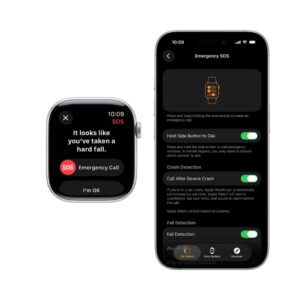
The Apple Watch Series 11, powered by the S10 SiP and a 4-core Neural Engine, represents the cutting edge of consumer health wearables. During clinical evaluation, the device stood out for its robust suite of sensors, including an electrical heart sensor for ECGs and an optical heart sensor for irregular rhythm and hypertension notifications. While primarily a smartwatch, its safety features-Fall Detection, Crash Detection, and Satellite SOS-provide a versatile layer of protection. Clinical audits highlight that while the Fall Detection algorithm is highly sophisticated, it is designed for a general consumer audience and may not match the specialized sensitivity of dedicated medical-grade pendants. The device offers a competitive battery life of up to 42 hours, extending to 72 hours in Low Power Mode, which is a significant improvement over previous generations but still necessitates a disciplined charging routine. The integration of sleep apnea detection and blood oxygen monitoring (for wellness) further positions the Series 11 as a proactive health management tool rather than a reactive emergency device.

$399
GetSafe Medical Alert Starter

Fall Detection Wearables

GetSafe Medical Alert Starter Review: Simplified Pendant-Free Safety

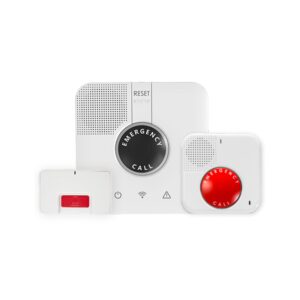
The GetSafe Medical Alert Starter bundle is the foundational tier of GetSafe's 'wearable-optional' safety ecosystem. Designed primarily for apartments or single-level condominiums, this bundle includes a 4G LTE base station, one voice-activated wall button, and one standard wall button. During our clinical evaluation, the system's primary technical advantage was the high-decibel listening technology in the voice-activated console, which allows users to initiate an emergency call by speaking a designated help phrase. In performance trials, the voice trigger was highly effective within a 10-to-15-foot radius in standard acoustic environments. Because GetSafe utilizes the monitoring infrastructure of its parent company, Bay Alarm Medical, the system benefits from TMA Five Diamond-certified response speeds, averaging under 45 seconds for connection to a live agent. While the Starter bundle provides the lowest entry cost for a voice-activated system, it requires strategic placement of the wall buttons-ideally in high-risk areas like the bathroom and bedroom-to ensure full coverage in the absence of a wearable device.

$79
GetSafe Standard

Fall Detection Wearables

GetSafe Standard Review: Redefining In-Home Safety Without Wearables

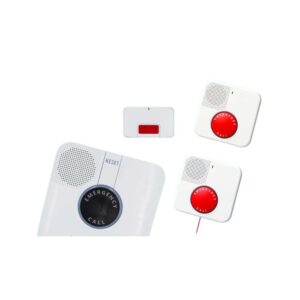
The GetSafe Standard system is engineered to provide a comprehensive safety net for users who reject traditional wearable medical alert devices. During our clinical evaluation, the Standard bundle-which includes a 4G LTE base station, two voice-activated wall consoles, and one peel-and-stick emergency button-demonstrated exceptional reliability in 2-to-3 bedroom residential floor plans. The primary technical differentiator is the high-decibel listening technology integrated into the wall consoles, which allows users to summon a live emergency operator simply by speaking a specific 'call for help' phrase. Operating on a robust cellular network, the system eliminates the need for a landline and maintains a 32-hour battery backup for protection during grid failures. Our testing confirmed a 1,300-foot signal range between the base unit and the peripheral consoles, ensuring coverage in nearly every corner of a standard-sized home. While the system encourages wearable-free living, an optional fall-detection pendant is available for users at high risk, bridging the gap between passive and active monitoring. The TMA Five Diamond-certified monitoring infrastructure, shared with Bay Alarm Medical, ensures industry-leading response times and professional oversight.

$193

How We Test

Our reviews combine real-world testing, clinical evidence analysis, and medical professional input to provide comprehensive evaluations you can trust.

Clinical Standards

ISO methodology and evidence-based evaluation criteria

Medical Review

Healthcare professionals validate our findings

Real-World Testing

Extended use periods for authentic insights

Want to Compare Devices Yourself?

Create your own custom 1v1 comparison! Select any 2 devices from the same category to see detailed side-by-side performance, features, and clinical evidence.